 English
 中文简体
 русский
 Français
 Español
 عربى
 Indonesia

Outdoor LED Road Lamp JD-1076: Efficient, Durable, and Adaptable Roadway Lighting
Modern road infrastructure requires lighting systems that deliver dependable visibility, efficient energy use, long service life, and straightforward maintenance. Municipal roads, industrial parks, residential developments, logistics areas, commercial districts, and public facilities all depend on outdoor lighting to support safety and movement after dark. At the same time, project owners are under increasing pressure to reduce electricity consumption, control operating costs, meet environmental objectives, and select products that can adapt to different roadway conditions.
The Outdoor LED Road Lamp JD-1076 is designed to address these requirements through a flexible power range, efficient LED technology, multiple housing sizes, reliable thermal management, and a durable outdoor structure. Available from 30W to 240W, the fixture can be configured for a wide range of roadway applications, from smaller access roads and residential streets to larger urban routes and infrastructure projects. Its use of 3030 or 5050 LED packages and a system efficacy of 130-160 lumens per watt supports a practical balance between illumination performance and energy efficiency.
Rather than treating roadway lighting as a one-size-fits-all product, the JD-1076 is built around project adaptability. Different power levels, three available size categories, optical distribution options, housing finishes, and OEM/ODM customization allow the fixture to be aligned with the requirements of a specific installation. This flexibility is particularly valuable for lighting contractors, engineering companies, distributors, municipal buyers, and international project developers that need a reliable product platform rather than a single fixed specification.
The product is manufactured by Cixi HuaSheng Lighting Co., Ltd., a Ningbo-based lighting manufacturer with capabilities covering die-casting, CNC machining, aging, photometric testing, mold development, assembly, and customized production. The company serves outdoor, industrial, solar, indoor, and specialized lighting markets, providing both finished luminaires and technical support for project-based orders.
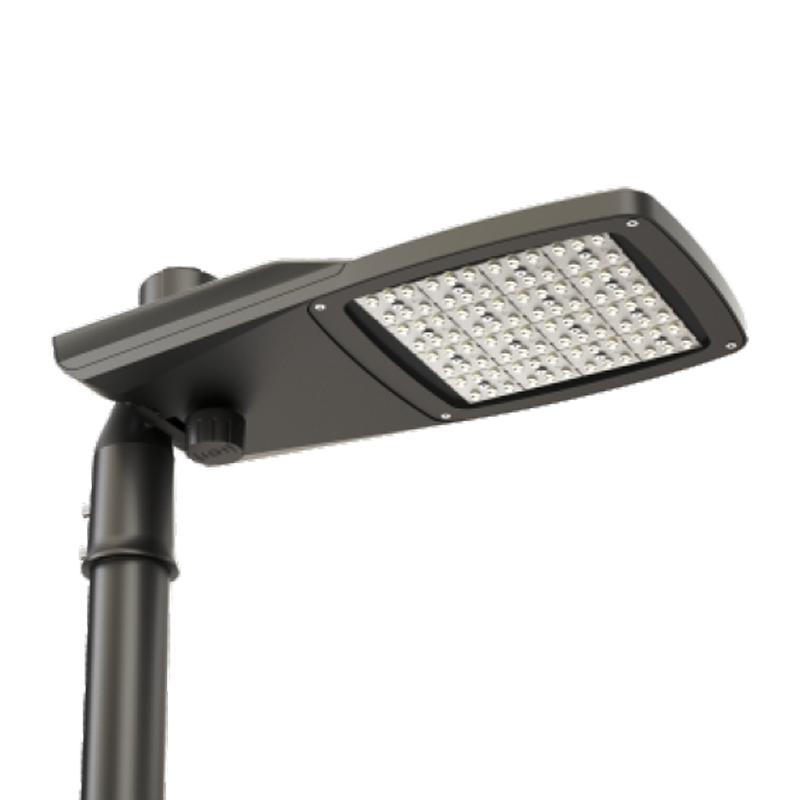
Outdoor LED Road Lamp JD-1076
1. The Role of Efficient Roadway Lighting in Modern Infrastructure
Road lighting has a direct influence on visibility, traffic safety, pedestrian confidence, public security, and the usability of outdoor spaces. Poorly designed lighting can create dark zones, excessive glare, uneven illumination, and unnecessary energy consumption. A well-designed LED road lamp, by contrast, should distribute light where it is needed, maintain stable output over time, withstand outdoor exposure, and support economical operation.
Traditional high-pressure sodium, metal halide, and other conventional technologies have served roadway applications for decades. However, they often require higher operating power, longer warm-up periods, more frequent lamp replacement, and more complex maintenance. LED technology offers a different approach. Light-emitting diodes can provide high optical efficiency, instant start-up, directional light output, compact construction, and better compatibility with modern control systems.
The performance of an LED road lamp is not determined only by the nominal wattage. A successful fixture must combine the LED package, driver, heat sink, optical system, housing, sealing structure, installation interface, and manufacturing quality. If one element is poorly designed, the overall result may be reduced brightness, faster lumen depreciation, unreliable operation, or increased maintenance requirements.
The JD-1076 is intended as a complete roadway lighting fixture rather than simply an LED module attached to a housing. Its design emphasizes the relationship between power selection, heat dissipation, mechanical durability, and installation flexibility. This makes it suitable for projects where long-term operation and practical maintenance are more important than short-term purchase price alone.
2. Product Overview and Main Specifications
The Outdoor LED Road Lamp JD-1076 is a high-efficiency roadway luminaire designed for outdoor infrastructure. Its rated power range extends from 30W to 240W, allowing project designers to select a configuration according to road width, pole spacing, mounting height, target illumination, and local lighting requirements.
| Specification | Available Configuration | Project Relevance |
| Product model | JD-1076 | Identifies the outdoor roadway lighting platform |
| Application category | LED street light | Suitable for roads, streets, public infrastructure, and outdoor circulation areas |
| Power range | 30-240W | Supports low-, medium-, and higher-output roadway applications |
| LED package | 3030/5050 | Provides configuration flexibility for different performance requirements |
| System efficacy | 130-160 lm/W | Helps reduce energy consumption while maintaining useful light output |
| Small size | 577 x 229 x 115 mm | Appropriate for compact and lower-power installations |
| Medium size | 639 x 260 x 115 mm | Balances physical scale and output for general roadway use |
| Large size | 700 x 310 x 115 mm | Provides a larger platform for higher-power configurations |
These specifications demonstrate that the JD-1076 is designed as a scalable product family. The three housing sizes make it possible to avoid using an oversized fixture for a small road or an undersized body for a higher-output application. Selecting an appropriately sized luminaire can improve visual proportion, simplify installation, and support more effective thermal management.
The 130-160 lm/W efficacy range is also significant for project planning. Actual system performance depends on the selected LED package, operating current, driver, optical configuration, ambient temperature, and other design factors. Nevertheless, the stated range places the product within the high-efficiency category for many outdoor roadway applications. A higher efficacy means that a project can achieve a required light level with less electrical input, subject to a complete photometric design.
3. Flexible Power Selection for Different Roads
One of the most important advantages of the JD-1076 is its broad power range. Roadways do not all have the same lighting requirements. A narrow residential lane, a pedestrian-oriented access road, a factory internal road, and a multi-lane urban route may require significantly different output levels. Using the same wattage for every application can lead to over-lighting, under-lighting, or unnecessary energy costs.
The 30W to 240W range allows the fixture to be matched more closely to the application. Lower-power configurations may be suitable for smaller roads, pathways, low mounting heights, and areas with modest traffic levels. Middle-range configurations can serve residential streets, industrial estates, parking approaches, and secondary municipal roads. Higher-power versions can be considered for wider roads, taller poles, larger spacing, and demanding infrastructure projects after photometric evaluation.
This flexibility can also simplify procurement. Contractors and distributors can work with one product platform across several projects instead of maintaining multiple unrelated street-light designs. A common product family may reduce training requirements, simplify spare-parts planning, and create a more consistent visual appearance across a development.
Power selection should always be based on a lighting calculation rather than wattage alone. Important factors include road classification, pavement reflectance, pole height, pole spacing, arm length, lane arrangement, pedestrian activity, required uniformity, glare limits, and local standards. The JD-1076 provides the configuration range, while a professional lighting design determines the appropriate version for the site.
For engineering companies, the ability to customize power configuration is particularly useful. A project may require different wattages on a main route, side streets, intersections, entrances, and pedestrian zones. Instead of redesigning the entire fixture for each location, the JD-1076 platform can support a coordinated family of configurations.
4. LED Performance and Energy Efficiency
LED roadway lighting is widely selected because it can produce useful illumination with lower energy consumption than many conventional alternatives. The JD-1076 uses 3030 or 5050 LED packages, enabling configuration according to the required output, thermal design, optical arrangement, and project specification.
LED packages are compact sources that can be arranged in an organized optical field. This allows the fixture to direct light toward the roadway instead of wasting a large proportion of output above the horizontal plane or outside the intended area. Proper optical control can improve roadway uniformity and reduce the need to compensate for inefficient light distribution with excessive wattage.
The stated efficacy of 130-160 lm/W indicates that the JD-1076 is intended to deliver strong output relative to its electrical consumption. For a municipality or private operator, the energy-saving effect continues throughout the operating life of the installation. Even a moderate reduction in power consumption can produce substantial savings when multiplied across hundreds or thousands of fixtures and many hours of nightly operation.
For example, a project that replaces older fixtures with more efficient LED road lamps may reduce connected load while maintaining or improving the designed illumination level. The actual saving depends on the original technology, operating schedule, dimming strategy, electricity tariff, and number of installed units. A responsible project evaluation should compare measured or documented system performance rather than relying only on a nominal wattage comparison.
The JD-1076 can also support a more sustainable approach to infrastructure planning. Lower electricity demand reduces operating expenditure and can contribute to lower indirect carbon emissions where electricity is generated from fossil fuels. When combined with suitable controls, scheduled dimming, and responsible maintenance, the fixture can become part of a broader energy-management program.
Energy efficiency should not be separated from optical quality. A very efficient LED source is not enough if light is poorly distributed or if glare makes the installation uncomfortable. The value of the JD-1076 lies in combining LED efficiency with an optical and mechanical platform intended for roadway use.
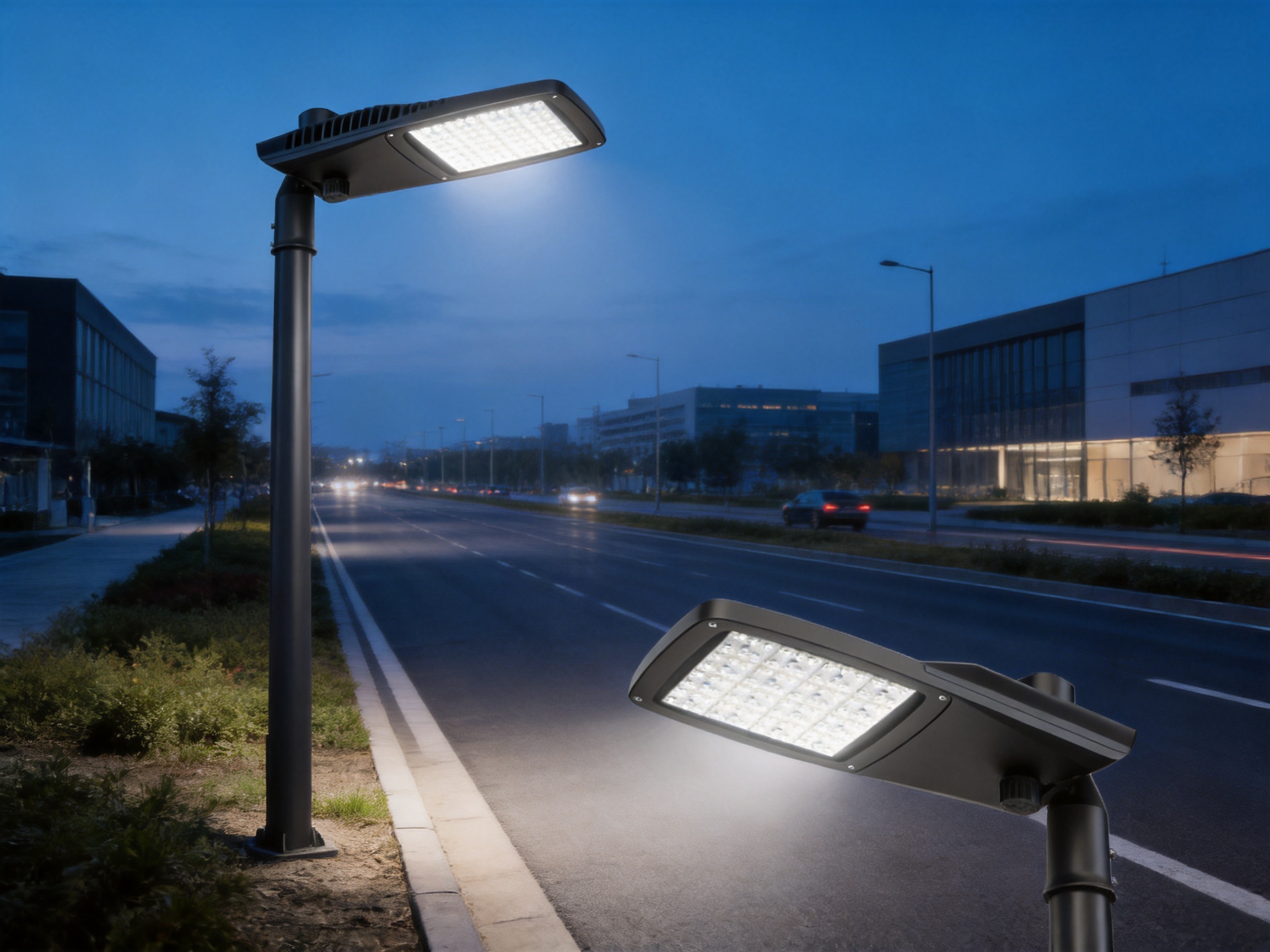
5. Thermal Management and Long-Term Reliability
Heat is one of the most important factors influencing LED performance and service life. Although LEDs consume less energy than many traditional light sources, a portion of their electrical input still becomes heat. If that heat is not effectively transferred away from the LED junction and driver, component temperatures can rise, accelerating lumen depreciation and reducing operational reliability.
The JD-1076 incorporates an optimized heat-dissipation structure to support stable outdoor operation. Its housing is designed to work as part of the thermal system, helping transfer heat from the LED assembly into the surrounding environment. The available size options also help align the physical body with the power configuration, which is important because higher-output versions generally require greater thermal capacity.
Effective thermal management provides several practical benefits. It helps maintain more consistent light output, supports the expected operating life of the LED system, protects sensitive electronic components, and reduces the risk of performance loss in warm climates. This is especially important for road lamps installed in regions with high ambient temperatures, limited nighttime cooling, dust exposure, or long annual operating hours.
A roadway luminaire is exposed to repeated heating and cooling cycles. During the day, the fixture may absorb solar radiation, while at night it operates for many hours. Seasonal temperature changes, humidity, rain, and wind add further stress. A well-designed housing and production process help the lamp manage these environmental conditions over time.
Thermal performance is influenced by more than the external shape. The quality of contact between the LED board and heat-dissipating surface, the flatness of machined interfaces, the choice of thermal materials, the consistency of assembly, and the cleanliness of contact surfaces can all affect heat transfer. Manufacturing control is therefore essential to the reliability of the final luminaire.
6. Durable Housing for Outdoor Conditions
Outdoor road lamps must withstand conditions that do not affect indoor luminaires to the same degree. Rain, humidity, wind, dust, pollution, ultraviolet exposure, temperature changes, insects, and accidental impact may all influence the product during its service life. The JD-1076 uses a durable housing structure intended for long-term outdoor operation.
A robust housing protects the internal LED modules, driver, wiring, and optical components. It also contributes to the mechanical stability of the fixture when mounted on a pole or outreach arm. For projects located in coastal, industrial, or high-traffic environments, housing quality is particularly important because salt, airborne chemicals, dust, and vibration can accelerate deterioration.
Housing finish can be customized for specific project needs. Different environments or brand guidelines may require a particular color, coating appearance, or surface treatment. Custom finishing can help the luminaire integrate with municipal streetscapes, industrial facilities, residential developments, and commercial architecture.
The long, low-profile form associated with roadway fixtures can also help reduce visual obstruction and wind loading compared with bulky designs. The exact wind-resistance performance depends on installation height, orientation, pole structure, local wind conditions, and engineering requirements. These factors should be reviewed during project design, but the product’s roadway-oriented housing provides a practical base for such evaluation.
Durability also affects maintenance economics. A fixture that maintains structural integrity and protects its internal components can reduce premature replacement. Fewer replacements mean lower labor costs, less traffic disruption, reduced equipment use, and less material waste over the life of a project.
7. Three Physical Sizes for Project Adaptability
The JD-1076 is available in small, medium, and large size configurations. The small body measures 577 x 229 x 115 mm, the medium body measures 639 x 260 x 115 mm, and the large body measures 700 x 310 x 115 mm. These size choices create a more logical relationship between fixture dimensions and electrical output.
The small version can be considered for compact roads, lower mounting heights, narrow access routes, pathways, and applications in which a visually lighter fixture is preferred. Its reduced physical dimensions may also be advantageous where pole arms or mounting structures have limited capacity.
The medium version provides a balanced platform for general roadway projects. It can support a broad range of municipal, industrial, residential, and commercial applications while maintaining a proportionate appearance on common road poles.
The large version provides additional physical area for higher-power configurations and demanding roadway layouts. A larger housing can support more LED modules, a broader thermal path, and an optical arrangement suitable for greater output. As with all lighting products, the final choice should be based on photometric results and installation conditions rather than size alone.
Offering several sizes can be an advantage over products that provide only one fixed body. A single-size competitor may force a project to use a small body at high operating stress or a large body for a low-output road. The JD-1076 gives buyers more opportunity to select a configuration that fits both technical and visual requirements.
8. Optical Distribution and Lighting Quality
Roadway lighting should illuminate the intended surface with appropriate uniformity while limiting glare and unnecessary spill light. Optical distribution is therefore a major part of the design process. The JD-1076 can be customized with optical distribution suited to the project layout, allowing the fixture to be evaluated for different road widths, pole arrangements, mounting heights, and spacing plans.
An appropriate roadway optical pattern can help extend light across the pavement, support uniform brightness between poles, and reduce dark areas. It may also reduce the amount of light directed toward adjacent properties, building windows, vegetation, or the night sky. The correct optical choice depends on the road geometry and the performance criteria required by the project.
Designers should consider longitudinal distribution along the road, lateral distribution across lanes, beam angle, mounting angle, pole spacing, and the position of the luminaire relative to the road edge. A product that performs well on one road layout may need a different lens or orientation on another. This is why optical customization and professional photometric analysis are valuable.
Huasheng Lighting provides DIALux design support as part of its technical service capabilities. A DIALux model can help project teams compare mounting arrangements, estimate illuminance and uniformity, evaluate spacing, and refine the selected power and optical configuration before installation. Such analysis can reduce the risk of over-lighting or under-lighting and help create a more efficient bill of materials.
Good optical design also contributes to perceived quality. Uniform roads are more comfortable for drivers and pedestrians than roads with alternating bright and dark patches. Carefully controlled light can provide a cleaner appearance and reduce visual discomfort, particularly in residential and urban areas where excessive brightness may be unwelcome.
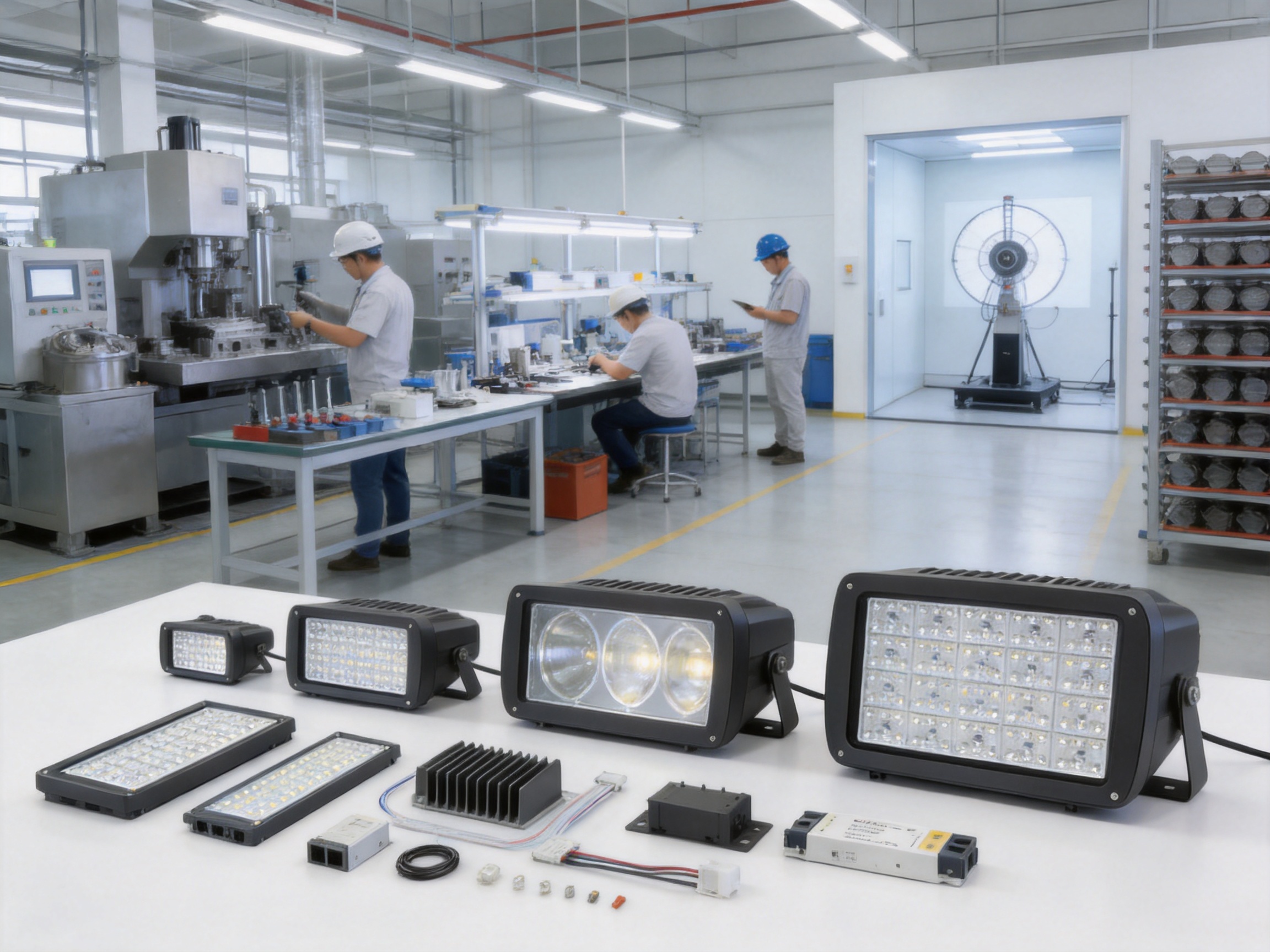
9. Advantages Compared with Less Adaptable Competitor Products
Road lighting products vary widely in design quality, configuration range, thermal performance, and manufacturing support. The JD-1076 offers several advantages when compared with basic or less adaptable competitor fixtures.
9.1 Broader Configuration Range
Many entry-level road lamps are sold in one or two fixed wattages. This may simplify catalog presentation, but it can limit project flexibility. The JD-1076 covers 30W to 240W, making it easier to build a coordinated lighting scheme for roads with different widths, pole heights, and usage patterns.
9.2 Better Alignment Between Body Size and Output
Products that use a single housing for every power level may experience compromises in thermal capacity, appearance, or component arrangement. The JD-1076 uses three size categories, helping match the physical platform to the selected output. This provides a more rational basis for product selection and can support stable operation across the range.
9.3 Support for Customized Optical Distribution
Some competing products offer limited lens choices or fixed light distributions. The JD-1076 can be configured for project-specific optical requirements. This is valuable when a road has unusual geometry, large pole spacing, strict glare considerations, or different lighting zones within one development.
9.4 Integrated Manufacturing Capabilities
Quality control can be more consistent when a manufacturer has control over key processes such as die-casting, CNC machining, mold development, aging, assembly, and photometric testing. A supplier that depends entirely on unrelated subcontractors may face greater variation in dimensional accuracy, finish, thermal interfaces, and delivery schedules. Huasheng Lighting’s integrated capabilities provide a stronger foundation for repeatable production.
9.5 OEM and ODM Flexibility
International buyers may require a private label, a specified housing finish, a particular power configuration, or an optical arrangement developed for a local market. The JD-1076 supports OEM/ODM cooperation, allowing the product to be adapted without starting from an entirely new design platform. This can shorten development time and help distributors create a more differentiated offering.
9.6 Project-Oriented Technical Support
Product selection is more effective when supported by photometric design and engineering communication. DIALux services, mold design, SKD/CKD options, and customized delivery arrangements can be valuable advantages over suppliers that offer only a standard catalog product and limited after-sales assistance.
These advantages should not be interpreted as a claim that one fixture is automatically suitable for every road or superior under every condition. Performance must be verified against the project’s technical requirements, local regulations, environmental conditions, and lighting calculations. The principal strength of the JD-1076 is its combination of efficiency, flexibility, manufacturing support, and application adaptability.
10. Advanced Manufacturing Processes
The quality of an outdoor LED road lamp depends heavily on how it is manufactured. Even a well-designed concept can underperform if the housing is poorly formed, the thermal interfaces are inconsistent, or assembly procedures are not controlled. Huasheng Lighting has developed a production system that combines specialized equipment with quality management practices.
10.1 Die-Casting
Die-casting is important for producing complex metal housings with repeatable dimensions and integrated structural features. A properly engineered die-cast body can provide strength, dimensional stability, and effective thermal pathways. It can also accommodate mounting interfaces, rib structures, access areas, and other features required by a roadway luminaire.
Die-casting mold quality has a direct influence on the final product. Mold design affects wall thickness, cooling behavior, surface quality, part consistency, and the ability to create efficient heat-dissipation features. Huasheng Lighting’s mold design capability allows the company to develop and refine tooling for its own products and customer projects.
10.2 CNC Machining
CNC machining can be used to improve the accuracy of critical surfaces and interfaces after casting. Mounting points, contact surfaces, threaded areas, and other precision features may require controlled machining to ensure reliable assembly and installation. Consistent dimensions are especially important for thermal contact and pole-mounting alignment.
By combining die-casting with CNC processing, a manufacturer can obtain both efficient structural production and improved precision where it matters most. This combination supports more reliable assembly and helps maintain consistency between production batches.
10.3 Aging Lines
Electronic lighting products benefit from controlled aging and testing before shipment. Aging lines allow fixtures to operate for a defined period under controlled conditions so that potential issues can be identified before the products reach the installation site. This process can help reveal irregular driver behavior, wiring problems, connection faults, or other early-stage defects.
Pre-shipment aging is especially valuable for large projects. Detecting a problem in the factory is generally faster and less expensive than troubleshooting a fixture after it has been installed on a high pole beside an active road. It can also improve confidence in batch consistency and reduce avoidable commissioning delays.
10.4 Photometric Testing
Goniophotometers are used to measure the distribution of light from a luminaire. Photometric testing provides data that can support optical verification, performance documentation, and lighting calculations. This is important because a fixture’s actual usefulness depends on where its light goes, not simply how many lumens its LED package produces.
Photometric capability enables the manufacturer to evaluate different optical arrangements, confirm performance, and provide more reliable information for DIALux or other professional design software. It also supports product improvement when engineers compare measured results with intended distribution.
10.5 Quality Management and Certification
Cixi HuaSheng Lighting Co., Ltd. maintains ISO 9001, ISO 14001, and ISO 45001 certifications according to the supplied company information. These systems relate respectively to quality management, environmental management, and occupational health and safety. Together, they indicate an organizational approach that considers product consistency, environmental responsibility, and workplace practices.
Relevant products are also certified by CB and CE according to the provided information. Certification requirements vary by product, market, and configuration, so buyers should request current documentation for the exact model and specification under consideration. Nevertheless, a structured certification and quality-management approach can simplify communication with international customers and support project compliance reviews.
11. Manufacturing Strengths of the Supplier
Huasheng Lighting is located in Cixi, Ningbo, Zhejiang, China, an area with strong manufacturing and export connections. The company focuses on lighting solutions for global customers and has experience in outdoor, industrial, solar, indoor, and specialized lighting categories.
Its product range includes LED street lights, tunnel lights, high-bay lights, linear lights, garden lights, solar lights, grow lights, explosion-proof lights, and other luminaires. This breadth provides useful cross-category experience. For example, outdoor roadway products require thermal and environmental durability, industrial products require high-bay performance and robust operation, and explosion-proof products require specialized construction and compliance considerations.
The company’s manufacturing equipment includes die-casting and CNC machines, aging lines, and goniophotometers. These capabilities support a more complete production chain, from housing development and precision processing to electrical aging and optical verification.
Another strength is the company’s ability to offer one-stop project services. These services include efficient lighting solutions, DIALux designs, mold design, OEM/ODM production, SKD/CKD customization, and delivery support. One-stop service can reduce the number of separate suppliers involved in a project and improve coordination between design, tooling, production, and shipment.
For distributors, this manufacturing depth can support private-label programs and repeat orders. For contractors, it can simplify technical discussions when a project requires a combination of standard products and custom configurations. For industrial customers, it can provide access to related lighting categories from one experienced source.
12. OEM, ODM, SKD, and CKD Customization
Lighting projects often involve requirements that are not fully addressed by a standard catalog. A buyer may need a custom logo, a particular color, a special mounting interface, a regional electrical configuration, a modified optical distribution, or a specific packaging arrangement. The JD-1076 is available for OEM/ODM cooperation, providing a starting platform for such requirements.
OEM production is useful when the buyer has an established product identity or distribution network and wants the fixture supplied under its own brand or commercial specification. ODM cooperation may be appropriate when the customer wants the manufacturer to contribute to product development, optical configuration, mechanical changes, or engineering refinement.
SKD and CKD options can support regional assembly strategies. In a semi-knocked-down arrangement, selected components are supplied for local assembly. In a completely knocked-down arrangement, the product is shipped in a more disassembled form for assembly within the destination market. These models may be relevant to local-content programs, regional manufacturing plans, tariff considerations, or distribution strategies.
Customization should be managed through a clear technical process. The buyer and manufacturer should define the required power, LED package, driver, optical distribution, housing finish, mounting dimensions, environmental conditions, testing documentation, packaging, and delivery schedule. Samples or pilot batches can then be used to confirm the final specification before mass production.
A flexible manufacturer should also be able to preserve consistency when a customized product enters repeat production. This requires controlled drawings, approved samples, documented bill-of-materials information, inspection standards, and change-management procedures. Huasheng Lighting’s mold, machining, testing, and quality-management capabilities provide a foundation for this type of cooperation.
13. Applications for the JD-1076
13.1 Municipal Roads
Municipal road projects often include a mixture of main routes, side streets, intersections, pedestrian crossings, and public access roads. The JD-1076’s power range and optical flexibility can help municipalities create a coordinated system while selecting different configurations for each road type.
13.2 Residential Developments
Residential streets require a balance between useful visibility, visual comfort, energy efficiency, and control of spill light. Lower- and medium-power configurations may be suitable depending on pole spacing and mounting height. Custom optical distribution can help reduce unnecessary light toward homes and adjacent properties.
13.3 Industrial Parks
Industrial parks often operate around the clock and may contain heavy vehicles, loading zones, internal roads, warehouse approaches, and security perimeters. Efficient roadway lighting can improve visibility for workers and drivers while reducing the electricity burden associated with long operating schedules.
13.4 Commercial and Logistics Areas
Shopping areas, business parks, distribution centers, and logistics facilities need reliable lighting for vehicle circulation and pedestrian movement. The durable housing and flexible output of the JD-1076 can support different outdoor zones within a commercial site.
13.5 Public Facilities and Infrastructure
Hospitals, schools, transport facilities, utility compounds, and public service sites may require consistent lighting across roads, entrances, and parking approaches. The product’s scalable format can support a unified appearance while allowing engineers to choose different output levels for different areas.
13.6 Outdoor Infrastructure Projects
Large infrastructure projects may involve long roads, complex installation conditions, and strict delivery schedules. A manufacturer with production, testing, customization, and export experience can help reduce coordination challenges and provide a more dependable supply plan.
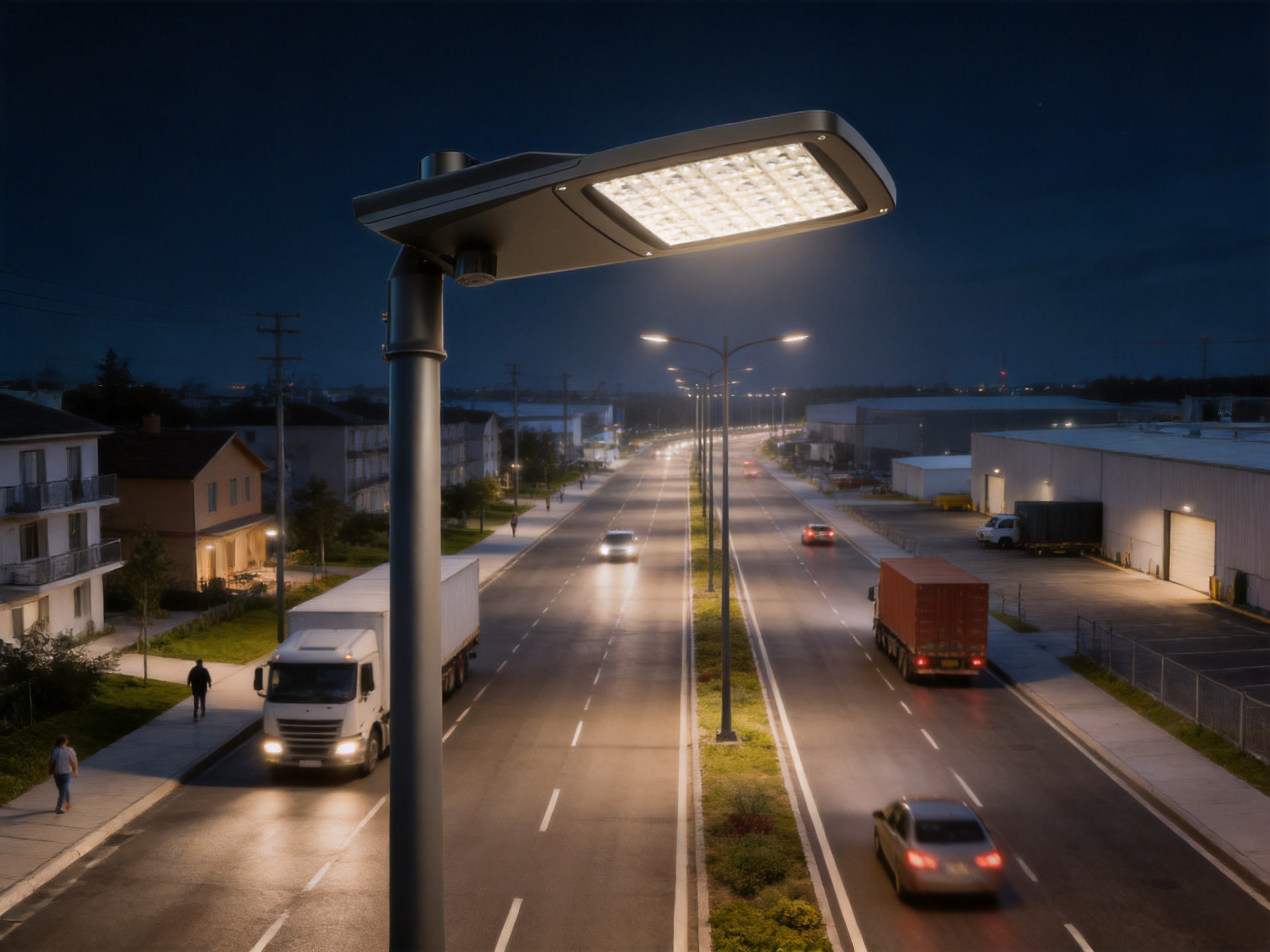
14. Installation and Project Design Considerations
Correct installation is essential to achieving the intended performance of any road lamp. Before ordering, project teams should confirm pole-top dimensions, arm diameter, mounting angle, cable entry, fixture weight, wind exposure, maintenance access, and electrical compatibility.
The selected power and optical distribution should be verified through a lighting calculation. Designers should input the actual road width, lane arrangement, pole spacing, mounting height, overhang, tilt angle, pavement reflectance, and maintenance factor. A DIALux model or equivalent analysis can help compare alternative configurations and avoid relying on assumptions.
The mounting orientation should follow the approved photometric design. Changing the tilt angle after the calculation may alter glare, uniformity, and the distribution of light along the roadway. Installation teams should also confirm that the pole and outreach arm can safely support the fixture under local structural and wind requirements.
Electrical installation should be performed by qualified personnel in accordance with applicable codes. The supply voltage, protective devices, grounding arrangements, surge protection, cable size, and control system compatibility should be reviewed before commissioning. Outdoor electrical equipment benefits from appropriate protection against lightning and transient events, particularly in exposed locations.
Maintenance planning should be considered at the design stage. Although LED road lamps generally require less frequent source replacement than conventional fixtures, periodic inspection remains important. Cleaning, connection checks, visual examination of the housing, and verification of control performance can help preserve the installation’s efficiency and reliability.
15. Maintenance and Lifecycle Value
The economic value of a roadway luminaire extends beyond the initial purchase price. Energy consumption, replacement frequency, labor, access equipment, traffic management, spare parts, and downtime all contribute to total ownership cost. The JD-1076 is designed to support a lifecycle approach through efficient operation, durable construction, and service-oriented manufacturing.
Lower electrical consumption can provide recurring savings throughout the operating period. The exact financial result depends on the selected wattage and operating hours, but the impact becomes increasingly meaningful in large installations. A project with several hundred fixtures may see a substantial difference between an efficient LED system and an older, less efficient technology.
Reduced maintenance can provide additional value. Road lamps are often installed at heights that require lifting equipment or road closures for access. A reliable fixture can reduce the number of interventions, lowering labor and logistical costs while minimizing disruption to traffic and nearby activities.
Standardization across a project can simplify maintenance inventories. If the same JD-1076 platform is used in several output levels, the operator may be able to organize spare components, installation tools, and technical training more efficiently. A consistent supplier relationship can also make it easier to request replacement parts or additional production in the future.
Long-term value should be assessed together with documentation. Buyers may request product drawings, photometric files, installation instructions, electrical information, quality records, and certification documents. Clear documentation supports proper installation, future maintenance, and project handover.
16. Environmental and Operational Benefits
LED roadway lighting can support environmental goals by reducing electricity consumption and extending replacement intervals. Lower energy demand can reduce the indirect environmental impact associated with electricity generation. Longer service intervals may also reduce packaging, transportation, and disposal requirements over the lifetime of the installation.
Huasheng Lighting’s ISO 14001 environmental management certification indicates that environmental considerations are included within its management framework. The practical effect of such a system depends on implementation, monitoring, and continuous improvement, but it provides an organized basis for addressing resource use, waste, emissions, and compliance.
The company also manufactures solar lighting products, which reflects experience with energy-conscious outdoor applications. Although the JD-1076 is presented as a standard LED roadway fixture rather than an integrated solar lamp, the company’s broader product expertise can be useful for customers evaluating different outdoor lighting strategies.
Environmental performance should be evaluated across the full lifecycle. Efficient operation is important, but responsible material selection, durable construction, repairability, packaging, manufacturing practices, and end-of-life handling also matter. A product that lasts longer and remains serviceable can reduce the frequency with which complete fixtures must be discarded.
17. How to Select the Appropriate Configuration
Choosing a JD-1076 configuration should begin with the application rather than a preferred wattage. The project team should identify the road category, required lighting level, target uniformity, mounting geometry, operating schedule, environmental conditions, and available electrical infrastructure.
Lower-power configurations may be evaluated for narrow roads, pathways, low mounting heights, and areas with relatively modest traffic. Medium-power versions may suit standard streets, industrial estate roads, residential access routes, and general outdoor circulation. Higher-power configurations may be considered for wider roadways, greater pole spacing, taller poles, or areas requiring increased illumination.
The LED package selection should be coordinated with the desired output, thermal conditions, optical design, and project specification. The 3030 and 5050 options provide a basis for adapting the product to different requirements, but the final selection should be confirmed through the manufacturer’s technical proposal and performance documentation.
Housing size should be selected alongside power and thermal requirements. The small, medium, and large bodies provide choices for different installation scales. Appearance may also be relevant, especially in urban or architectural environments where the luminaire is visible from nearby buildings and public spaces.
Optical distribution should be chosen after reviewing the road layout. If a project includes multiple road geometries, it may require more than one optical configuration. The manufacturer can support this process through photometric data and lighting design assistance.
Finally, the buyer should establish the required finish, mounting interface, control compatibility, packaging, documentation, certification, and delivery terms. A detailed specification reduces the possibility of misunderstandings and helps ensure that the delivered product matches the approved design.
18. Recommended Procurement Process
A structured procurement process can improve both technical results and delivery reliability. The first step is to provide the manufacturer with accurate project information, including installation photos or drawings when available. Road dimensions, pole details, environmental conditions, operating schedules, and target standards should be included.
The manufacturer can then recommend a suitable power range, housing size, LED package, optical distribution, and mounting arrangement. The proposed configuration should be tested in a professional lighting calculation. Any changes required by the calculation should be agreed before sample approval.
For customized projects, the buyer should review mechanical drawings, electrical specifications, labeling, housing finish, packaging, and inspection criteria. A pre-production sample can confirm the appearance and basic fit. For larger orders, a pilot batch may provide additional assurance that the production version meets the approved configuration.
Before shipment, buyers may request inspection records, aging information, photometric data, certification documents, and packing details. The exact documentation depends on the market and contract. Clear records are useful for customs, quality audits, project handover, and future replacement orders.
After delivery, installation feedback should be communicated to the manufacturer. Information about mounting, performance, local environmental conditions, and maintenance observations can support continuous improvement and help optimize future batches.
19. Questions and Answers
Q1: What type of product is the JD-1076?
The JD-1076 is an outdoor LED road lamp designed for roadway and infrastructure lighting. It can be used on urban roads, residential streets, industrial park roads, commercial access roads, and other outdoor circulation areas.
Q2: What power options are available?
The product supports a power range of 30W to 240W. The appropriate wattage should be selected according to road width, pole spacing, mounting height, required illumination, and the results of a professional lighting calculation.
Q3: Which LED packages can be used?
The listed LED options are 3030 and 5050. The final package selection depends on the required output, optical arrangement, thermal design, and project specification.
Q4: What is the product efficacy?
The stated efficacy range is 130-160 lumens per watt. Actual system performance may vary according to the selected configuration, driver, operating current, optics, and environmental conditions.
Q5: Are different housing sizes available?
Yes. The JD-1076 is available in three size categories: small at 577 x 229 x 115 mm, medium at 639 x 260 x 115 mm, and large at 700 x 310 x 115 mm.
Q6: Can the light distribution be customized?
Yes. Optical distribution can be adapted for project requirements. The road geometry, pole arrangement, mounting height, spacing, and glare objectives should be provided so the appropriate configuration can be evaluated.
Q7: Is OEM or ODM production available?
Yes. OEM/ODM customization is available for power configuration, housing finish, optical distribution, and other agreed project requirements. Buyers should confirm the complete technical specification before production.
Q8: What manufacturing capabilities support the product?
The manufacturer has die-casting and CNC machines, aging lines, and goniophotometers. It also provides mold design, lighting calculations, OEM/ODM services, and SKD/CKD customization.
Q9: Is the product suitable for hot or demanding outdoor environments?
The product includes an optimized heat-dissipation structure and a durable housing intended for outdoor operation. The final suitability depends on local ambient temperature, solar exposure, humidity, pollution, mounting conditions, and the selected configuration.
Q10: Can the product be used for a large municipal project?
It can be considered for municipal and infrastructure projects, particularly where a scalable product family and customized configurations are useful. The project team should verify photometric results, electrical requirements, structural conditions, certification, and procurement documentation before approval.
Q11: Does the manufacturer provide lighting design support?
Yes. The company provides efficient lighting solutions and DIALux design support. This can help project teams evaluate illumination, uniformity, spacing, and configuration before installation.
Q12: What should buyers request before placing an order?
Buyers should request the applicable product datasheet, mechanical drawings, photometric files, electrical information, available certification documents, customization details, sample requirements, inspection standards, packaging information, and delivery schedule.
20. Conclusion
The Outdoor LED Road Lamp JD-1076 is a practical roadway lighting platform for projects that require efficiency, durability, and configuration flexibility. Its 30-240W power range supports different roadway scales, while the 3030/5050 LED options and 130-160 lm/W efficacy range provide a foundation for energy-conscious lighting design.
The three available housing sizes help align fixture dimensions with output requirements. Optimized heat dissipation supports stable operation, and the durable outdoor housing is intended to withstand the demands of long-term infrastructure use. Customizable optical distribution, housing finish, and power configuration make the product more adaptable than fixed-specification alternatives.
The product’s value is further supported by the manufacturer’s integrated capabilities. Die-casting, CNC machining, mold design, aging, photometric testing, and quality-management systems create a stronger production base for consistent manufacturing. OEM/ODM, SKD/CKD, DIALux, and delivery services provide additional support for distributors, contractors, engineering firms, and international project owners.
As with any roadway luminaire, the correct configuration should be verified through professional lighting calculations and a review of local installation standards. When properly selected and installed, the JD-1076 can contribute to improved nighttime visibility, lower energy consumption, reduced maintenance demands, and more adaptable outdoor infrastructure.
References
1. Product specification information for Outdoor LED Road Lamp JD-1076, including power range, LED package options, efficacy, dimensions, and customization capabilities.
2. Manufacturer-provided company information concerning lighting production, die-casting, CNC machining, aging lines, goniophotometric testing, certification, and OEM/ODM services.
3. General principles of roadway lighting design, including illuminance, luminance, uniformity, glare control, mounting geometry, and photometric evaluation.
4. General LED lighting engineering principles concerning luminous efficacy, thermal management, lumen maintenance, driver operation, and outdoor luminaire reliability.
5. Quality, environmental, and occupational health management principles represented by ISO 9001, ISO 14001, and ISO 45001 frameworks.
Product: Outdoor LED Road Lamp JD-1076

Solusi Kustom & OEM untuk Merek Pencahayaan Global
Hak Cipta © Cixi HuaSheng Lighting Co., Ltd. Semua Hak Dilindungi Undang-undang.
Pemasok Cetakan Die-Casting
