 English
 中文简体
 русский
 Français
 Español
 عربى
 Indonesia

Industrial Safety Explosion-Proof LED Luminaire for Hazardous Industrial Environments
Industrial facilities require lighting that does much more than illuminate a workspace. In hazardous areas, a luminaire must provide dependable visibility while controlling the risks associated with flammable gases, vapors, dust, heat, impact, moisture, corrosion, and continuous operation. The Industrial Safety Explosion-Proof LED Luminaire is engineered for this demanding role. It combines explosion protection, high-efficiency LED performance, robust mechanical construction, thermal stability, and long-term operational reliability in a compact industrial fixture.
This luminaire is designed for safety-critical applications in railways, power generation plants, petrochemical facilities, metallurgy operations, shipbuilding yards, and related industrial environments. Its certified explosion-proof construction supports use in IIA, IIB, and IIC gas groups and covers T1 to T6 temperature classifications. The stated explosion-proof marking is Ex db IIC T6 Gb; Ex tb IIIC T80°C Db, demonstrating suitability for hazardous gas and combustible dust environments when installed according to the applicable certification and site requirements.
Unlike conventional industrial lighting, this product is not simply a high-power lamp placed inside a stronger housing. Its design integrates the LED light source, driver system, enclosure, sealing structure, heat dissipation path, fasteners, surface treatment, and installation configuration into one safety-oriented solution. Each of these elements contributes to reliable performance in locations where a lighting failure or uncontrolled ignition source could have serious consequences.
The luminaire is available with a rated power range of 30–80 W, a rated voltage of AC 220 V at 50/60 Hz, a color temperature of 5700 K, and a luminous efficacy of 110–130 lm/W. It provides an IP66 enclosure protection rating, a compact diameter of 225 mm, a height of 189 mm, and a weight of approximately 3.5 kg. These specifications make it suitable for industrial projects that need efficient illumination without excessive fixture size or structural loading.
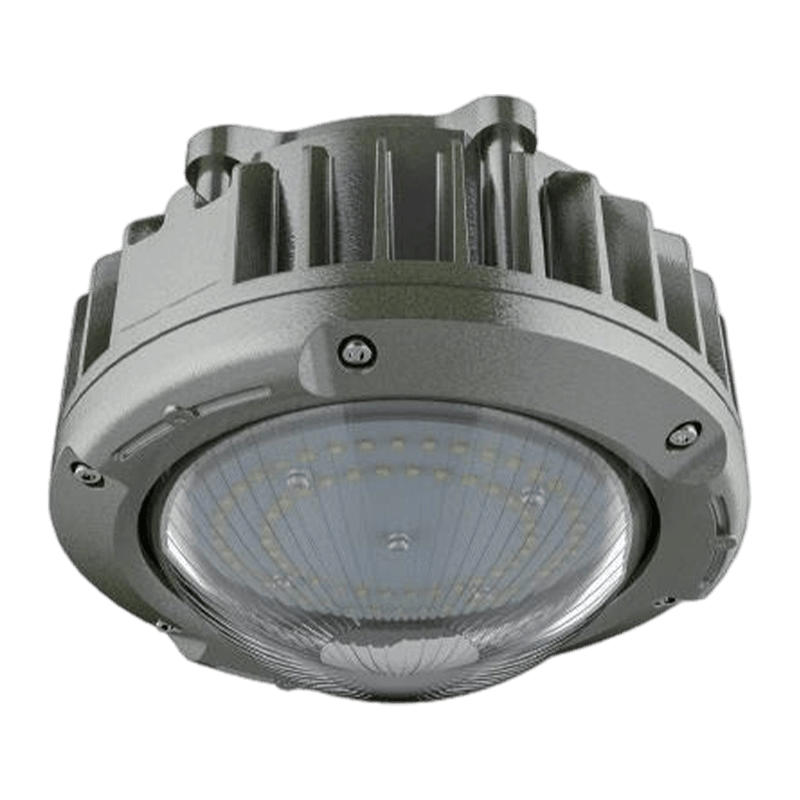
Industrial Safety Explosion-Proof LED Luminaire
Why Hazardous-Area Lighting Requires a Specialized Design
Industrial workspaces often contain equipment and substances that create risks not found in ordinary commercial buildings. Petrochemical installations may contain flammable gases and vapors. Grain processing facilities, chemical plants, and metalworking areas may generate combustible dust. Power plants and manufacturing lines may combine elevated temperatures, vibration, moisture, corrosive chemicals, and difficult maintenance conditions.
In such locations, an ordinary LED fixture may present unacceptable risks. Electrical contacts, switching components, driver failures, loose connections, or overheated surfaces can potentially become ignition sources. Even when an ordinary fixture has a high ingress protection rating, that rating alone does not establish explosion protection. IP protection describes resistance to dust and water ingress, whereas explosion-proof certification addresses how the enclosure contains or limits an internal ignition event and how surface temperatures are controlled.
A certified explosion-proof luminaire therefore requires a complete engineering approach. The enclosure must be designed with suitable flame paths, joints, seals, and mechanical strength. The driver must remain stable under the specified electrical conditions. The LED assembly must manage heat effectively so that external surface temperatures remain within the required classification. Cable entries, mounting arrangements, fasteners, and installation procedures must also be compatible with the hazardous-area requirements.
The Industrial Safety Explosion-Proof LED Luminaire addresses these conditions through a purpose-built enclosure and certified protection concept. It is developed for demanding industrial service rather than adapted from a general-purpose outdoor light. This distinction is important for users who need dependable illumination and documented compliance in regulated environments.
Core Product Specifications
The technical configuration provides a balance between efficiency, illumination quality, protection, and installation flexibility. The following table summarizes the main product parameters supplied for this model.
| Parameter | Specification |
| Product Type | Industrial safety explosion-proof LED luminaire |
| Rated Power | 30–80 W |
| Rated Voltage | AC 220 V, 50/60 Hz |
| Color Temperature | 5700 K |
| Luminous Efficacy | 110–130 lm/W |
| Enclosure Protection | IP66 |
| Explosion-Proof Marking | Ex db IIC T6 Gb; Ex tb IIIC T80°C Db |
| Dimensions | Diameter 225 × height 189 mm |
| Weight | Approximately 3.5 kg |
The 30–80 W power range allows project planners to select an appropriate output according to mounting height, spacing, task requirements, and illumination targets. A lower-power configuration may be suitable for access corridors, platforms, service areas, and equipment zones, while higher-power versions can support broader industrial work areas. Final selection should be confirmed through photometric calculations and the specific requirements of the installation.
The 5700 K color temperature produces a cool white appearance that supports visual clarity in industrial environments. Clear visibility is particularly important around control panels, machinery, pipework, platforms, emergency routes, inspection points, and maintenance areas. The selected color temperature can help users distinguish equipment details and identify potential hazards during routine work.
Explosion-Proof Protection for Gas and Dust Environments
The explosion-proof marking Ex db IIC T6 Gb identifies a high level of protection for hazardous gas environments. The “db” protection concept relates to a flameproof enclosure, while IIC represents the most demanding gas group within the commonly used gas classification system. The T6 temperature class indicates a maximum surface temperature of 85°C under the relevant conditions. The Gb equipment protection level is associated with equipment suitable for areas where an explosive gas atmosphere is likely to occur during normal operation in defined circumstances.
The additional marking Ex tb IIIC T80°C Db addresses combustible dust environments. Group IIIC covers conductive dust, which represents a demanding dust classification. The stated surface temperature of 80°C supports the requirements indicated by the marking, and the Db equipment protection level is intended for a high-risk dust environment within the applicable certification framework.
These markings are significant because they provide more information than a general statement such as “suitable for hazardous areas.” They indicate the protection concept, gas or dust group, temperature limitation, and equipment protection level. Project engineers and safety officers can use this information when evaluating whether the luminaire is appropriate for a specific zone, substance, ambient temperature, and installation method.
Users must still verify the complete certification documentation, installation conditions, cable gland requirements, ambient temperature range, and local regulations before placing the product into service. Explosion-proof equipment must be installed, inspected, and maintained by qualified personnel. Correct product selection and correct installation are equally important components of a safe lighting system.
High-Efficiency LED Performance
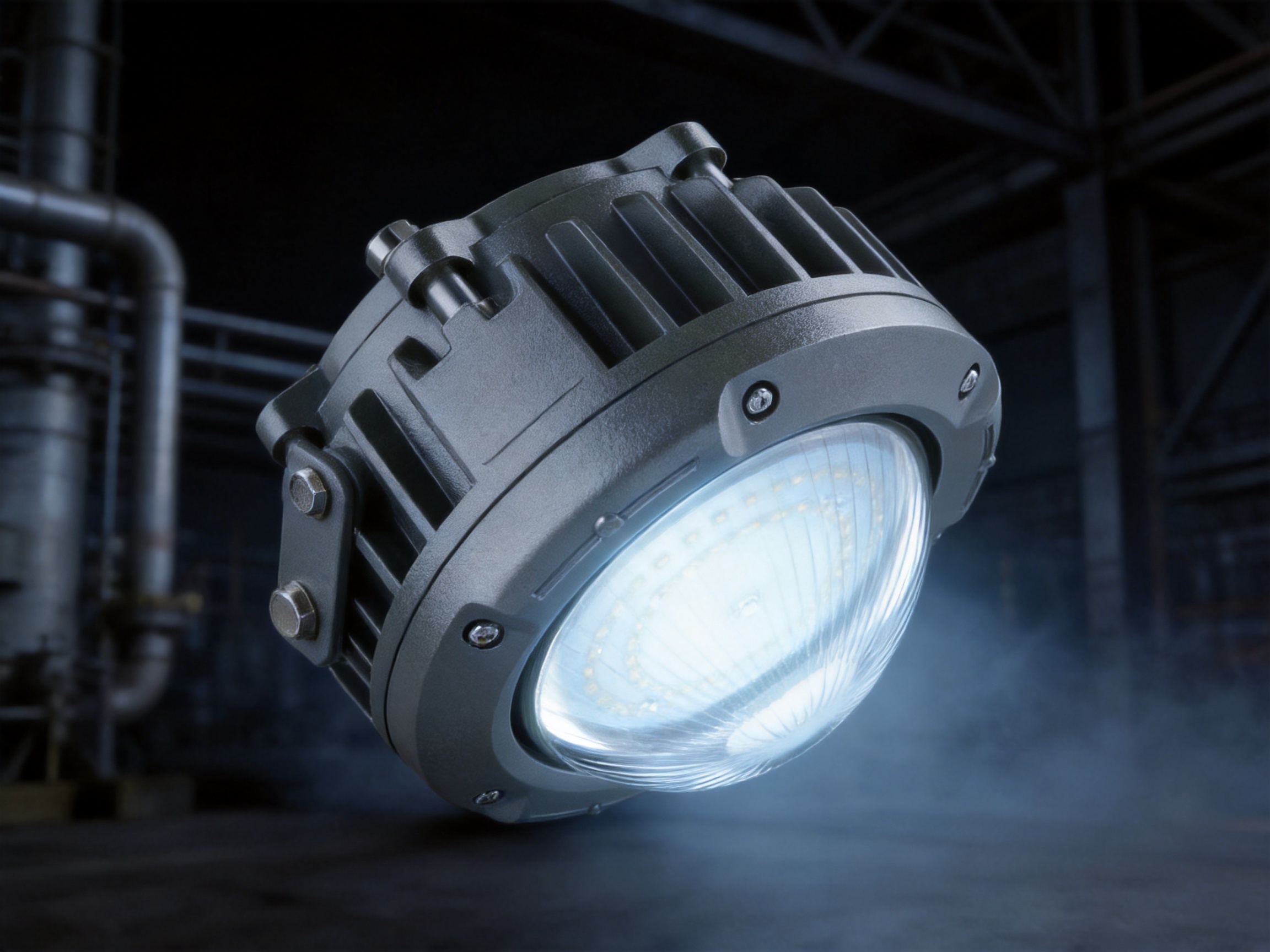
The luminaire delivers a stated luminous efficacy of 110–130 lm/W. This range indicates that a substantial proportion of the electrical input is converted into useful light rather than lost as heat. Compared with older fluorescent, metal halide, or high-pressure sodium systems, an efficient LED fixture can reduce energy consumption while maintaining suitable illumination levels.
Energy efficiency is especially valuable in industrial facilities where lighting operates for long periods. A railway maintenance area, refinery service platform, power plant, or manufacturing hall may require lighting continuously throughout multiple shifts. Even a moderate reduction in wattage can create meaningful annual savings when multiplied across hundreds of fixtures and thousands of operating hours.
LED technology also provides immediate illumination without the warm-up period associated with some traditional discharge lamps. This characteristic is useful in areas where lights are switched on for inspections, emergency access, maintenance work, or intermittent operations. Stable light output can improve working conditions and reduce delays during startup.
The 5700 K light appearance supports a bright, daylight-like visual environment. In industrial applications, good visibility can assist with reading labels, identifying warning signs, checking gauges, inspecting welds, locating tools, and navigating around equipment. Lighting quality does not replace workplace safety procedures, but it contributes to a clearer and more controlled working environment.
LED sources also avoid the frequent lamp replacement cycles associated with conventional bulbs. Reduced replacement frequency can lower the cost of consumables and minimize the need for maintenance personnel to enter hazardous or elevated areas. In an explosion-protected installation, every maintenance intervention may require additional planning, isolation procedures, permits, and safety controls. Long-life LED operation can therefore provide value beyond the direct energy saving.
Stable Driver Systems and Operational Reliability
The driver is one of the most important parts of an LED luminaire. It converts and regulates incoming electrical power so that the LEDs can operate consistently. In an industrial installation, the driver must withstand voltage variation, repeated operating cycles, thermal stress, and the electrical conditions created by nearby machinery.
This luminaire is supplied with a stable driver system selected as part of the overall product design. Integrating the driver with the LED board and enclosure allows the manufacturer to consider electrical performance and thermal performance together. The objective is to maintain consistent light output, avoid excessive flicker, and reduce stress on the LED components.
A stable driver also supports predictable operation throughout the product life cycle. Uncontrolled current can accelerate LED degradation, increase heat generation, and create uneven light output. By contrast, appropriate current regulation helps the fixture maintain its intended performance and supports a more reliable lighting environment for workers.
Industrial users should evaluate driver quality carefully because the driver can determine the practical reliability of an LED product. A fixture may have a high-efficiency LED chip but still experience premature failure if its driver is poorly matched, inadequately cooled, or insufficiently protected. The product’s integrated approach helps avoid this imbalance between the light source and the power system.
Thermal Management and Temperature Control
Heat is a central design consideration in explosion-proof LED lighting. LED components, electronic drivers, and internal connections all perform better when operating temperatures are controlled. Excessive heat can reduce light output, accelerate component aging, affect seals, and increase the risk of surface temperatures exceeding the required classification.
The Industrial Safety Explosion-Proof LED Luminaire uses optimized thermal management to move heat away from the LED assembly and driver. The enclosure and internal structure are designed to support heat dissipation while preserving the required protective characteristics. This balance is important because an explosion-proof housing must be mechanically secure and appropriately sealed, yet it must also prevent heat from accumulating around sensitive components.
Effective thermal management contributes to several product advantages. It helps preserve luminous output, supports driver stability, reduces thermal stress, and assists the fixture in meeting the applicable temperature classification. In a T6-rated application, temperature control is particularly important because the allowable surface temperature is tightly limited.
Thermal design also affects long-term maintenance. A fixture that operates at lower internal stress is less likely to experience rapid degradation of its electronic components. While actual service life depends on ambient temperature, operating hours, voltage conditions, installation, and maintenance, a well-managed thermal system creates a stronger foundation for reliable performance.
Users should avoid covering the luminaire, obstructing heat-dissipation surfaces, or installing it in a way that conflicts with the manufacturer’s instructions. Even a well-designed fixture requires sufficient clearance and proper orientation to perform as intended.
IP66 Protection for Harsh Industrial Conditions
The IP66 enclosure rating indicates protection against dust ingress and powerful water jets. This level of protection is valuable in outdoor industrial areas, washdown zones, coastal facilities, shipyards, utility plants, and locations exposed to airborne particles or heavy rain.
Dust can accumulate on electrical components and heat-dissipation surfaces, potentially affecting performance or creating maintenance problems. Water can enter through poorly sealed joints, cable connections, or damaged housings and may lead to corrosion, short circuits, or insulation deterioration. A properly designed IP66 enclosure helps limit these risks during normal service conditions.
IP66 protection also supports more consistent operation in environments where cleaning, weather, or process activity exposes fixtures to water and dust. However, IP protection is dependent on the complete installation. Cable glands, conduit connections, covers, fasteners, and any field-installed accessories must maintain the required level of sealing.
The combination of IP66 protection and explosion-proof construction makes this luminaire more versatile than a basic indoor industrial light. It can be considered for areas where moisture, dust, and hazardous atmospheres occur together, subject to the product certificate and project requirements.
Corrosion-Resistant Housing and Stainless-Steel Fasteners
Industrial lighting fixtures frequently operate in atmospheres that cause corrosion. Salt spray, humidity, chemical vapors, process residues, cleaning agents, and airborne pollutants can gradually attack exposed metal surfaces. Corrosion may weaken structural components, interfere with enclosure joints, damage threads, and make future maintenance difficult.
The exterior housing of this luminaire receives high-pressure electrostatic powder coating. This process creates a durable protective finish across the external surface. Powder coating is applied electrostatically and then cured to form a uniform layer with strong adhesion and resistance to common environmental stresses.
A consistent coating is especially important around edges, curves, and exposed areas where moisture may otherwise begin to attack the base material. The finish improves resistance to rust and supports the appearance of the luminaire during long-term outdoor or industrial use. It can also reduce the frequency of repainting and surface restoration compared with inadequately protected metal housings.
Fasteners are made of stainless steel, providing additional resistance to rust and environmental deterioration. Fasteners may appear small, but they are essential to enclosure integrity. Damaged or corroded screws can make inspection difficult, compromise closure pressure, or increase the risk of improper reassembly. Stainless-steel hardware supports the serviceability and structural stability of the fixture over time.
The combination of powder-coated housing and stainless-steel fasteners gives the luminaire an advantage over products that rely on untreated metal, low-quality paint, or ordinary steel hardware. In coastal, marine, chemical, and heavy industrial applications, the details of surface protection can have a direct impact on maintenance cost and service continuity.
Compact Mechanical Construction
With dimensions of approximately 225 mm in diameter and 189 mm in height, the luminaire provides a compact form factor for industrial installation. Its weight of approximately 3.5 kg can simplify handling compared with larger traditional fixtures, particularly during replacement, retrofit, or installation at elevated locations.
A compact fixture can also reduce interference with surrounding equipment. Industrial sites often contain pipe racks, cable trays, ventilation ducts, cranes, conveyors, structural beams, and process machinery. A smaller housing can provide greater flexibility when selecting mounting points and may help maintain the required clearance from adjacent equipment.
The mechanical design is intended to withstand the practical demands of industrial service. The enclosure protects internal electrical components while providing a stable platform for mounting. Its shape and proportions support heat dissipation, enclosure strength, and installation convenience without creating unnecessary bulk.
When replacing an older fixture, the compact size may assist with retrofit planning. However, the mounting arrangement, light distribution, electrical connection, and hazardous-area classification must be checked carefully. A replacement should not be selected solely by physical size; it must also satisfy illumination calculations and certification requirements.
Applications Across Industrial Sectors
Railways and Transit Infrastructure
Railway facilities include tunnels, maintenance depots, traction substations, platforms, service corridors, signal equipment areas, and rolling-stock workshops. These sites may experience vibration, dust, moisture, oil residues, and restricted access for maintenance. Reliable lighting helps workers inspect vehicles, tracks, cables, mechanical assemblies, and safety equipment.
The luminaire’s IP66 protection, corrosion-resistant finish, and explosion-proof design can support selected railway areas where hazardous substances or combustible dust are present. Its efficient LED output can also help reduce energy use across facilities that operate day and night.
Power Generation Plants
Power generation facilities contain turbines, boilers, fuel systems, transformers, control rooms, service platforms, and auxiliary equipment. Depending on the plant type, areas may contain fuel vapors, lubricants, dust, elevated temperatures, or outdoor weather exposure.
In these environments, lighting must remain dependable around critical equipment and access routes. The luminaire’s stable driver, thermal management, and industrial enclosure support continuous operation in demanding service areas. The applicable certification marking helps plant engineers evaluate whether the fixture is suitable for a defined hazardous location.
Petrochemical and Chemical Facilities
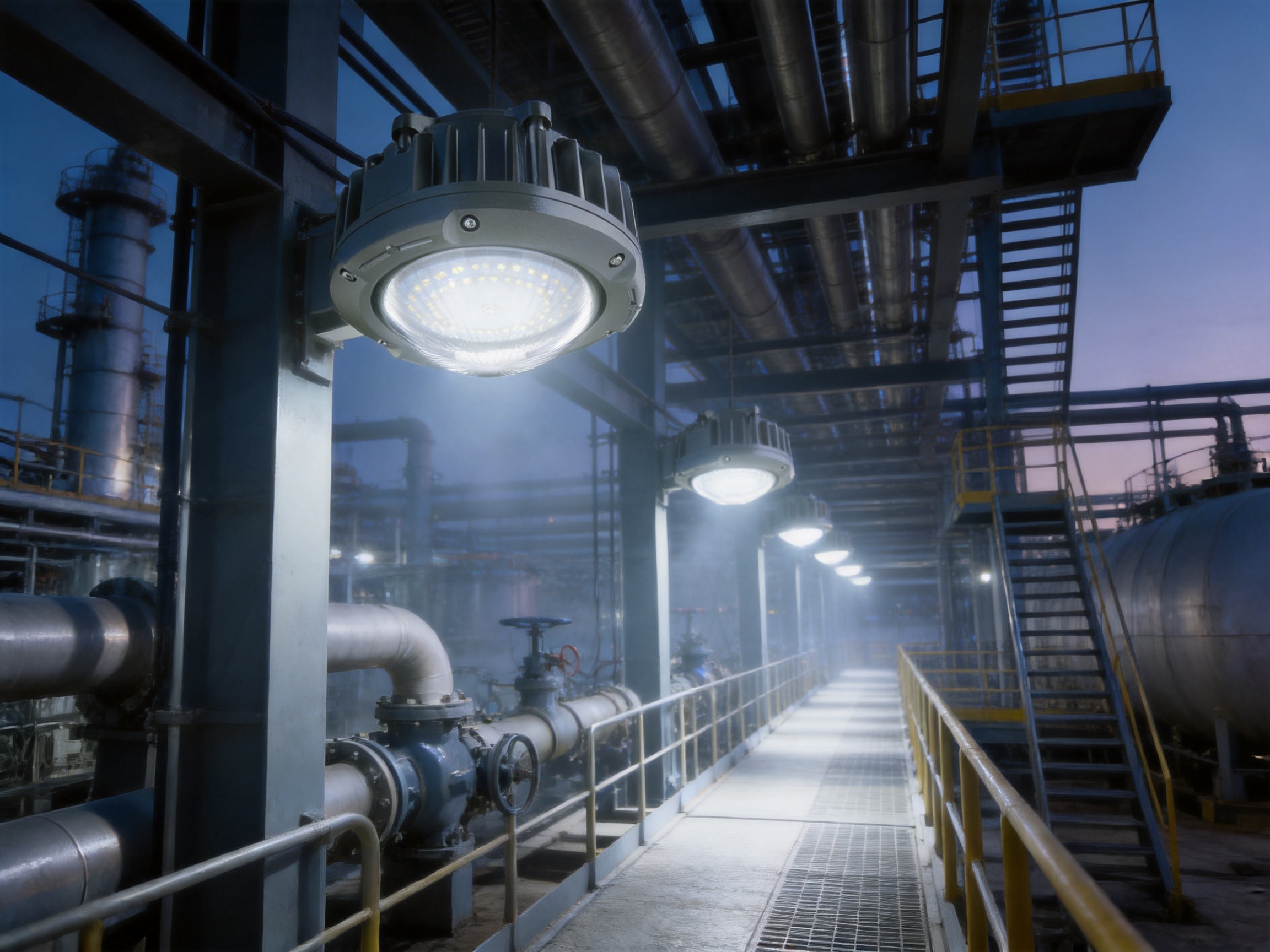
Petrochemical plants, refineries, storage terminals, blending facilities, and chemical processing sites commonly contain flammable gases, vapors, and liquids. Lighting may be installed around tanks, pumps, pipe racks, loading stations, processing units, and inspection platforms.
The IIC gas-group marking is particularly relevant when a project involves demanding gas conditions. The T6 temperature classification and flameproof protection concept provide important information for safety review. The high-quality external finish and stainless-steel fasteners can also be valuable in corrosive atmospheres, although the complete chemical compatibility and environmental conditions must always be evaluated.
Metallurgy and Heavy Manufacturing
Metallurgical facilities may combine high temperatures, metal dust, vibration, impact, oil, and intense production schedules. Steel mills, foundries, aluminum plants, and fabrication workshops require clear lighting around furnaces, conveyors, cranes, inspection stations, and material-handling zones.
The product’s controlled surface temperature, rugged enclosure, and high-efficiency output are suitable features for consideration in such applications. Its compact size can help when installing fixtures around dense equipment layouts, while the reduced maintenance requirement of LED technology can limit disruption to production operations.
Shipbuilding and Marine-Related Operations
Shipyards and marine facilities expose equipment to salt, humidity, wind, rain, metal dust, coatings, and demanding mechanical work. Lighting may be installed in workshops, machinery spaces, storage areas, construction zones, and service platforms.
The powder-coated housing, stainless-steel fasteners, and IP66 protection help address environmental challenges associated with marine-adjacent conditions. Project teams should also consider salt exposure, mounting hardware, cable entry protection, and the required inspection schedule when applying explosion-proof luminaires in these areas.
Advantages Compared with Conventional Industrial Fixtures
The first major advantage is the combination of energy efficiency and hazardous-area protection. Conventional explosion-proof fixtures may rely on older light sources with lower efficacy, longer startup times, or higher maintenance requirements. This LED luminaire provides 110–130 lm/W while retaining a certified protective enclosure concept.
The second advantage is reduced maintenance exposure. Traditional lamps may require frequent replacement, and replacing a lamp in a hazardous area can involve shutdowns, permits, access equipment, and specialized procedures. Long-life LED components can reduce the number of interventions required during the operating cycle.
The third advantage is improved thermal control. Some competing fixtures may focus primarily on enclosure strength without optimizing the relationship between the LED board, driver, and heat-dissipation structure. This product is designed with thermal management as a core part of the system, supporting stable operation and the T6 temperature classification indicated by its marking.
The fourth advantage is environmental durability. High-pressure electrostatic powder coating and stainless-steel fasteners provide stronger protection against corrosion than ordinary painted housings and standard steel hardware. This can be especially important in chemical plants, coastal facilities, shipyards, and outdoor industrial sites.
The fifth advantage is configuration flexibility. The 30–80 W range allows customers to match output to the application instead of selecting a single oversized fixture for every area. In addition, OEM and ODM services can include power adjustment, certification support, and mounting system design.
The sixth advantage is a compact and manageable form. A smaller, lighter luminaire can simplify handling, reduce structural demands, and fit more easily into congested industrial layouts. This can be useful for both new projects and retrofit installations.
Manufacturing Capabilities and Quality Control
The manufacturer behind this product operates as a professional lighting producer in Ningbo, China, with experience in outdoor, industrial, municipal, and specialized lighting applications. Its product range includes LED street lights, tunnel lights, high-bay lights, linear lights, garden lights, solar lights, grow lights, and explosion-proof lights.
The company maintains ISO 9001, ISO 14001, and ISO 45001 management certifications. These standards represent structured approaches to quality management, environmental management, and occupational health and safety. For industrial customers, such systems provide a framework for consistent production, documented procedures, process control, and continual improvement.
Relevant products are certified by CB and CE according to the applicable product requirements. Certification does not replace project-level engineering or installation compliance, but it provides an important foundation for customers evaluating products for international procurement and industrial applications.
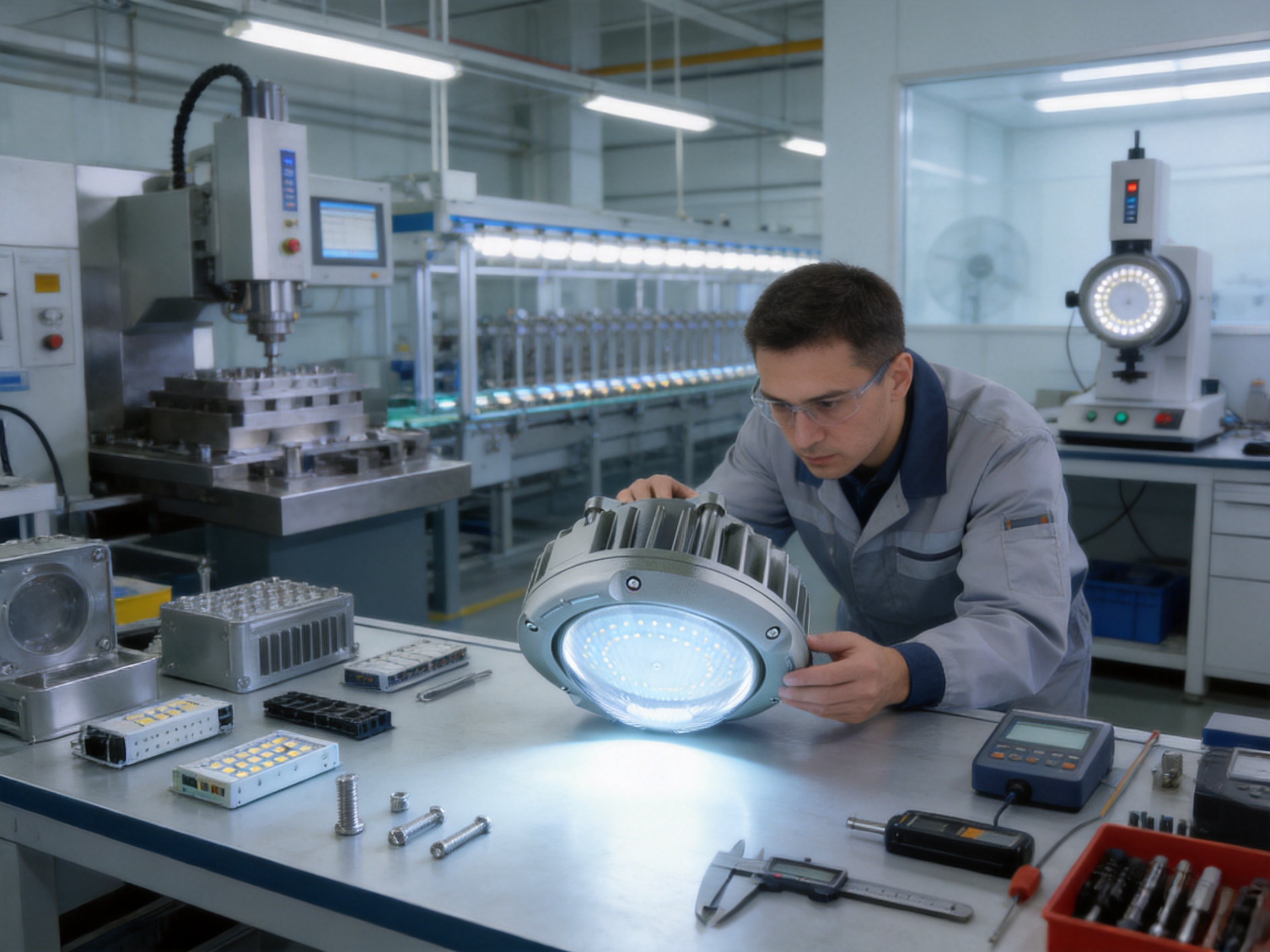
The manufacturing operation includes die-casting and CNC machining equipment, aging lines, and goniophotometers. These capabilities support the development and production of precise housings, machined components, stable electronic assemblies, and measured photometric performance.
Die-Casting and Housing Production
Die-casting technology allows the manufacturer to create repeatable metal housings with controlled dimensions and integrated structural features. A well-produced die-cast enclosure can provide strength, consistent wall geometry, and suitable surfaces for heat dissipation and coating.
Dimensional consistency is particularly important for explosion-proof lighting. Enclosure joints, covers, threaded components, and mounting interfaces must be produced within controlled tolerances. Stable tooling and repeatable die-casting processes help support the uniformity required for reliable assembly.
CNC Machining and Precision Components
CNC machining is used to achieve precise dimensions on selected metal components and interfaces. This capability supports the production of threads, mounting features, joint surfaces, and other parts that require closer dimensional control than a basic casting process can provide.
Precision machining can also improve repeatability during assembly and maintenance. When components fit correctly, the manufacturer can better control sealing, fastening, alignment, and mechanical strength. These details are essential in a product where enclosure integrity is directly connected to safety performance.
Aging and Reliability Testing
Aging lines are used to operate products under controlled conditions before shipment. This process can help identify early-stage issues in LED modules, drivers, wiring, and assembly. Detecting problems before delivery improves product consistency and reduces the possibility of premature field failure.
For industrial lighting, aging is particularly valuable because customers often expect fixtures to operate for long periods with minimal intervention. A controlled aging process provides an additional quality-control step between assembly and shipment.
Photometric Measurement
Goniophotometers measure the light distribution of luminaires. This equipment helps manufacturers evaluate luminous intensity, beam distribution, total output, and other photometric characteristics. Accurate measurement supports product selection, lighting calculations, and DIALux design work.
Photometric data enables project planners to position fixtures more effectively. Instead of relying only on nominal wattage, engineers can evaluate mounting height, spacing, target illuminance, uniformity, and glare considerations. This can reduce over-lighting, avoid dark areas, and improve the overall efficiency of the installation.
OEM and ODM Support for Project-Specific Requirements
Hazardous-area lighting projects often involve requirements that differ from one facility to another. A customer may need a specific power level, mounting bracket, cable entry arrangement, light distribution, color temperature, certification package, or enclosure finish. Standard products may provide a useful starting point, but customization can improve project compatibility.
OEM and ODM services for this luminaire include certification support, power adjustment, and mounting system design. Power adjustment allows the lighting output to be aligned with the area’s actual requirements. This can help prevent unnecessary energy consumption and may simplify the replacement of an existing fixture with a different wattage.
Mounting system design is useful when the installation uses special brackets, poles, walls, ceilings, pipe racks, or equipment structures. A mounting solution designed around the site can improve mechanical stability and reduce installation complications. The final configuration must always preserve the certified protection characteristics and comply with the relevant engineering requirements.
Certification support can assist customers during technical review and procurement. Industrial projects frequently require documentation such as certificates, test reports, product drawings, electrical specifications, material information, and installation instructions. A manufacturer that can coordinate these documents helps reduce communication gaps between the supplier, consultant, contractor, and end user.
The company also provides mold design, DIALux lighting solutions, SKD and CKD customization, and delivery services. These capabilities support customers seeking a one-stop supply chain for lighting products and related manufacturing requirements.
Designing a Lighting System with This Luminaire
Successful use of an explosion-proof luminaire begins with an assessment of the installation area. Engineers should identify the hazardous zone, the gases or dusts present, the required equipment group, the temperature class, ambient temperature, humidity, corrosion exposure, mounting height, and expected operating schedule.
After the hazardous-area assessment, the lighting design should establish the required illuminance and uniformity. Different areas may require different lighting levels. A walkway, equipment platform, inspection area, workshop, loading point, and emergency route should not automatically use the same fixture spacing or power level.
Photometric files and measured light-distribution data can be used in DIALux or another recognized lighting design program. The design should consider the luminaire’s actual output, beam pattern, mounting angle, surface reflectance, obstructions, and maintenance factor. This approach is more accurate than estimating performance from wattage alone.
Installation height and spacing have a direct effect on uniformity. Fixtures mounted too far apart may create dark zones, while excessive overlap may waste energy and increase glare. Correct orientation is also important around vertical surfaces, machinery, tanks, and workstations.
Electrical design should verify the AC 220 V, 50/60 Hz supply and confirm that the circuit protection, cable type, glands, conduits, grounding, and isolation devices meet the project requirements. Hazardous-area cable entries must be selected according to the certificate and local regulations.
Maintenance planning should be considered before installation. The fixture should remain accessible for inspection without creating unnecessary exposure to hazardous conditions. Operators should establish procedures for cleaning, checking fasteners, examining cable entries, and confirming that the enclosure remains undamaged.
Installation and Maintenance Considerations
Only qualified personnel should install or service explosion-proof lighting. Before opening the enclosure or disconnecting the fixture, the power supply must be isolated according to the site’s safety procedures. In hazardous environments, it may be necessary to confirm that the area is free from dangerous concentrations of gas or dust before work begins.
The enclosure, flameproof joints, seals, and fasteners should not be modified without authorization. Drilling, grinding, repainting critical surfaces, replacing screws with non-approved hardware, or using unsuitable cable glands may compromise the certification. Any replacement component should be compatible with the product documentation.
Routine inspection should include the housing, coating, lens or light-transmitting section, cable entries, mounting bracket, fasteners, and visible wiring. Signs of impact, cracking, corrosion, loose hardware, overheating, or water ingress should be addressed promptly.
Cleaning should be performed using methods and materials compatible with the external finish and enclosure. Excessive pressure, aggressive solvents, or abrasive tools may damage coatings, labels, seals, or transparent components. The maintenance team should follow the manufacturer’s instructions and the site’s hazardous-area procedures.
Because the LED source is integrated, service generally focuses on the complete fixture rather than frequent lamp replacement. If the LED module or driver requires replacement, the work should be carried out with approved parts and by trained personnel. Maintaining the original protective configuration is essential.
Sustainability and Total Cost of Ownership
Energy efficiency is one part of the product’s sustainability value. A 110–130 lm/W luminaire can help reduce the electricity required to achieve a target illumination level. Lower energy demand may reduce operating costs and indirectly lower the environmental impact associated with power generation.
Long-term durability also contributes to resource efficiency. A fixture that remains operational for an extended period may require fewer replacement products, fewer packaging materials, and fewer transport movements. Reduced maintenance can also limit the need for access vehicles, lifting equipment, and work interruptions.
The total cost of ownership should include more than the initial purchase price. Industrial buyers should consider energy use, maintenance labor, replacement frequency, access requirements, downtime, spare parts, corrosion resistance, and the cost of safety procedures. A robust explosion-proof LED luminaire may provide greater value when these factors are considered over the complete operating period.
ISO 14001 certification indicates that environmental management is included in the manufacturer’s organizational framework. While the environmental performance of a specific project depends on many factors, structured environmental management can support more responsible material selection, production control, waste reduction, and process improvement.
Procurement Guidance for Industrial Buyers
When purchasing explosion-proof lighting, buyers should request complete technical documentation rather than relying on a product name or a general marketing statement. Important documents may include the explosion-proof certificate, product datasheet, dimensional drawing, installation instructions, photometric files, wiring diagram, inspection records, and conformity information.
The buyer should confirm that the marking matches the hazardous-area classification. The gas group, dust group, temperature class, equipment protection level, and protection concept must be evaluated against the actual facility conditions. If the area contains multiple substances, the most demanding applicable condition may determine the required product classification.
Electrical compatibility should also be checked. This product is specified for AC 220 V at 50/60 Hz. Voltage stability, system frequency, circuit protection, grounding, and surge conditions should be reviewed by the project’s electrical engineer.
Environmental conditions deserve equal attention. The customer should communicate ambient temperature, humidity, salt exposure, chemical vapors, dust type, vibration, impact risk, cleaning method, and installation location. This information helps confirm whether the standard configuration is adequate or whether a customized finish, bracket, cable entry, or mounting design is required.
For large projects, buyers can request samples, pilot installations, photometric verification, aging information, and quality-control documentation. A clear approval process reduces the risk of selecting a product that looks suitable but does not meet the project’s technical or certification requirements.
Frequently Asked Questions
What is the rated power range of the luminaire?
The rated power range is 30–80 W. The appropriate version depends on the required illumination, mounting height, spacing, light distribution, and application area. A photometric design should be completed before final selection.
What input voltage does the product use?
The listed rated voltage is AC 220 V at 50/60 Hz. The supply system, circuit protection, grounding, and connection accessories should be verified by a qualified electrical professional before installation.
What explosion-proof marking does the fixture carry?
The stated marking is Ex db IIC T6 Gb; Ex tb IIIC T80°C Db. This marking indicates a flameproof gas protection concept and dust protection for demanding gas and dust groups, with the temperature and equipment protection levels shown. The complete certificate and site classification must be reviewed before use.
Can it be used in both gas and dust hazardous areas?
The listed marking includes protection information for gas and combustible dust environments. Whether it is suitable for a specific location depends on the area classification, substance characteristics, ambient conditions, installation method, and applicable regulations.
What does the IP66 rating mean?
IP66 indicates protection against dust ingress and powerful water jets. The rating applies to the complete correctly assembled enclosure. Cable glands, conduits, covers, and field connections must be installed properly to preserve the intended protection.
Why is the T6 temperature classification important?
T6 indicates a controlled maximum surface temperature within the relevant certification system. This is important in areas where flammable gases or vapors may be present because the surface temperature must remain below the ignition temperature of the applicable substance under the specified conditions.
What color temperature does the luminaire provide?
The listed color temperature is 5700 K. This produces a cool white, daylight-like appearance that can support visibility around machinery, platforms, control equipment, inspection areas, and industrial workstations.
How efficient is the LED system?
The stated luminous efficacy is 110–130 lm/W. Actual delivered light depends on the selected power, optical configuration, operating conditions, and product version. Project calculations should use the applicable photometric data.
How does the product resist corrosion?
The exterior housing receives high-pressure electrostatic powder coating, and the fasteners are made of stainless steel. These features improve resistance to rust and corrosion in harsh environments. The exact suitability for a chemical or marine atmosphere should be confirmed for the project conditions.
Can the luminaire be customized?
OEM and ODM support includes certification assistance, power adjustment, and mounting system design. Customers can discuss project-specific requirements with the manufacturer to determine whether a modified configuration is technically and commercially feasible.
Is the product suitable for outdoor industrial use?
The IP66 enclosure rating and corrosion-resistant construction make it suitable for consideration in many outdoor industrial applications. The final decision should also account for temperature, salt spray, chemicals, wind loading, mounting structure, hazardous-area classification, and local requirements.
What manufacturing equipment supports product quality?
The manufacturer operates die-casting and CNC machining equipment, aging lines, and goniophotometers. These resources support precision housing production, component processing, reliability screening, and photometric measurement.
Does the manufacturer provide lighting design services?
The company provides DIALux lighting solutions and related technical support. A lighting design can help determine fixture quantity, spacing, mounting height, illumination, and uniformity for a specific industrial area.
What should be checked before installation?
Users should check the certification, hazardous-area classification, voltage, cable entries, mounting system, grounding, enclosure condition, ambient temperature, and installation instructions. Installation and maintenance should be performed by qualified personnel.
Conclusion
The Industrial Safety Explosion-Proof LED Luminaire is designed for industrial sites where reliable lighting and hazardous-area protection must work together. Its main strengths include a 30–80 W power range, 110–130 lm/W luminous efficacy, AC 220 V operation, 5700 K cool white light, IP66 protection, and the stated Ex db IIC T6 Gb; Ex tb IIIC T80°C Db marking.
The product also benefits from a corrosion-resistant powder-coated housing, stainless-steel fasteners, stable driver systems, optimized thermal management, and a compact 225 × 189 mm form. These features make it a practical option for railways, power plants, petrochemical systems, metallurgy, shipbuilding, and other demanding industrial applications.
Compared with conventional industrial fixtures, the luminaire offers the combined advantages of efficient LED performance, reduced maintenance requirements, controlled operating temperature, environmental protection, and customizable project support. Its value is further strengthened by the manufacturer’s die-casting, CNC machining, aging, photometric testing, mold development, OEM/ODM, and lighting design capabilities.
For industrial buyers, the most important step is to match the product’s certification and configuration with the actual installation conditions. When correctly selected, installed, and maintained, this explosion-proof LED luminaire can support safer work areas, lower operating costs, improved visibility, and more dependable industrial lighting performance.
References
International Electrotechnical Commission. Explosive Atmospheres: Equipment Protection Concepts and Classification Principles.
International Electrotechnical Commission. Degrees of Protection Provided by Enclosures for Electrical Equipment.
International Electrotechnical Commission. Photometric and Performance Considerations for LED Luminaires.
International Organization for Standardization. Quality Management Systems: Requirements and Implementation Principles.
International Organization for Standardization. Environmental Management Systems: Requirements with Guidance for Use.
International Organization for Standardization. Occupational Health and Safety Management Systems: Requirements and Guidance.
Industrial lighting design practice. Principles of illuminance, uniformity, maintenance factors, glare control, and hazardous-area installation.
Product: Industrial Safety Explosion-Proof LED Luminaire

Solusi Kustom & OEM untuk Merek Pencahayaan Global
Hak Cipta © Cixi HuaSheng Lighting Co., Ltd. Semua Hak Dilindungi Undang-undang.
Pemasok Cetakan Die-Casting
