 English
 中文简体
 русский
 Français
 Español
 عربى
 Indonesia

High-Brightness LED Street Lighting for Efficient Urban Roadway Projects
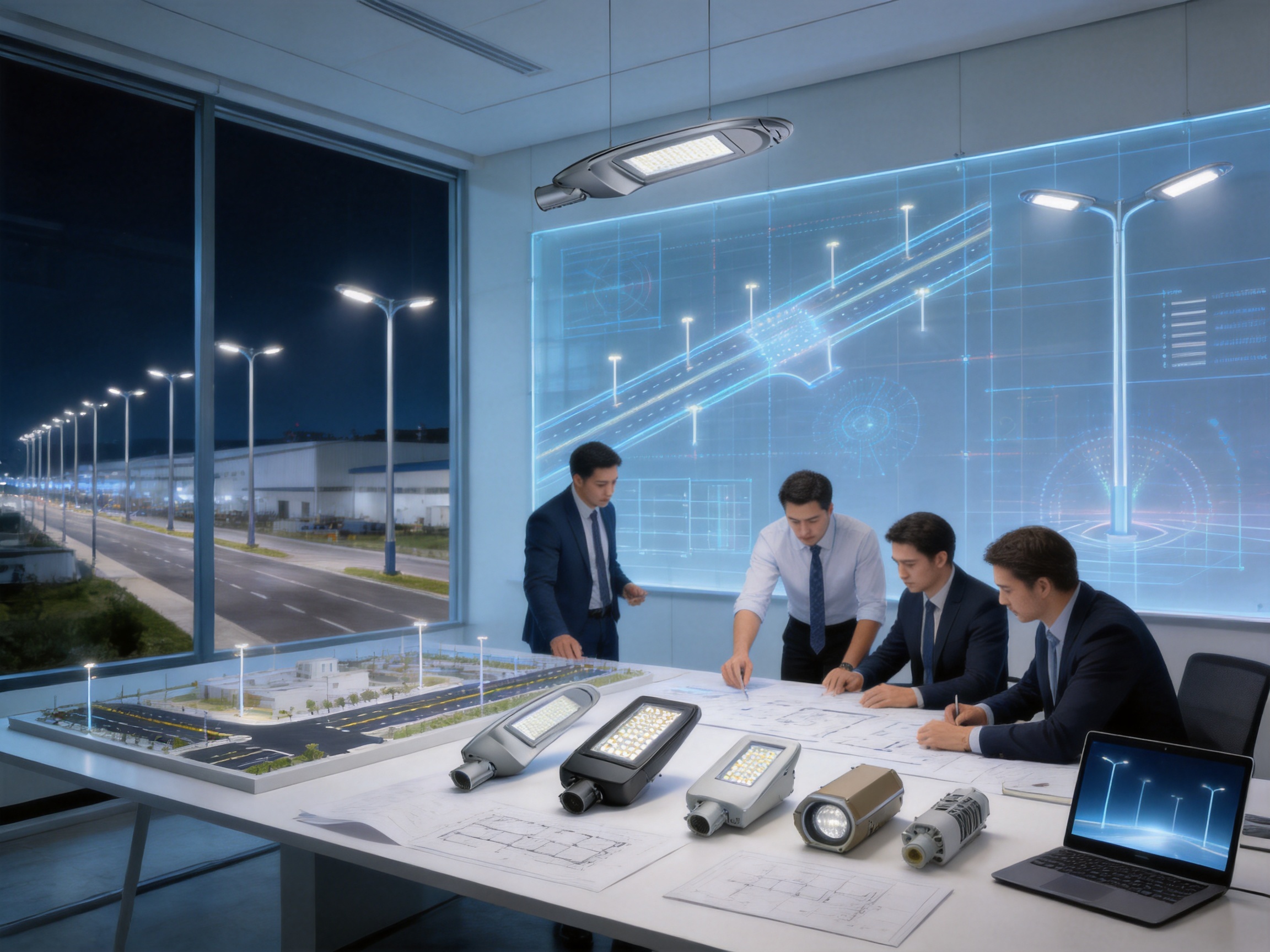
Urban roads, industrial parks, residential streets, logistics areas, and municipal infrastructure projects all require dependable lighting after sunset. A roadway lighting fixture must do more than produce a high lumen output. It must distribute light effectively, operate reliably in changing weather conditions, manage heat over long operating periods, simplify maintenance, and provide project flexibility for different road layouts. At the same time, buyers are increasingly expected to reduce energy consumption, control lifecycle costs, and select equipment that supports more sustainable infrastructure development.
The High Brightness LED Street Light BTLED-2402 is designed for these practical requirements. With a power range of 20W to 240W, it can be considered for various outdoor roadway applications, from smaller access roads and pedestrian-oriented areas to larger streets and infrastructure projects requiring stronger illumination. Its design combines efficient LED performance, optimized heat dissipation, a durable housing structure, and customization options for different project specifications.
Rather than treating street lighting as a simple replacement for conventional lamps, the BTLED-2402 is positioned as a complete roadway lighting solution. Its value comes from the combination of brightness, operating efficiency, project adaptability, and manufacturing support. These characteristics are particularly important for contractors, lighting distributors, municipal buyers, engineering companies, and original equipment customers seeking a dependable product platform rather than a one-size-fits-all fixture.
1. The Role of High-Quality Street Lighting in Modern Infrastructure
Street lighting has a direct relationship with visibility, traffic movement, public comfort, and the effective use of outdoor spaces. Poorly designed lighting can create dark areas, excessive glare, uneven illumination, or unnecessary energy consumption. In contrast, a well-selected LED street light can support safer movement, improve the visual quality of an urban environment, and reduce the frequency of maintenance interventions.
Modern road projects also operate under increasing economic and environmental pressure. Electricity costs can represent a significant portion of a lighting system’s total operating expense, especially when hundreds or thousands of fixtures are installed. Maintenance can be equally important. A fixture that requires frequent lamp replacement, difficult access, or repeated repairs can create labor costs and traffic-management challenges that exceed the original equipment price.
LED technology addresses many of these concerns through efficient light generation, long service potential, rapid start-up, and flexible control possibilities. However, not every LED street light provides the same practical value. The quality of the housing, thermal path, optical design, driver arrangement, sealing, production consistency, and after-sales support all influence real-world results. This is why buyers must evaluate the complete product and manufacturing system rather than focusing only on nominal wattage.
The BTLED-2402 is intended for buyers who need a robust outdoor fixture with a broad power range and the flexibility to adapt the product to specific applications. Its design makes it suitable for urban roadway lighting and outdoor infrastructure projects where stable illumination, lower energy use, and long-term operating efficiency are important selection criteria.
2. Product Overview of the BTLED-2402
The High Brightness LED Street Light BTLED-2402 is an LED roadway lighting fixture developed for outdoor use. Its listed power range is 20W to 240W, allowing project planners to select a suitable configuration according to road width, mounting height, spacing, traffic conditions, and required illumination levels.
The broad power range is one of the product’s principal advantages. A smaller road, service lane, pedestrian access route, or parking-related area may require a lower-power version, while a wider municipal road, industrial access road, or major outdoor infrastructure project may call for a higher-power configuration. Instead of using entirely different product families for each situation, buyers can work with a consistent platform and adjust the configuration to the project.
| Product Attribute | Specification or Characteristic |
| Product name | High Brightness LED Street Light BTLED-2402 |
| Product category | LED Street Light |
| Power range | 20W-240W |
| Primary application | Urban roads and outdoor infrastructure projects |
| Core performance focus | Stable illumination, energy efficiency, heat dissipation, and outdoor durability |
| Customization availability | Power configuration, housing finish, and optical distribution |
| Manufacturing support | OEM/ODM, mold design, lighting solutions, and DIALux design support |
The product description emphasizes stable illumination rather than short-term brightness alone. This distinction is important. A street light must maintain dependable output across repeated operating cycles and changing outdoor conditions. Consistency contributes to predictable project performance and allows lighting designers to calculate layouts more effectively.
The fixture also incorporates a durable housing structure. Outdoor lighting equipment is exposed to rain, dust, temperature changes, wind, and contamination. A strong housing helps protect internal components and supports the fixture’s long-term suitability for demanding environments. The housing finish can also be customized, giving project buyers more flexibility when coordinating the appearance of a road, industrial complex, residential development, or municipal installation.
Optical distribution is another available customization area. Different roads and outdoor spaces do not have identical lighting requirements. A narrow road may need a distribution pattern that directs light along the roadway, while a broad area may require a different arrangement to achieve balanced coverage. The ability to customize optical distribution can improve design compatibility and reduce the risk of installing a fixture that is technically powerful but poorly matched to the site.
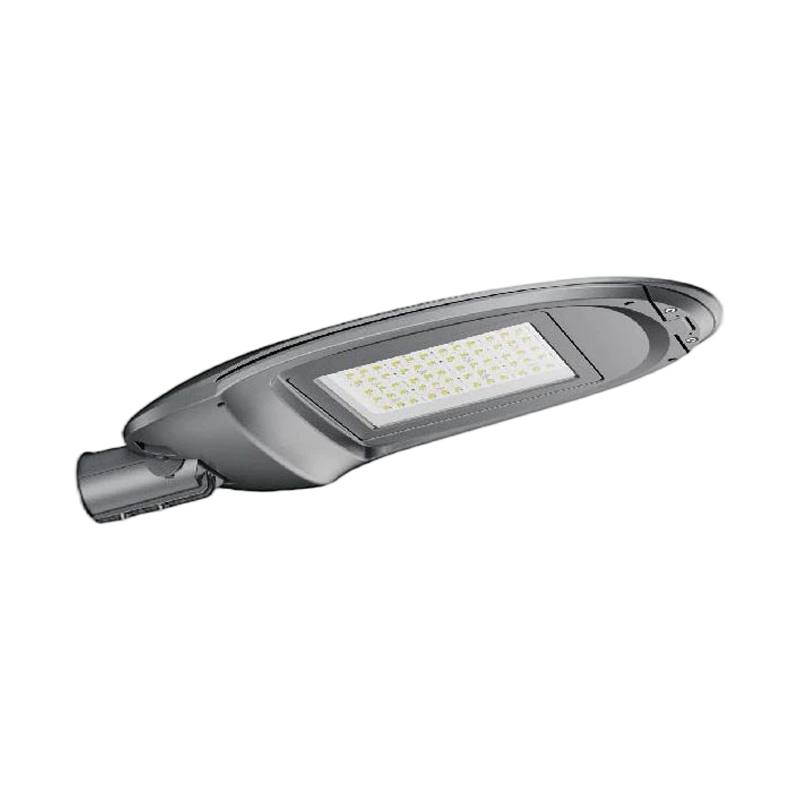
High Brightness LED Street Light BTLED-2402
3. Energy Efficiency and the Operating Value of LED Technology
Energy efficiency is one of the strongest reasons for selecting LED street lighting. Compared with older outdoor lighting technologies, LED fixtures can provide high-quality illumination with a more efficient conversion of electrical energy into useful light. The result can be lower electricity consumption for an equivalent lighting objective, especially when LED fixtures are selected and designed correctly.
The BTLED-2402 is developed to help reduce energy consumption while improving nighttime visibility. Its power range gives engineers the opportunity to avoid over-lighting smaller areas. Selecting an appropriate wattage is essential because excessive power does not automatically produce better lighting. The correct balance depends on the road geometry, pole height, fixture spacing, surface reflectance, traffic requirements, and optical distribution.
A 20W configuration may be appropriate for a compact outdoor area, access route, or lower-demand application, while a higher-power configuration can support larger roadway projects. The availability of versions up to 240W provides the flexibility needed for stronger illumination requirements. This broad selection helps project planners develop more consistent specifications across different zones.
Energy savings should be assessed across the complete lifecycle rather than by comparing purchase prices alone. A fixture that uses less electricity over many years can reduce the total cost of ownership. When multiplied across a large installation, even a modest reduction in consumption may create meaningful financial benefits. Lower energy use also contributes to reduced operational emissions, supporting sustainability goals for municipalities, industrial organizations, and property developers.
LED street lights can also offer advantages through instant operation and controllability. Although the product information does not specify a particular control system, the LED platform is compatible in principle with project-level discussions about dimming, scheduling, or intelligent lighting integration where the selected configuration and control architecture support those functions. Buyers should confirm all control requirements during technical planning and OEM or ODM discussions.
Matching Wattage to the Application
Choosing the correct wattage is not simply a matter of selecting the largest available model. Overpowered lighting can cause excessive brightness, glare, wasted energy, and unnecessary project expense. Underpowered lighting can create dark zones and fail to meet the intended visual requirements. A suitable selection should be based on a lighting calculation that considers mounting height, spacing, road width, traffic conditions, target illumination, and uniformity.
The BTLED-2402’s 20W-240W range allows the same general product family to be considered for a wide variety of applications. This is useful for distributors and contractors who want to simplify procurement while retaining sufficient configuration flexibility. It also supports phased projects in which different sections of a development require different lighting levels.
Efficiency Beyond Electrical Consumption
Efficiency also includes maintenance efficiency, installation planning, inventory management, and engineering time. A product that can be adapted for several applications may reduce the number of separate models a buyer must evaluate and stock. A manufacturer that can provide optical design support may help shorten the process of converting a preliminary lighting concept into a practical product specification.
For large projects, the value of a product is therefore connected to the complete workflow. The BTLED-2402 is supported by a manufacturing organization that offers lighting solutions, DIALux designs, OEM/ODM services, mold design, and SKD/CKD customization. These services can help customers address not only the fixture itself but also the engineering, packaging, production, and delivery requirements associated with a project.
4. Stable Illumination for Urban and Outdoor Applications
Stable illumination is a central requirement for roadway lighting. Roads must be visible throughout the operating period, and the lighting distribution should remain consistent enough to support comfortable visual adaptation for drivers, cyclists, and pedestrians. Variations in brightness, poorly controlled light, and localized dark spots can reduce the quality of the installation even when the total lumen output appears high.
The BTLED-2402 is designed around stable LED performance. This means that the product is intended to provide reliable illumination for urban roads and outdoor infrastructure projects, where the lighting system may operate for many hours each night and throughout the year. Consistency is especially important in locations where access for maintenance is difficult or where traffic disruption must be minimized.
Optical distribution has a major effect on perceived performance. The same electrical power can produce very different results depending on how light is directed. A properly selected distribution pattern can place more light where it is needed and reduce unnecessary spill into adjacent areas. This can improve the effectiveness of each watt and help project designers meet lighting objectives without simply increasing fixture power.
The availability of optical distribution customization is therefore a significant advantage over generic fixtures with limited configuration options. It allows customers to discuss the relationship between the product and the site layout. For example, a roadway with closely spaced poles may need a different distribution from a road with taller poles and wider spacing. Industrial yards, perimeter roads, residential streets, and municipal avenues can also present different requirements.
Support for Lighting Design
A lighting manufacturer’s ability to provide design assistance can reduce uncertainty during project development. DIALux design support is included among the company’s one-stop services. Such support can help customers evaluate proposed layouts, compare fixture configurations, and make more informed decisions about wattage and optical distribution.
Lighting calculations should always be completed according to the requirements of the specific project and the applicable local standards. Nevertheless, access to design support gives buyers a practical advantage over suppliers that only provide a product data sheet. It connects the fixture to the intended installation and can help reduce the risk of over-specification or under-specification.
5. Thermal Management and Long-Term Reliability
Heat is one of the most important factors influencing LED fixture reliability. LEDs, drivers, and other electronic components perform best when heat is managed effectively. Excessive operating temperature can accelerate component aging, reduce performance stability, and shorten the useful life of the fixture. For outdoor lighting installed in locations that are difficult or expensive to access, thermal management is especially important.
The BTLED-2402 features optimized heat dissipation as part of its design. This characteristic supports stable operation by helping move heat away from critical components. Efficient thermal management is not an isolated feature; it depends on the relationship between the LED board, heat-conductive materials, housing geometry, mounting structure, and production quality.
The housing plays an important role in this process. A durable metal structure can contribute to mechanical protection and heat transfer when it is properly designed and manufactured. The use of die-casting and CNC machining capabilities within the manufacturing system provides a foundation for producing accurate and consistent structural components. These processes can support the creation of housing details, mounting interfaces, and other mechanical features that influence thermal and installation performance.
Buyers comparing the BTLED-2402 with lower-cost alternatives should consider more than the initial quotation. A low purchase price may be less attractive if poor heat management leads to unstable operation, early component failure, repeated service calls, or premature replacement. A robust thermal design can support better lifecycle value, particularly in large-scale projects where maintenance costs accumulate quickly.
Why Heat Dissipation Matters in Different Climates
Outdoor fixtures may be installed in hot, humid, cold, dusty, coastal, or industrial environments. Ambient temperature can affect the operating conditions of the LED system, while direct sunlight can increase the temperature of the housing during the day. A product designed with attention to heat dissipation is better positioned to handle these variations than a fixture whose housing and internal arrangement are optimized only for appearance or low initial cost.
Environmental conditions still need to be considered during project specification. Customers should confirm the required protection level, operating temperature range, corrosion expectations, and installation conditions for their location. The product’s customization and engineering process can then be used to discuss suitable configurations and finishes.
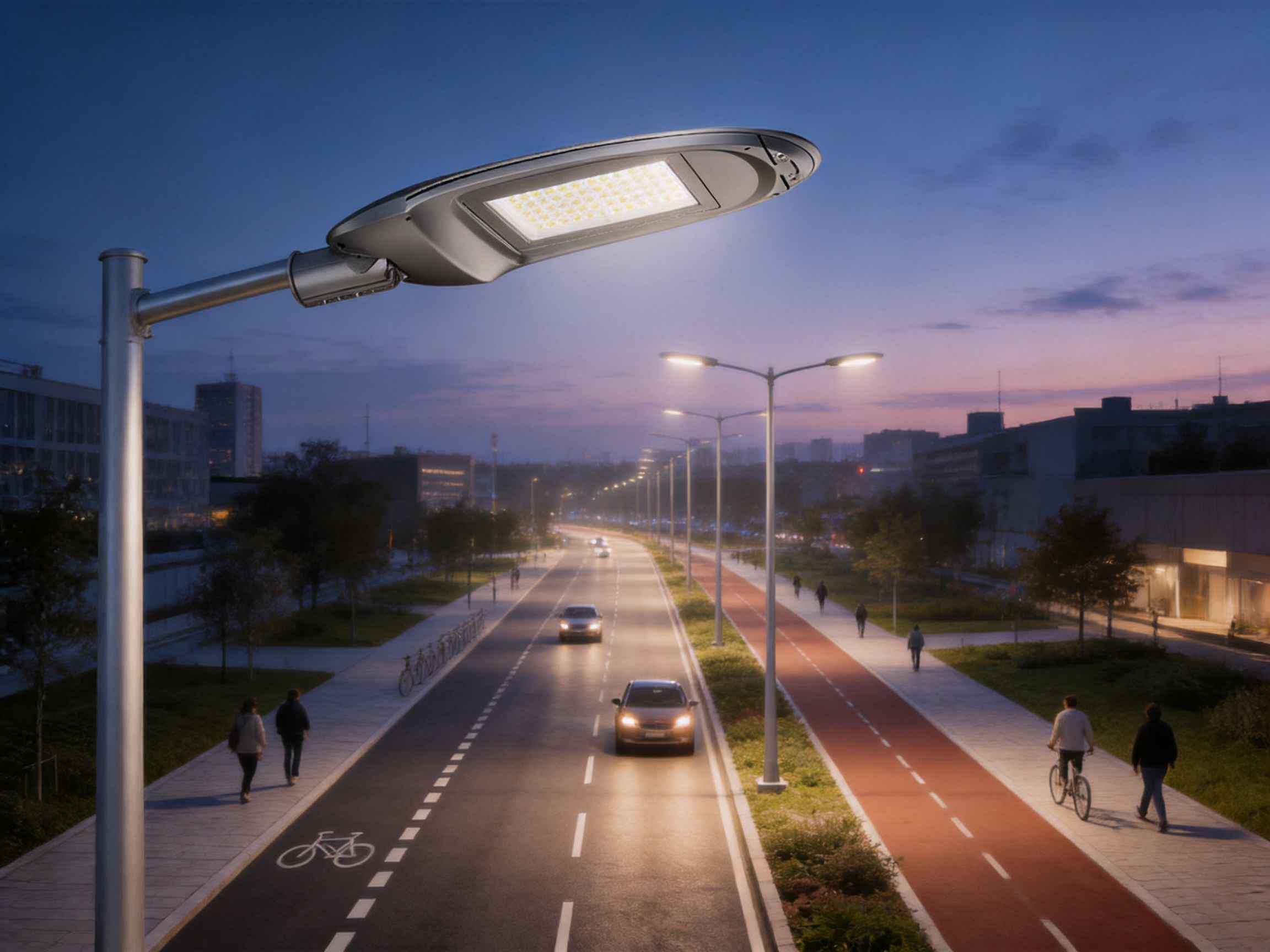
6. Durable Housing for Outdoor Operation
Street lights are permanent or semi-permanent infrastructure assets. Once installed, they are expected to operate through repeated exposure to outdoor conditions. A durable housing helps shield internal components, support mechanical stability, and maintain the appearance of the installation over time.
The BTLED-2402 is described as having a durable housing structure for long-term outdoor operation. This is important for urban roads, industrial parks, public facilities, and infrastructure projects where fixtures may remain in service for many years. Strong construction can also make the product more suitable for transportation, installation, and routine maintenance activities.
Housing design affects several practical areas. It influences how the fixture is mounted, how heat is transferred, how internal components are protected, and how the product looks after installation. A carefully finished housing can contribute to visual consistency across a project. The availability of customized housing finishes gives buyers the option to coordinate the fixture with local design preferences, corporate environments, or municipal specifications.
Outdoor appearance is not merely a cosmetic issue. Lighting equipment is often installed in highly visible public spaces. A clean and consistent finish can support the overall quality of an urban development. In industrial or commercial projects, a coordinated appearance can reinforce the professional image of the site.
Material and Production Consistency
Durability depends on the materials selected and the consistency with which components are produced. Variations in casting, machining, surface treatment, assembly, or sealing can influence the final performance of an outdoor fixture. This is why manufacturing capability is a meaningful differentiator when comparing suppliers.
The manufacturer behind the BTLED-2402 operates die-casting and CNC machines, aging lines, and goniophotometers. These capabilities support a more integrated approach to production. Die-casting can be used for precise metal housing components, CNC machining can refine dimensions and interfaces, aging lines can support product reliability checks, and goniophotometers can be used for optical performance evaluation.
A supplier with these resources can coordinate design and production more effectively than a company that depends entirely on unrelated external factories. It can also respond more efficiently to custom requirements involving housing shape, mechanical details, surface treatment, and optical distribution.
7. Manufacturing Strengths Behind the Product
The performance of an LED street light is closely connected to the manufacturing system that produces it. A product may have an attractive specification, but consistent results require controlled processes, suitable equipment, experienced personnel, and inspection procedures. The manufacturing strengths supporting the BTLED-2402 are therefore an important part of its value proposition.
Die-Casting Capability
Die-casting is useful for producing durable metal components with repeatable dimensions and complex structural details. In an LED street light, the housing may need to combine strength, mounting precision, heat dissipation, and a suitable external shape. Die-casting can support these objectives when the mold design, material control, casting parameters, and finishing processes are properly managed.
The company’s die-casting capability also supports its role as a die-casting mould supplier. This means customers can discuss not only the use of an existing product platform but also the development or modification of molds for customized requirements. For OEM and ODM buyers, this can shorten communication channels between product design and component manufacturing.
CNC Machining
CNC machining provides a way to refine cast components and produce accurate mechanical interfaces. Mounting points, connection surfaces, holes, threads, and other details may require controlled dimensions so that installation is straightforward and repeatable. Accurate machining can also support better fit between the housing, cover, bracket, and internal assemblies.
For projects involving customized finishes or mechanical configurations, CNC capability can give the manufacturer greater control over the final product. It may also help reduce dependence on manual correction, which can improve consistency across production batches.
Aging Lines
Aging processes are commonly used to operate products or components under controlled conditions before shipment. The objective is to identify early defects and verify that the product behaves consistently after a period of operation. For LED lighting, aging can be part of a broader quality-control strategy that examines the interaction between the light source, driver, thermal system, and assembly.
Although aging cannot eliminate every possible field issue, it can help identify certain early-stage problems before products reach the customer. This is particularly valuable for outdoor projects, where replacing a fixture may require lifting equipment, road closures, or additional labor.
Goniophotometer Testing
A goniophotometer is used to measure the distribution of light from a luminaire at different angles. This type of equipment supports the development and verification of optical performance. It can help manufacturers understand how a fixture directs light and whether the distribution is appropriate for a particular design objective.
Because the BTLED-2402 offers optical distribution customization, photometric measurement is especially relevant. Customers need more than a wattage number; they need confidence that the light will be directed effectively across the planned road or outdoor area. Photometric data and design calculations can contribute to better project decisions.
Integrated Production Resources
The combination of die-casting, CNC machining, aging lines, and goniophotometers represents a broader manufacturing advantage. These resources allow the company to connect product design, mechanical production, reliability processes, and optical evaluation within one organization. Such integration can improve communication and make it easier to implement changes requested by customers.
For OEM and ODM projects, integrated resources are particularly useful. Buyers may require a special power configuration, customized housing finish, modified optical distribution, private labeling, different packaging, or a project-specific mechanical design. A manufacturer with its own engineering and production capabilities is generally better positioned to manage these requirements than a trading company with limited control over the factory process.
8. Advantages Over Generic or Less Flexible Competitors
Many street lighting products appear similar when viewed only through basic specifications. However, meaningful differences often become clear when the products are evaluated according to application flexibility, thermal management, manufacturing support, maintenance implications, and customization capacity.
Broader Configuration Flexibility
A fixed-wattage product may be suitable for one type of road but poorly matched to other applications. The BTLED-2402 offers a 20W-240W range, giving project planners more options within one product family. This can simplify technical evaluation, procurement, and inventory management.
Customization Rather Than Simple Catalog Supply
Some suppliers provide only standard fixtures with limited changes possible. The BTLED-2402 can be customized in power configuration, housing finish, and optical distribution. This gives buyers greater control over both performance and appearance. Customization is especially valuable when a project has unusual road geometry, specific visual requirements, or brand and municipal design standards.
Manufacturing Depth
Competitors that outsource all major manufacturing stages may have less control over product consistency and development schedules. The manufacturing system supporting this product includes die-casting, CNC machining, aging lines, and photometric equipment. These resources provide a stronger foundation for quality control and technical adaptation.
Thermal and Structural Attention
Low-cost fixtures may focus on minimizing material use or simplifying assembly. The BTLED-2402 places emphasis on heat dissipation and a durable housing structure. These design priorities can support more stable long-term operation and reduce the risk that a low initial purchase price leads to higher lifecycle costs.
Engineering and Design Support
A product supplier that can assist with DIALux designs and lighting solutions offers more project value than a supplier that only sends a basic quotation. Design support helps customers select a suitable power level and optical arrangement. This can reduce the likelihood of unsuitable spacing, excessive wattage, or inadequate coverage.
One-Stop OEM and ODM Service
For distributors, engineering firms, and international buyers, coordinating separate suppliers for molds, housings, optical systems, assembly, and delivery can be inefficient. The company offers OEM/ODM, mold design, SKD/CKD customization, and delivery services. This allows customers to discuss multiple parts of the supply chain through one manufacturing partner.
These advantages do not mean that one configuration is automatically correct for every project. Technical requirements should always be verified through project calculations and discussions. However, the combination of flexibility, manufacturing control, and engineering support gives the BTLED-2402 a stronger competitive position than a basic, fixed-specification street light.
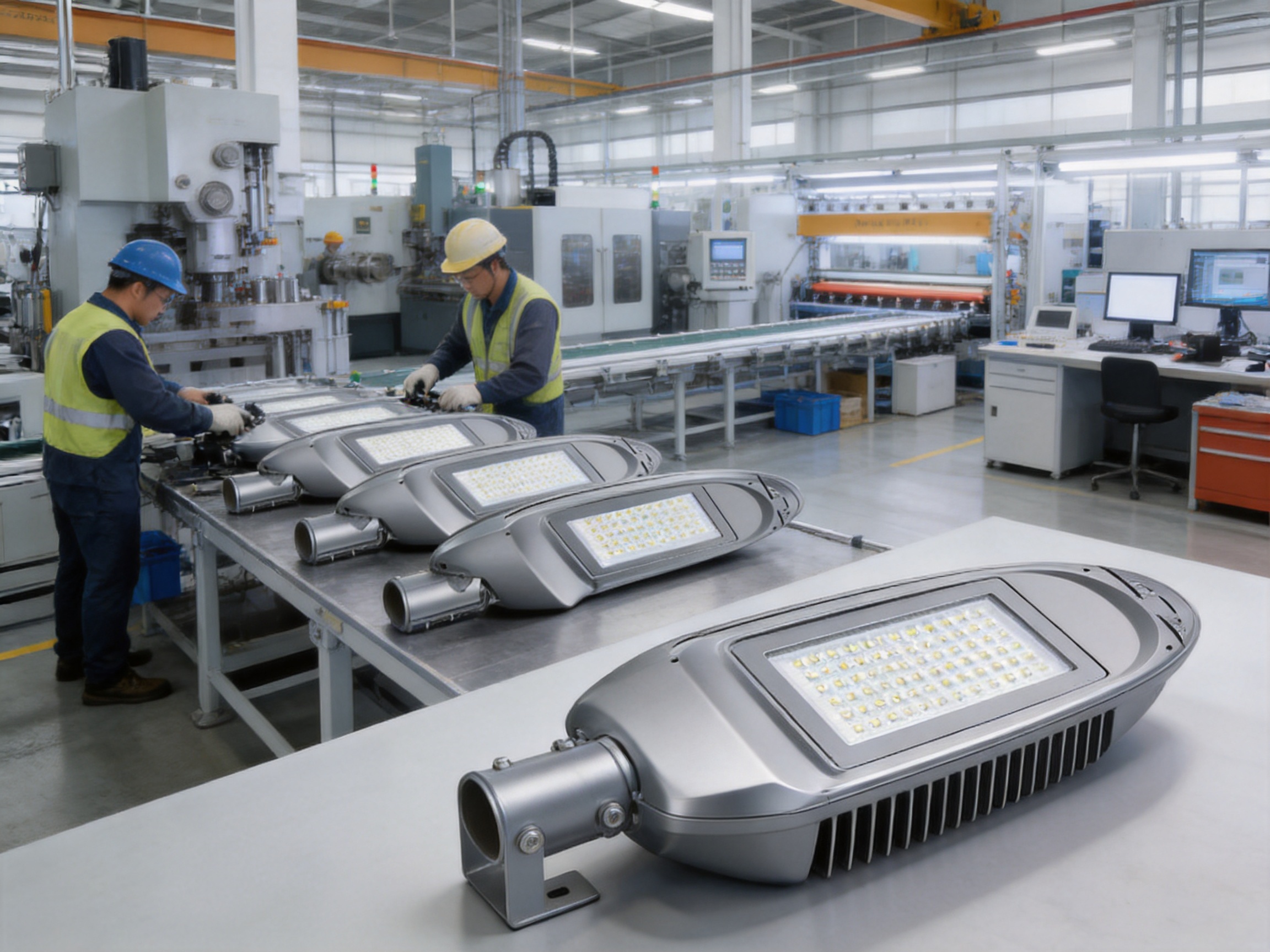
9. Applications for the BTLED-2402
The product is suitable for urban roads and outdoor infrastructure projects. Its broad power range and customization possibilities allow it to be considered for several related applications.
Municipal Roads
Municipal roads require dependable lighting that supports traffic movement and public visibility. Different road classifications may require different power levels, mounting arrangements, and optical distributions. The BTLED-2402 can be configured according to the specific design conditions of each route.
Residential Streets
Residential streets often require balanced illumination and careful control of glare and light spill. A suitable lower- or medium-power configuration can help provide useful roadway coverage without creating excessive brightness near homes. Optical distribution should be selected according to the street width, pole arrangement, and local requirements.
Industrial Parks
Industrial parks may include internal roads, loading areas, worker access routes, and perimeter zones. These areas can operate throughout the night and may expose lighting equipment to dust, vibration, vehicle movement, and demanding maintenance conditions. The durable structure and broad power range of the BTLED-2402 make it suitable for consideration in these environments.
Commercial and Mixed-Use Developments
Commercial areas often require lighting that supports both visibility and visual presentation. Customized housing finishes can help coordinate the fixtures with the architectural character of the development. Different zones may use different wattages while retaining a consistent product family.
Parking and Access Areas
Parking areas and access roads benefit from reliable lighting that helps drivers identify routes, pedestrians, parked vehicles, and changes in surface level. The selected optical distribution should take the site layout into account so that light is distributed across the useful area rather than concentrated in isolated spots.
Infrastructure Expansion Projects
Infrastructure projects are often completed in phases. One phase may involve a small road or service area, while later stages add larger routes and public spaces. A scalable product family can simplify future procurement and help maintain a consistent technical standard across the completed development.
10. OEM, ODM, and Project Customization
Customization is increasingly important in the international lighting market. Distributors may need products aligned with their own market positioning, while contractors may require a fixture that meets a particular tender specification. Property developers and municipal buyers may also have requirements concerning appearance, optical performance, packaging, and documentation.
The BTLED-2402 supports customization for power configuration, housing finish, and optical distribution. These options address three important areas of product adaptation. Power customization aligns the fixture with the required lighting level. Housing finish supports visual and environmental requirements. Optical customization improves compatibility with the planned road geometry.
OEM and ODM services extend this flexibility further. OEM projects may involve customer branding, packaging, labeling, or a defined specification manufactured by the supplier. ODM projects may involve the development or adaptation of a product based on the manufacturer’s platform and the customer’s market requirements.
SKD and CKD customization can also be relevant for customers with local assembly, import, or supply-chain objectives. The precise arrangement should be discussed according to the destination market, technical requirements, assembly capacity, customs considerations, and quality-control expectations.
Mold design is another important capability. When a project requires a new housing detail or a modified mechanical structure, mold development can become a critical stage. A manufacturer with internal experience in die-casting molds can help connect the design concept to a practical production method. This can improve communication, reduce unnecessary revisions, and support more predictable development schedules.
Recommended Customization Process
A structured customization process normally begins with the project application. The customer should provide information about the road type, installation environment, mounting method, target lighting performance, preferred appearance, expected quantity, and destination market.
The manufacturer can then evaluate the appropriate power range, optical distribution, housing finish, and production method. Where necessary, lighting calculations or DIALux designs can be prepared. Mechanical drawings, samples, mold requirements, and packaging details should be reviewed before mass production.
Before final approval, customers should confirm the agreed technical parameters, inspection procedures, labeling, documents, and delivery schedule. Clear communication at this stage helps reduce misunderstandings and protects both the buyer and the manufacturer during implementation.
11. Quality, Certification, and Responsible Manufacturing
Quality management is especially important in outdoor lighting because fixtures are expected to operate continuously in public or commercial environments. The company is certified to ISO 9001, ISO 14001, and ISO 45001 standards. These management systems relate respectively to quality management, environmental management, and occupational health and safety.
ISO 9001 certification indicates that the organization maintains a structured quality-management framework. For customers, this can provide confidence that documented processes, responsibilities, and continual-improvement practices are part of the company’s operating system.
ISO 14001 reflects attention to environmental management. Lighting manufacturing involves metals, electronics, coatings, packaging, energy use, and waste management. An environmental management framework helps an organization identify and control relevant environmental aspects.
ISO 45001 focuses on occupational health and safety. Safe production is important not only for workers but also for the continuity and reliability of manufacturing operations. A well-managed factory is better positioned to maintain stable production schedules and reduce avoidable process disruption.
The company also reports that relevant products have CB and CE certifications. Certification scope should always be verified for the exact product configuration, market, and shipment. Customers should request the appropriate technical documents and confirm that the selected BTLED-2402 version meets the requirements of the target country or project.
Responsible manufacturing extends beyond certificates. It includes process control, inspection, material traceability, honest technical communication, and the ability to respond when a customer identifies a problem. These factors are essential when selecting a long-term lighting partner.
12. Installation and Project Planning Considerations
The performance of any street light depends partly on how it is installed. Even a well-designed fixture may produce unsatisfactory results if pole spacing, mounting angle, height, orientation, or electrical configuration do not match the lighting design.
Before installation, project teams should confirm the road dimensions, pole locations, mounting heights, fixture orientation, cable requirements, and access conditions. A lighting simulation can help verify whether the selected power and optical distribution will provide appropriate coverage.
Installation teams should also inspect the fixtures upon arrival. Packaging should be checked for damage, and product quantities and specifications should be compared with the purchase documentation. Any visible damage or discrepancy should be recorded before installation.
Electrical connections should be completed by qualified personnel in accordance with local regulations. The installation environment should be evaluated for voltage stability, grounding, surge exposure, and control requirements. The exact electrical details depend on the selected configuration and should be confirmed in the technical documentation.
Correct mechanical installation is equally important. The mounting connection must be secure, aligned, and suitable for the pole or arm. Fasteners should be tightened according to the applicable instructions, and the fixture should be positioned to achieve the intended optical direction.
Good installation practice protects the investment in the lighting system. It can also reduce future maintenance requirements and ensure that the product delivers the performance expected during the design stage.
13. Maintenance Efficiency and Lifecycle Considerations
One of the main reasons customers choose the BTLED-2402 is its balance of brightness and maintenance efficiency. Outdoor lighting maintenance can involve vehicle access, lifting equipment, traffic control, labor, replacement parts, and administrative planning. Reducing the frequency of these interventions can improve the total cost of ownership.
A durable housing and effective heat dissipation can support stable operation, while consistent manufacturing can reduce variation between units. However, maintenance planning should still include routine visual inspections, cleaning where environmental conditions require it, checking mounting security, and verifying electrical connections.
Dust, pollution, leaves, industrial residue, and other deposits can affect the external surface of a luminaire. The cleaning schedule should be based on the local environment. Coastal, dusty, or industrial locations may require more frequent inspections than clean urban environments.
Maintenance teams should also monitor changes in illumination. A sudden reduction in output, flickering, irregular operation, or visible damage may indicate an electrical, thermal, mechanical, or environmental issue. Early attention can prevent a minor problem from affecting a larger section of the lighting network.
For large installations, buyers should maintain records of fixture locations, installation dates, configurations, and service history. This information helps identify patterns, plan replacement activities, and manage spare parts. A manufacturer that provides consistent product configurations and technical support can make this process easier.
14. Why the Manufacturer Is a Suitable International Partner
Cixi HuaSheng Lighting Co., Ltd. is located in Ningbo, China, and serves customers in international markets. Its product range includes LED street lights, tunnel lights, high-bay lights, linear lights, garden lights, solar lights, grow lights, explosion-proof lights, and other lighting products.
This broader product portfolio gives the manufacturer experience across multiple lighting applications. A customer working on a complete infrastructure project may need several types of fixtures, including roadway, industrial, landscape, tunnel, or solar lighting. Working with a supplier that understands these related categories can simplify project coordination.
The company provides one-stop services that include lighting solutions, DIALux designs, mold design, OEM/ODM, SKD/CKD customization, and delivery. These services are valuable because international lighting projects often involve more than product manufacturing. They may require technical calculations, customized mechanical components, market-specific documentation, packaging coordination, and logistical planning.
Its equipment and production resources support a more complete manufacturing model. Die-casting and CNC machines address structural production. Aging lines support reliability processes. Goniophotometers support photometric evaluation. Together with ISO management systems and international certification experience, these capabilities form a practical foundation for serving distributors, contractors, developers, and engineering companies.
International buyers should still complete their own due diligence. They should review samples, technical files, quality requirements, inspection procedures, production schedules, packaging, warranty terms, and shipment arrangements. A strong supplier relationship is built through clear expectations and transparent communication on both sides.
15. Frequently Asked Questions
What is the power range of the BTLED-2402?
The listed power range is 20W to 240W. This allows the product family to cover different roadway and outdoor infrastructure requirements, subject to project-specific lighting calculations.
What type of product is the BTLED-2402?
It is a high-brightness LED street light designed for urban roads and outdoor infrastructure projects.
What are the main advantages of this street light?
The main advantages include stable LED illumination, a broad power range, optimized heat dissipation, a durable housing structure, maintenance efficiency, and customization for power configuration, housing finish, and optical distribution.
Can the product be customized for different roads?
Yes. Customization is available for power configuration, housing finish, and optical distribution. The appropriate configuration should be selected according to road dimensions, mounting conditions, lighting objectives, and applicable standards.
Does the manufacturer provide lighting design support?
Yes. The company provides lighting solutions and DIALux design support as part of its one-stop service offering.
Why is heat dissipation important in an LED street light?
Effective heat dissipation helps control operating temperature and supports stable performance. Poor thermal management can accelerate component aging and increase the risk of premature failure.
What manufacturing equipment supports the product?
The manufacturing system includes die-casting machines, CNC machines, aging lines, and goniophotometers. These resources support housing production, mechanical precision, reliability processes, and optical evaluation.
Is OEM or ODM service available?
Yes. OEM and ODM services are available, along with mold design and SKD/CKD customization. Specific requirements should be discussed during the project-development stage.
Can the housing finish be changed?
Housing finish customization is available. The exact finish, color, surface treatment, and environmental requirements should be confirmed for the intended application.
Is the product suitable for industrial parks?
It can be considered for industrial park roads, access routes, perimeter areas, and other outdoor infrastructure applications. The final specification should account for dust, traffic, mounting height, road geometry, and required illumination.
How should customers select the correct wattage?
Wattage should be selected through a project-based assessment that considers road width, pole height, spacing, traffic conditions, target illumination, uniformity, and optical distribution. The highest wattage is not automatically the most appropriate choice.
Does certification apply to every product configuration?
Certification scope should be confirmed for the exact product and configuration being purchased. The company reports relevant products with CB and CE certifications, but customers should request the applicable documents for their specific order and destination market.
What should buyers review before placing an order?
Buyers should review the technical specification, power configuration, optical distribution, housing finish, installation method, environmental requirements, certification documents, inspection procedure, packaging, warranty conditions, and delivery schedule.
16. Conclusion
The High Brightness LED Street Light BTLED-2402 is designed to address the practical requirements of modern roadway and outdoor infrastructure lighting. Its 20W-240W power range provides flexibility for different road types and project scales, while stable LED performance supports consistent nighttime visibility.
The product’s optimized heat dissipation and durable housing structure are important advantages for long-term outdoor operation. Its customization options for power configuration, housing finish, and optical distribution help customers adapt the fixture to specific technical and visual requirements. These capabilities make it more versatile than a basic fixed-specification street light.
The manufacturing system behind the product adds further value. Die-casting, CNC machining, aging lines, and goniophotometers support structural quality, production consistency, reliability evaluation, and optical development. The company’s ISO 9001, ISO 14001, and ISO 45001 certifications demonstrate an established management framework, while its OEM/ODM, mold design, DIALux, and SKD/CKD services support complete project development.
For municipalities, contractors, distributors, developers, and international lighting buyers, the BTLED-2402 offers a balanced combination of brightness, energy-conscious operation, maintenance efficiency, and project adaptability. The most effective results will come from selecting the correct configuration through professional lighting design and confirming all technical, environmental, and certification requirements before production and installation.
References
1. Product specification information for the High Brightness LED Street Light BTLED-2402, including power range, application, customization options, and product characteristics.
2. Company manufacturing information concerning die-casting, CNC machining, aging lines, goniophotometers, mold design, and OEM/ODM services.
3. ISO 9001 quality management principles and related quality-control practices for manufacturing organizations.
4. ISO 14001 environmental management principles for responsible industrial production.
5. ISO 45001 occupational health and safety management principles.
6. General roadway lighting design practices concerning illumination, uniformity, optical distribution, mounting height, spacing, and lifecycle evaluation.
7. General LED lighting engineering principles concerning energy efficiency, thermal management, photometric testing, and outdoor luminaire reliability.
Product: High Brightness LED Street Light BTLED-2402

Solusi Kustom & OEM untuk Merek Pencahayaan Global
Hak Cipta © Cixi HuaSheng Lighting Co., Ltd. Semua Hak Dilindungi Undang-undang.
Pemasok Cetakan Die-Casting
