 English
 中文简体
 русский
 Français
 Español
 عربى
 Indonesia

LED Street Light JD-SLG023: A High-Efficiency Solar Roadway Lighting Solution for Modern Infrastructure

Introduction
Modern roadway projects require lighting systems that provide dependable visibility, controlled energy consumption, and reliable performance under changing outdoor conditions. Municipal roads, residential streets, industrial parks, rural routes, pedestrian areas, and infrastructure developments all need lighting that can operate efficiently while limiting maintenance demands. The LED Street Light JD-SLG023 is designed to answer these requirements through a compact integrated lighting solution that combines high-efficiency LED technology, solar power generation, intelligent battery management, and a durable outdoor housing.
The JD-SLG023 supports a power range of 10W, 15W, and 20W, making it suitable for different roadway layouts and illumination requirements. It uses 3030 or 5050 LED configurations and achieves a stated luminous efficacy of 160–170 lm/W. This efficiency allows project designers to obtain useful illumination with a relatively low electrical load. When combined with a 39W, 18V solar panel and a LiFePO4 battery system, the fixture can provide an autonomous lighting solution for locations where grid connection is expensive, difficult, or impractical.
Manufactured by Cixi HuaSheng Lighting Co., Ltd., the product reflects the company’s experience in outdoor lighting, solar lighting, LED roadway fixtures, die-casting, CNC processing, testing, and customized manufacturing. The company supports OEM and ODM projects, allowing customers to request changes to power configuration, housing finish, optical distribution, and other product details. This flexibility is valuable for distributors, contractors, engineering companies, municipalities, and infrastructure developers that require more than a standard catalog product.
This article examines the construction, technology, application value, manufacturing advantages, customization potential, and selection considerations of the JD-SLG023 LED Street Light.
Product Overview
The LED Street Light JD-SLG023 is an outdoor roadway lighting fixture intended for urban roads and other infrastructure applications. Its design combines an LED light source, solar energy collection, battery storage, and an intelligent controller in one integrated system. The result is a lighting unit that can operate independently from a conventional utility grid when the solar resource and system configuration are properly matched to the installation environment.
Unlike traditional street lighting systems that depend entirely on underground cables, utility poles, and centralized electrical infrastructure, a solar street light can reduce the need for trenching and cable installation. This can be particularly advantageous in remote areas, newly developed industrial zones, rural roads, temporary infrastructure projects, and locations where grid expansion is costly or delayed.
The JD-SLG023 is available in three nominal power options: 10W, 15W, and 20W. These variations allow the fixture to be matched to road width, pole spacing, mounting height, target illuminance, and local project standards. A lower-power version may be suitable for narrow access roads, pedestrian routes, and residential lanes, while a higher-power configuration can support broader streets or locations requiring stronger illumination.
The fixture uses high-efficiency 3030 or 5050 LED packages. These LED options provide project flexibility in terms of light output, thermal behavior, optical arrangement, and application requirements. The stated efficacy of 160–170 lm/W indicates that the system is designed to convert electrical power into useful visible light efficiently, helping reduce battery capacity requirements and improve the practical operating duration of the system.
The solar energy system includes a 39W, 18V solar panel and a LiFePO4 battery available in 8Ah, 12Ah, 16Ah, or 20Ah configurations at 12.8V. The system can be paired with either PWM or MPPT control technology, depending on project requirements and the desired balance between cost and solar charging efficiency.
| Product | LED Street Light JD-SLG023 |
| Application | Urban roads, outdoor infrastructure, streets, access roads, and public areas |
| Rated power options | 10W, 15W, and 20W |
| LED type | 3030 or 5050 |
| Stated efficacy | 160–170 lm/W |
| Solar panel | 39W, 18V |
| Battery | LiFePO4, 8Ah, 12Ah, 16Ah, or 20Ah at 12.8V |
| Controller options | PWM or MPPT |
| Smart system working duration | 4–6 days, depending on system configuration and conditions |
| Overall size | 600 x 600 x 589 mm |
| Customization | OEM and ODM support for selected configurations, finishes, and optical requirements |
High-Efficiency LED Performance
One of the primary advantages of the JD-SLG023 is its use of efficient LED technology. Traditional outdoor lighting technologies often require higher electrical input to produce a similar amount of usable light. High-efficiency LED systems can reduce power consumption while maintaining the visual performance needed for roadway safety and nighttime navigation.
The stated efficacy of 160–170 lm/W positions the JD-SLG023 as a low-consumption lighting solution for solar applications. In a solar street light, every watt matters because the fixture must operate from energy collected during daylight and stored for use at night. A more efficient light source produces more illumination from the same battery capacity, potentially supporting longer operating periods, smaller energy storage requirements, or improved performance during periods of reduced sunlight.
The available 3030 and 5050 LED options offer flexibility for different project designs. LED package selection influences light distribution, thermal management, current requirements, optical layout, and overall system output. By offering more than one LED configuration, the manufacturer can work with customers to identify a suitable solution for different road classes and installation conditions.
High efficiency also contributes to lower operating costs. Although a solar fixture has no conventional electricity bill when operating independently from the grid, its lifecycle cost still includes battery replacement, cleaning, inspection, service visits, and component replacement. Efficient light output can reduce the stress placed on the battery and solar charging system, helping improve the overall balance between initial investment and long-term operation.
The JD-SLG023 is designed to provide stable illumination rather than relying on excessive power to compensate for inefficient components. This approach is important in outdoor infrastructure, where consistent lighting is often more valuable than short-term maximum brightness. A stable light source can support better visual comfort, predictable roadway coverage, and easier planning for lighting designers.
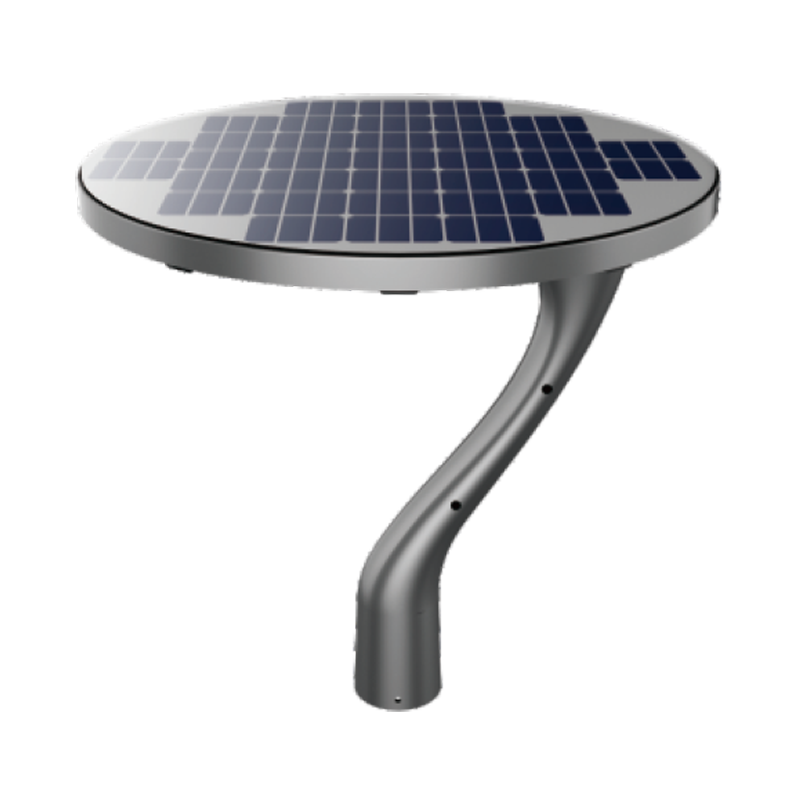
LED Street Light JD-SLG023
Solar Power and Autonomous Operation
The solar configuration of the JD-SLG023 includes a 39W, 18V solar panel. During daylight hours, the panel converts solar radiation into electrical energy, which is regulated by the controller and stored in the battery. At night, the stored energy powers the LED fixture according to the programmed operating schedule and system settings.
This operating principle offers significant advantages for areas with limited access to the electrical grid. Installing a conventional street light may require utility approvals, trench excavation, cable installation, distribution equipment, and ongoing electricity payments. A solar street light can reduce or eliminate many of these requirements, particularly when the light is installed as a self-contained unit on an existing or newly installed pole.
The use of a 39W panel provides a solar generation capacity that is proportionate to the low-power LED configurations offered by the product. Actual energy performance depends on local solar radiation, panel orientation, shading, seasonal conditions, operating hours, lighting schedules, battery capacity, and system efficiency. For this reason, project planning should consider the location’s solar resource rather than selecting the same configuration for every climate.
The product supports a smart system working duration of approximately four to six days, according to the supplied specifications. This feature is valuable in regions where cloudy or rainy weather may reduce daily solar collection. A properly sized energy storage system can continue powering the fixture through several days of lower solar availability, improving lighting continuity and reducing the risk of complete shutdown after a single overcast day.
Four battery capacity options are available: 8Ah, 12Ah, 16Ah, and 20Ah at 12.8V. This range allows the system to be adapted to different power levels, working schedules, geographic locations, and reserve requirements. A project in a high-sunlight region with moderate operating requirements may use a smaller battery, while a project in a seasonally cloudy area may require a larger capacity.
Solar street lighting also supports more flexible project deployment. New roads can be illuminated without waiting for grid infrastructure. Rural access routes can receive lighting without long cable runs. Temporary construction zones, parking areas, parks, and industrial compounds can be equipped with standalone fixtures that can be relocated or expanded as the site develops.
LiFePO4 Battery Technology
The JD-SLG023 uses lithium iron phosphate batteries, commonly known as LiFePO4 batteries. This chemistry is widely used in solar lighting because it offers a useful combination of safety, cycle life, thermal stability, and energy storage performance.
Battery selection is a critical factor in solar street light reliability. The LED module may have a long service life, but the battery is exposed to daily charge and discharge cycles, temperature variation, and changing environmental conditions. A suitable battery chemistry helps maintain system stability and supports predictable operation over an extended period.
LiFePO4 batteries are known for their comparatively stable chemical structure and strong resistance to thermal issues when properly designed and managed. They are also suitable for repeated cycling, which is essential for a solar light that charges during the day and discharges at night. The available 8Ah to 20Ah range enables the manufacturer or project engineer to select a storage capacity aligned with the light’s rated power and desired backup duration.
Battery performance is affected by ambient temperature, depth of discharge, charging strategy, storage conditions, and controller quality. The JD-SLG023’s controller options help regulate the charging and discharging process. Proper system matching is important because a battery that is too small may experience excessive discharge, while an unnecessarily large battery may increase initial cost without delivering proportional benefits.
For project owners, a correctly specified LiFePO4 battery can improve maintenance planning. Longer cycle capability may reduce the frequency of battery replacement compared with less suitable storage technologies. Reduced replacement frequency can lower labor requirements, transportation expenses, and disruption to road users.
PWM and MPPT Controller Options
The JD-SLG023 can be configured with a PWM or MPPT controller. These two controller approaches provide different levels of solar energy management and can be selected according to project budget, solar conditions, system size, and performance targets.
A PWM controller is a practical option for projects that require a cost-conscious solar charging solution. It regulates the connection between the panel and battery and can be suitable for straightforward systems where panel voltage and battery voltage are closely matched. PWM technology is commonly used in smaller solar lighting installations because of its simplicity and established operating principle.
An MPPT controller can extract solar energy more effectively under certain operating conditions by continuously adjusting the electrical operating point of the panel. This can be particularly useful when solar conditions fluctuate or when the panel’s voltage characteristics do not closely match the battery voltage. MPPT technology may improve charging performance during low-light periods, cooler conditions, or partial variations in solar availability.
The availability of both PWM and MPPT options makes the JD-SLG023 more adaptable than a fixed controller design. A distributor may need a cost-optimized version for a price-sensitive project, while an engineering contractor may prefer MPPT control for a location with difficult weather conditions or higher energy reliability requirements.
Controller selection should be based on a complete system assessment. The appropriate choice depends on the solar panel specification, battery capacity, LED power, expected daily operating time, local climate, and required reserve days. The manufacturer can support this selection process as part of its OEM and ODM service capabilities.
Thermal Management and Outdoor Durability
Outdoor lighting fixtures must operate through heat, cold, rain, dust, humidity, ultraviolet exposure, wind, and repeated temperature changes. A fixture that performs well in a controlled indoor environment may not remain reliable when installed on a roadside for many years. For this reason, the JD-SLG023 is designed with attention to heat dissipation, housing structure, and long-term outdoor use.
LED performance is closely related to thermal management. Excessive heat can accelerate lumen depreciation, affect electronic components, and reduce the expected operating life of the fixture. The JD-SLG023 incorporates an optimized heat dissipation design intended to transfer heat away from the LED and driver components. Effective thermal management helps maintain stable performance and supports the long service life expected from professional outdoor lighting equipment.
The durable housing structure provides mechanical protection for internal components. A robust enclosure helps shield the LED module, controller, wiring, and battery-related components from environmental exposure. It also supports easier installation and maintenance by providing a stable structure that can be handled during transportation and mounting.
Housing design can also influence airflow, heat transfer, optical alignment, and resistance to mechanical stress. The manufacturer’s die-casting and CNC capabilities support the production of accurate metal components with consistent dimensions. Precise component geometry is useful for achieving reliable assembly, proper fastening, and stable alignment between the light source, lens, housing, and mounting structure.
For harsh environments, project buyers should confirm the final enclosure rating, corrosion protection, operating temperature range, impact resistance, and mounting details with the supplier before placing an order. These factors can be customized or specified according to the installation location and applicable project standards.
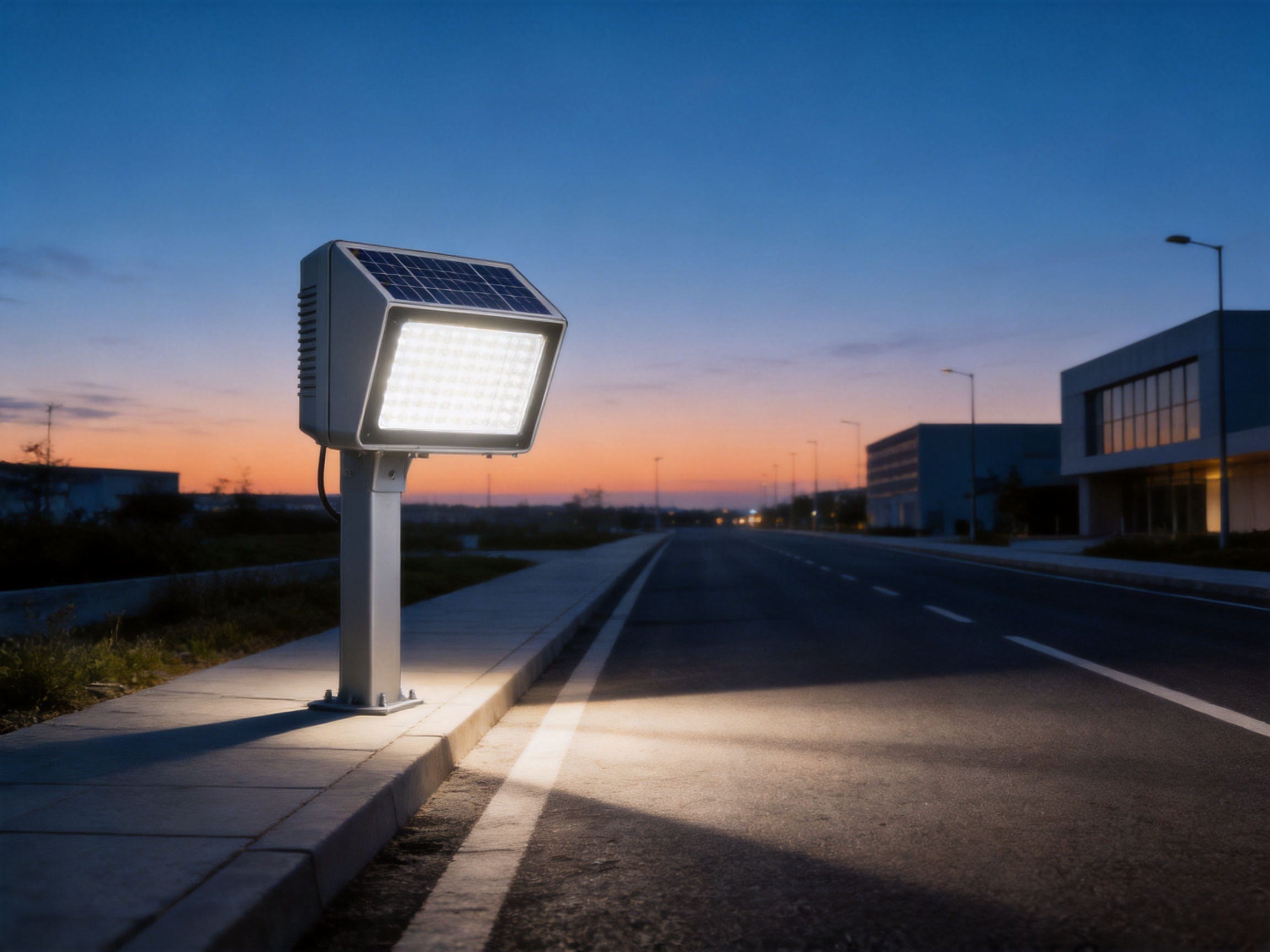
Optical Design and Roadway Visibility
Roadway lighting is not simply a matter of producing a high lumen output. The light must be directed to useful areas while limiting excessive glare, uneven brightness, and unnecessary spill light. Optical distribution should be matched to road width, pole height, pole spacing, mounting angle, traffic conditions, and surrounding land use.
The JD-SLG023 can be adapted for different optical distribution requirements through the manufacturer’s OEM and ODM capabilities. This enables project stakeholders to discuss the appropriate light distribution rather than accepting a one-size-fits-all arrangement. A narrow road may need a different beam pattern from a broad municipal street, parking area, pathway, or industrial access route.
Correct optical distribution can improve the efficiency of the entire lighting installation. If light is directed toward the roadway and pedestrian zones where it is needed, the project may achieve target illumination with lower electrical power. This supports the solar system by reducing energy demand and may also reduce glare for drivers, pedestrians, and nearby residents.
Lighting designers can evaluate the fixture using photometric data and professional simulation software. A DIALux design can help determine pole spacing, mounting height, tilt angle, average illuminance, uniformity, and potential dark zones. Cixi HuaSheng Lighting Co., Ltd. provides efficient lighting solutions and DIALux design support as part of its one-stop project services.
For infrastructure projects, optical performance should be evaluated together with road classification and local lighting requirements. The final selection should consider the required illuminance and uniformity rather than relying only on the fixture’s wattage. A professional lighting design helps ensure that the 10W, 15W, or 20W version is used appropriately.
Advantages Over Conventional and Less Adaptable Alternatives
The JD-SLG023 offers several advantages over conventional grid-connected street lights and basic solar lighting products. These advantages are most evident when the product is considered as part of a complete project rather than as an isolated lamp.
Reduced Dependence on Grid Infrastructure
Because the JD-SLG023 uses a solar panel and battery system, it can operate independently of a traditional electrical distribution network. This reduces the need for cable trenching, utility connection work, and ongoing grid electricity consumption. The benefit is especially significant for roads in remote or newly developed locations.
Lower Energy Consumption
The 160–170 lm/W efficacy helps produce useful illumination with relatively low power input. Compared with inefficient outdoor fixtures, the JD-SLG023 can reduce energy demand and improve the utilization of stored solar energy. Lower energy consumption also supports smaller system components or longer reserve periods when the project is designed correctly.
Flexible Power Selection
The 10W, 15W, and 20W power choices provide more flexibility than a single fixed-output product. Different road conditions can be served using an appropriate output level. This can prevent both under-lighting and unnecessary oversizing.
Multiple Battery Capacities
The 8Ah, 12Ah, 16Ah, and 20Ah LiFePO4 battery options allow the system to be configured for different weather conditions and autonomy requirements. This is more adaptable than a basic solar fixture that offers only one battery size.
Controller Choice
The ability to select PWM or MPPT charging gives project owners a choice between cost efficiency and enhanced energy harvesting. This makes the product suitable for a wider variety of budgets and operating environments.
OEM and ODM Adaptability
Many standard lighting products offer little opportunity for modification. The JD-SLG023 supports customization of power configuration, housing finish, optical distribution, and other project-related requirements. This helps importers, contractors, and brand owners develop a product that fits their market or tender specification more closely.
Integrated Project Support
In addition to manufacturing fixtures, the company provides lighting solutions, DIALux designs, mold design, OEM and ODM services, and SKD or CKD customization. This integrated capability can reduce communication gaps between product design, engineering, production, and delivery.
Advanced Manufacturing Capabilities
The performance of an outdoor lighting product depends not only on its component specifications but also on the manufacturing systems used to produce it. Cixi HuaSheng Lighting Co., Ltd. operates as an outdoor lighting manufacturer in Ningbo, China, with production capabilities covering product assembly, die-casting, CNC machining, aging, testing, and customized development.
Die-casting equipment allows the company to manufacture metal housings and structural components with repeatable geometry. A well-designed die-cast housing can provide mechanical strength, support heat dissipation, and maintain dimensional consistency across production batches. It can also enable the integration of ribs, mounting points, cable passages, and other structural features into a single component.
CNC machines support precise secondary processing. They can be used for machining mounting surfaces, threaded holes, connection points, and other areas where accuracy is important. CNC processing helps maintain consistent fit and finish, especially when a product must be assembled with optical modules, drivers, brackets, and other components.
Mold design is another important capability. When customers request a customized housing, optical arrangement, or structural design, the manufacturer can participate in mold development rather than relying entirely on external suppliers. This can improve communication during product development and help shorten the path from concept to production.
Aging lines support the evaluation of products under controlled operating conditions before shipment. Aging processes can help identify early component failures, assembly issues, unstable electrical behavior, or thermal problems. Although aging does not replace comprehensive quality control, it is a valuable part of the manufacturing process for LED lighting products.
The company also uses goniophotometers and other testing equipment for lighting evaluation. Photometric testing helps measure light distribution and provides data that can be used for product documentation, project calculations, and DIALux simulations. This is particularly important for roadway products because the shape and uniformity of the light distribution are as important as the total lumen output.
These manufacturing resources provide an advantage over suppliers that only assemble imported modules without in-house mechanical development or photometric testing. A manufacturer with die-casting, CNC, aging, and optical testing capabilities can address more aspects of the product lifecycle under one organizational structure.
Quality Management and Certifications
Cixi HuaSheng Lighting Co., Ltd. is certified to ISO 9001, ISO 14001, and ISO 45001 management standards. These certifications represent structured approaches to quality management, environmental management, and occupational health and safety, respectively.
ISO 9001 is relevant to process control, documentation, corrective actions, customer requirements, and continual improvement. For lighting buyers, a structured quality management system can provide greater confidence that production procedures are defined and monitored rather than being dependent only on individual workers.
ISO 14001 reflects an organized approach to environmental management. This is increasingly important for lighting manufacturers because product materials, energy consumption, waste management, packaging, and production processes all affect the environmental profile of a supply chain.
ISO 45001 focuses on workplace health and safety. A safer manufacturing environment supports operational continuity and reflects a broader commitment to responsible industrial production.
The company also indicates that relevant products are certified by CB and CE. Certification requirements vary according to product type, target market, electrical design, and applicable regulations. Buyers should request the specific certificates and test reports relevant to the exact JD-SLG023 configuration being purchased.
Applications for Different Infrastructure Projects
The JD-SLG023 can be used in a range of outdoor applications when its power, battery, optical distribution, and installation parameters are correctly selected.
Urban and Residential Roads
Residential streets and smaller urban roads can benefit from a compact solar lighting solution that reduces dependence on underground cabling. The 10W or 15W configuration may be suitable for lower-traffic roads, lanes, and access areas, subject to photometric design and local standards.
Rural Roads
Rural roads often extend through areas where grid infrastructure is limited. Solar street lights can provide essential nighttime visibility without requiring long utility extensions. The system’s multiple battery options can help address seasonal weather variation and different autonomy expectations.
Industrial Parks
Industrial parks require lighting for internal roads, loading access, perimeter routes, pedestrian areas, and parking zones. Standalone solar fixtures can be installed during phased construction and expanded as the industrial site grows.
Construction and Development Sites
New developments may need temporary or early-stage roadway lighting before permanent utility infrastructure is complete. The JD-SLG023 can offer a practical interim solution and may remain in service after the site is fully developed.
Parking Areas and Access Routes
Parking areas, service roads, and facility entrances can use solar lighting to improve visibility and security. The appropriate light distribution should be selected to minimize dark areas and avoid excessive glare for drivers.
Parks and Public Spaces
Outdoor public spaces require lighting that supports pedestrian movement while respecting the surrounding environment. Solar operation can simplify installation in parks and landscaped areas where extensive trenching would disturb existing surfaces or vegetation.
Remote Infrastructure
Bridges, agricultural access roads, utility facilities, and remote service routes may be difficult to connect to a grid. A solar street light can provide localized illumination without a large electrical infrastructure project.
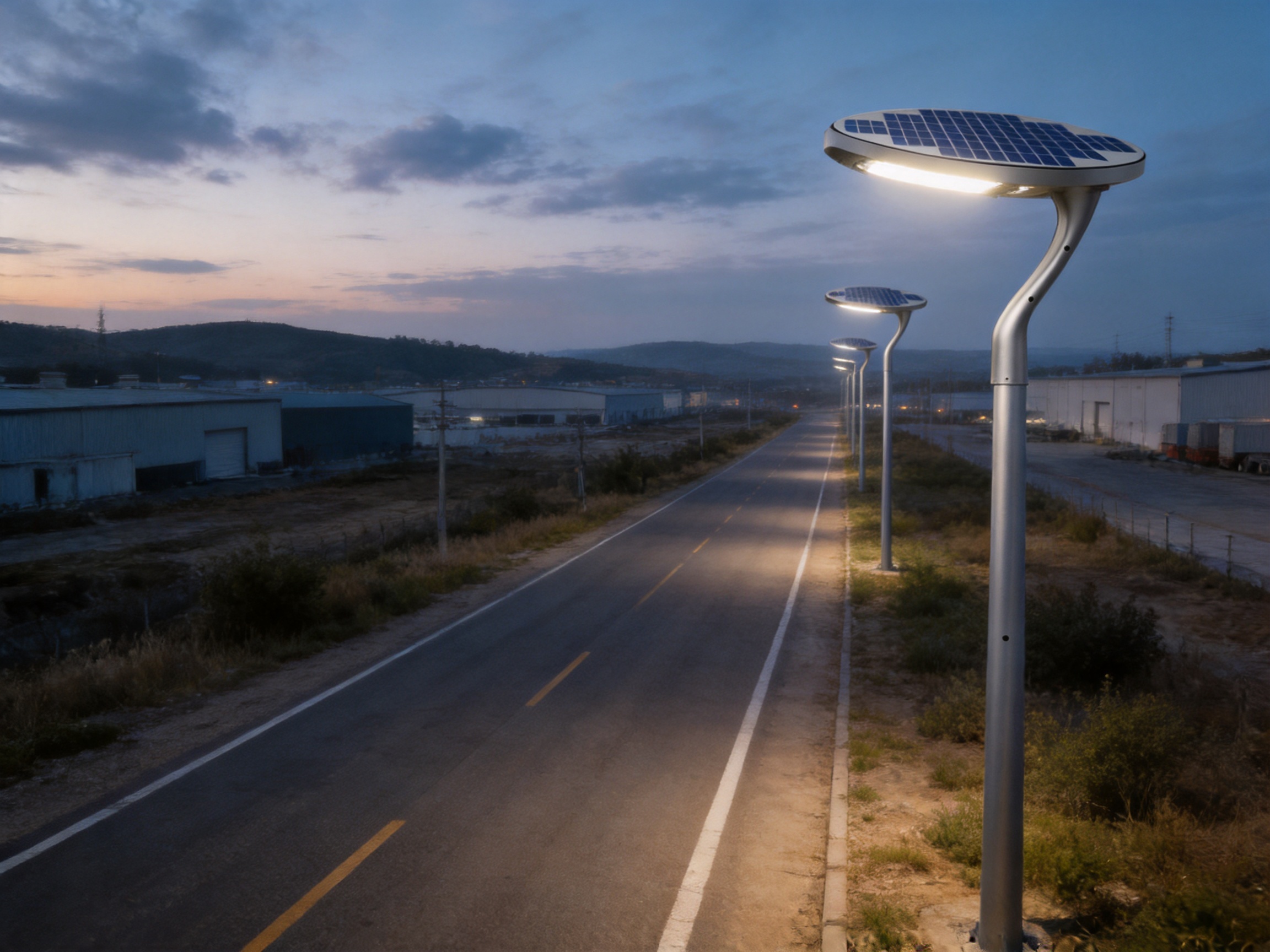
Customization and OEM or ODM Cooperation
Customization is an important advantage for professional buyers. Different markets may require different electrical ratings, finishes, logos, packaging, mounting arrangements, optical distributions, or control programs. The JD-SLG023 is available for OEM and ODM cooperation, allowing customers to discuss project-specific changes with the manufacturer.
Power configuration can be adjusted within the product platform to meet different road requirements. A distributor may need several versions for different market segments, while an engineering contractor may require a defined output for a particular lighting calculation.
Housing finish can also be customized. Surface treatment and color selection can help match local visual preferences, project branding, corrosion requirements, or municipal design guidelines. Any finish selection should be evaluated for outdoor durability, ultraviolet resistance, and compatibility with the housing material.
Optical distribution is another key customization area. Customers can discuss lens selection, beam patterns, LED arrangement, and mounting angles to support different roadway geometries. The final optical solution should be confirmed through photometric testing and, where necessary, DIALux simulation.
SKD and CKD services can support customers with local assembly strategies. Semi-knocked-down or completely knocked-down supply arrangements may help importers manage local labor, assembly, warehousing, or market-specific compliance requirements. These models should be planned carefully, including packaging, assembly instructions, testing procedures, and responsibility allocation.
Customized development generally requires technical communication before production. Customers should provide target markets, applicable regulations, operating schedules, pole details, road dimensions, solar conditions, and expected order volumes. A clear specification reduces development delays and helps ensure that the final product is suitable for its intended installation.
Installation and System Planning Considerations
Although the JD-SLG023 is designed for efficient outdoor installation, system planning remains essential. The product should not be selected solely by wattage. A complete project assessment should include road width, pole height, pole spacing, mounting orientation, local solar radiation, shading, operating hours, battery reserve, and lighting standards.
The solar panel should be positioned to receive sufficient sunlight throughout the year. Nearby buildings, trees, signs, and other structures can create shading that reduces charging performance. The panel’s orientation and tilt should be considered according to the installation latitude and local solar conditions.
The battery capacity should match the expected nightly energy demand and reserve requirement. A system designed for four to six days of operation should be evaluated against local seasonal weather patterns. In regions with long rainy periods, the project may require a larger battery, a modified dimming schedule, a different panel size, or an alternative control strategy.
Pole structure and mounting compatibility must also be confirmed. The product size is listed as 600 x 600 x 589 mm, but installation space, bracket dimensions, wind load, and maintenance access should be reviewed before deployment. The pole must be capable of supporting the fixture, solar panel, and local environmental loads.
Regular maintenance should include cleaning the solar panel, inspecting fasteners, checking wiring and connectors, reviewing battery condition, and verifying lighting operation. Maintenance requirements are generally manageable, but neglecting the panel or allowing surrounding vegetation to create shade can reduce system performance.
Lifecycle Value and Maintenance Efficiency
The value of a street light should be assessed across its entire operating life rather than only by its initial purchase price. The JD-SLG023 is designed to reduce energy consumption, simplify deployment, and support maintenance efficiency through a durable integrated structure.
Solar operation can reduce recurring electricity expenses. It can also lower the need for underground cable repairs caused by excavation, flooding, vehicle activity, or construction work. In remote projects, avoiding long cable runs can significantly reduce both installation complexity and future maintenance exposure.
High LED efficacy supports efficient use of stored energy. A well-matched system may reduce the frequency of deep battery discharge, which can contribute to better battery service life. The use of LiFePO4 technology further supports repeated daily cycling when the charging and discharging system is properly managed.
The manufacturer’s integrated production capabilities can also improve replacement and customization support. When a supplier understands the housing, optics, electronics, testing, and assembly processes, it may be better positioned to provide consistent replacement components and technical assistance over the product lifecycle.
Maintenance efficiency is especially important for municipal and industrial projects with many installed fixtures. Fewer service visits can reduce labor costs and traffic disruption. A planned inspection program can help identify panel obstruction, loose fasteners, battery degradation, or controller issues before they result in complete lighting failure.
Why Choose a Specialized Outdoor Lighting Manufacturer?
Working with a specialized outdoor lighting manufacturer offers advantages beyond purchasing a generic LED fixture. A specialized supplier understands the relationship between optical performance, thermal design, solar energy collection, battery storage, mechanical structure, and installation requirements.
Cixi HuaSheng Lighting Co., Ltd. manufactures a broad range of products, including LED street lights, tunnel lights, high-bay lights, linear lights, garden lights, solar lights, grow lights, explosion-proof lights, and other lighting products. This product breadth indicates experience across multiple lighting environments and application categories.
The company’s capabilities include die-casting and CNC machines, aging lines, and goniophotometers. These facilities support the development of mechanical structures, precise components, product reliability checks, and photometric evaluation. The company also provides one-stop services that include lighting solutions, DIALux design, mold design, OEM and ODM, SKD and CKD customization, and delivery.
For international buyers, a one-stop manufacturing partner can simplify sourcing. Instead of coordinating separate suppliers for housings, optical modules, assembly, testing, and packaging, customers can work with one organization responsible for the complete product program. This can help improve communication and reduce the risk of specification differences between suppliers.
The company is based in Ningbo, China, a major manufacturing and logistics region. Its location supports access to industrial supply chains, component suppliers, engineering resources, and international shipping services. Customers should still evaluate lead times, production capacity, packaging standards, after-sales support, and product documentation for each project.
Recommended Buyer Evaluation Process
Before ordering the JD-SLG023, buyers should define the intended application clearly. Important information includes the road classification, road width, pole height, pole spacing, required operating hours, local climate, solar conditions, and expected reserve days.
Buyers should request the photometric file and use it in a professional lighting simulation. This helps verify whether the selected power level and optical distribution can meet the project’s illumination and uniformity targets.
The exact battery capacity should be confirmed according to the selected LED power, operating program, solar resource, and autonomy requirement. Buyers should also confirm whether the project will use PWM or MPPT control and whether smart dimming, motion sensing, remote monitoring, or other control functions are required.
Product documentation should include the final electrical specification, installation instructions, maintenance guidance, warranty terms, test reports, and applicable certificates. The manufacturer should confirm whether the supplied configuration has completed the required testing for the destination market.
For customized orders, buyers should approve drawings, color samples, labels, packaging artwork, and prototype samples before mass production. A sample evaluation can help verify housing dimensions, mounting compatibility, lighting output, battery behavior, and overall finish.
Frequently Asked Questions
What is the rated power range of the JD-SLG023?
The LED Street Light JD-SLG023 is available in 10W, 15W, and 20W configurations. The appropriate option depends on the road width, mounting height, pole spacing, required illumination, and optical distribution.
What type of LEDs are used?
The product can use 3030 or 5050 LED packages. The final selection can be discussed according to the required output, optical design, thermal conditions, and project specification.
How efficient is the LED system?
The stated luminous efficacy is 160–170 lm/W. Actual system performance can vary according to LED selection, optical losses, operating current, temperature, and the final configuration.
What solar panel is included?
The listed solar panel specification is 39W at 18V. Project performance depends on panel orientation, shading, local solar radiation, weather, and the operating schedule.
What battery options are available?
The JD-SLG023 supports LiFePO4 battery options of 8Ah, 12Ah, 16Ah, and 20Ah at 12.8V. The correct capacity should be selected according to power demand and the required backup duration.
Does the product support several days of operation without strong sunlight?
The supplied specification indicates a smart system working duration of approximately four to six days. Actual autonomy depends on battery capacity, lighting power, dimming settings, weather, temperature, and solar charging conditions.
Can customers choose between different charge controllers?
Yes. The product can be configured with either PWM or MPPT control. MPPT may provide improved energy harvesting in certain conditions, while PWM may be suitable for more cost-sensitive applications.
Is the product suitable for areas without grid electricity?
Yes. Its solar panel and battery system are designed for standalone outdoor lighting applications. This makes it suitable for rural roads, remote infrastructure, new developments, and other locations where grid connection is difficult or expensive.
Can the housing finish be customized?
OEM and ODM customization is available for selected requirements, including housing finish. Customers should confirm available colors, surface treatments, minimum order quantities, and technical specifications with the manufacturer.
Can the optical distribution be customized?
Optical distribution can be discussed as part of the OEM or ODM process. The final design should be verified through photometric testing and, where appropriate, DIALux simulation.
Does the manufacturer provide lighting design support?
The company provides efficient lighting solutions and DIALux design services. Buyers should provide project drawings and installation parameters so that the lighting design can be developed accurately.
What manufacturing capabilities support this product?
The company operates die-casting and CNC machines, aging lines, and goniophotometers. These capabilities support housing production, precision machining, reliability checks, and optical testing.
What certifications does the company hold?
The company is certified to ISO 9001, ISO 14001, and ISO 45001 management standards. Relevant products are also indicated as having CB and CE certification. Buyers should request certificates for the exact product configuration and destination market.
What should buyers confirm before placing an order?
Buyers should confirm the power version, LED type, solar panel, battery capacity, controller type, optical distribution, housing finish, mounting dimensions, operating schedule, certifications, warranty terms, packaging, and delivery requirements.
Conclusion
The LED Street Light JD-SLG023 is a versatile solar roadway lighting solution designed for modern outdoor infrastructure. Its combination of 10W, 15W, and 20W power options, 3030 or 5050 LED technology, 160–170 lm/W efficacy, a 39W solar panel, LiFePO4 battery choices, and PWM or MPPT controller options gives project owners a practical foundation for different roadway applications.
Its strongest advantages are its balance of energy efficiency, autonomous operation, configuration flexibility, and customization potential. The product can help reduce dependence on grid infrastructure, simplify installation in remote areas, lower energy consumption, and support more efficient maintenance planning. Its durable housing and heat dissipation design are intended to support stable outdoor operation, while the company’s photometric testing and DIALux design capabilities help connect product selection with actual project requirements.
The manufacturing strengths of Cixi HuaSheng Lighting Co., Ltd. further support the product. Die-casting, CNC machining, aging lines, goniophotometers, mold design, OEM and ODM development, SKD and CKD services, and international delivery capabilities provide customers with a complete supply-chain solution. The company’s ISO management certifications and stated CB and CE product certifications add structure to its quality and compliance approach.
For best results, the JD-SLG023 should be selected through a complete lighting and solar-system assessment. When its power, optical distribution, battery, controller, panel orientation, and installation height are correctly matched to the project, it can provide a dependable and efficient lighting solution for urban roads, rural routes, industrial parks, public areas, parking facilities, and remote infrastructure.
References
1. Product specification information for LED Street Light JD-SLG023, including power, LED type, efficacy, solar panel, battery, controller, autonomy, and dimensions.
2. General principles of roadway lighting design, including illuminance, uniformity, glare control, optical distribution, and pole-spacing considerations.
3. Technical literature on high-efficiency LED packages, thermal management, and luminous efficacy in outdoor lighting systems.
4. Technical literature on photovoltaic power generation, solar charge control, PWM controllers, and MPPT controllers.
5. Technical literature on lithium iron phosphate battery chemistry, charge-discharge cycles, energy storage, and solar lighting applications.
6. ISO 9001 quality management system principles.
7. ISO 14001 environmental management system principles.
8. ISO 45001 occupational health and safety management system principles.
9. General guidance for photometric testing, goniophotometer use, and professional lighting simulation.
10. Manufacturer information regarding outdoor lighting production, die-casting, CNC machining, aging, testing, OEM and ODM services, and customized project support.
Product: LED Street Light JD-SLG023

Solusi Kustom & OEM untuk Merek Pencahayaan Global
Hak Cipta © Cixi HuaSheng Lighting Co., Ltd. Semua Hak Dilindungi Undang-undang.
Pemasok Cetakan Die-Casting
