 English
 中文简体
 русский
 Français
 Español
 عربى
 Indonesia

Corrosion-Resistant Explosion-Proof LED Light for Harsh Industrial Environments
Corrosion-Resistant Explosion-Proof LED Light
Industrial lighting must do much more than illuminate a workspace. In offshore platforms, chemical processing plants, marine facilities, storage terminals, and other hazardous locations, a luminaire must continue operating while exposed to corrosive chemicals, salt spray, moisture, dust, vibration, and potentially explosive gases. A failure in such an environment can interrupt production, increase maintenance costs, and create unacceptable safety risks.
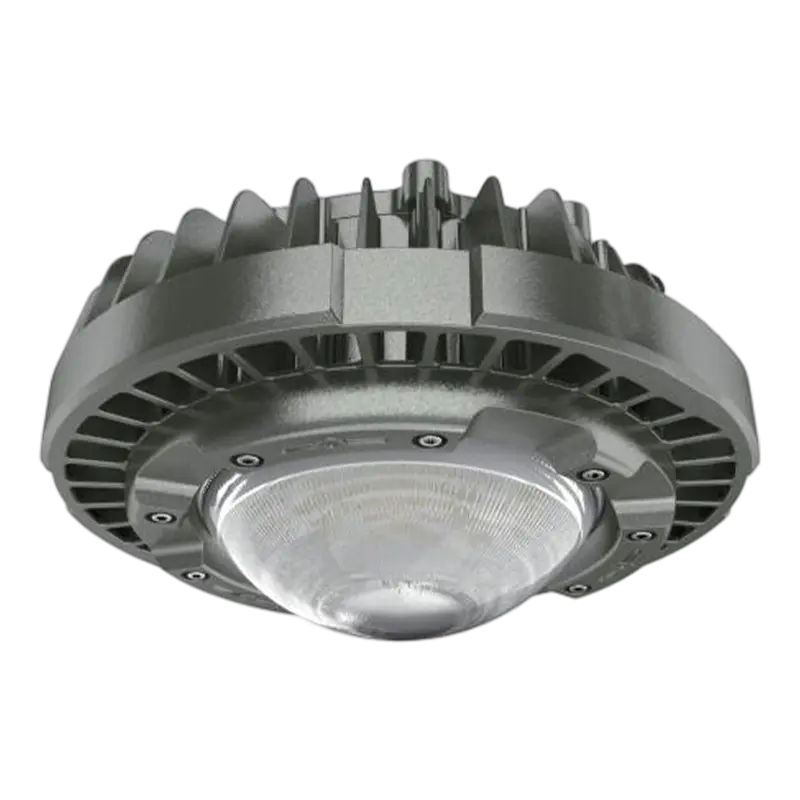
The Corrosion-Resistant Explosion-Proof LED Light is engineered for precisely these demanding conditions. It combines a sealed industrial enclosure, explosion-proof protection, corrosion-resistant construction, and energy-efficient LED technology in one practical lighting solution. The product is designed for explosive gas and dust environments classified under IIA, IIB, and IIC gas groups, as well as Zone 1, Zone 2, Zone 21, and Zone 22 applications.
With a rated power range of 100–140 W, a luminous efficacy of 110–130 lm/W, an IP66 enclosure protection rating, and an explosion-proof marking of Ex db IIC T6 Gb and Ex tb IIIC T80°C Db, this luminaire is suitable for industrial projects where safety, durability, and long service life are essential. Its corrosion-resistant design makes it particularly valuable in locations where conventional explosion-proof lights may deteriorate prematurely.
Why Hazardous-Location Lighting Requires More Than Ordinary LED Performance
Ordinary commercial LED fixtures are generally designed for offices, retail areas, warehouses, roads, or other relatively controlled environments. They may offer good efficiency and long rated life, but they are not necessarily designed to prevent ignition in explosive atmospheres or to withstand aggressive industrial chemicals.
Hazardous environments present several simultaneous challenges. Flammable gases or vapors may be present around processing equipment, tanks, pipelines, or loading areas. Combustible dust may accumulate in production facilities, storage zones, and material-handling areas. Salt-laden air can attack exposed metal surfaces. Chemical vapors can degrade coatings, seals, fasteners, and electrical components. Water spray and condensation can enter poorly sealed equipment and damage internal circuits.
A suitable luminaire must address all of these conditions as part of a unified engineering design. It must control potential ignition sources, protect electrical components, maintain mechanical strength, and prevent environmental contaminants from reaching sensitive internal parts. It must also provide sufficient illumination for operators, inspectors, maintenance personnel, and emergency response teams.
The Corrosion-Resistant Explosion-Proof LED Light is developed around this multi-condition requirement. Its function is not simply to replace a traditional lamp with an LED module. Instead, it is a complete industrial lighting system designed to maintain safe and stable operation in areas where both corrosion and explosion hazards are present.
Core Product Advantages
Explosion-Proof Protection for Gas and Dust Zones
The most important feature of this product is its suitability for hazardous areas containing explosive gas, vapor, or combustible dust. The stated explosion-proof marking is Ex db IIC T6 Gb and Ex tb IIIC T80°C Db. These markings identify the product as a flameproof enclosure for demanding gas environments and as dust-protected equipment for combustible dust environments.
The IIC gas group is associated with highly hazardous gas atmospheres. The T6 temperature class indicates a controlled maximum surface temperature appropriate for applications requiring strict thermal limits. The dust-related marking supports applications involving combustible dust and identifies a maximum surface temperature of 80°C under the stated conditions.
These characteristics provide an important advantage over general industrial LED fixtures that do not have an explosion-proof construction. A standard high-bay or floodlight may be efficient, but it cannot automatically be used in an area where flammable gas or dust may be present. Selecting the correct hazardous-area luminaire helps project designers create a safer and more compliant lighting installation.
Application suitability must always be confirmed against the actual area classification, ambient conditions, installation method, and applicable local regulations. However, the product’s stated markings make it a strong candidate for a wide range of hazardous industrial lighting projects.
Corrosion Resistance for Aggressive Environments
Corrosion is one of the most expensive causes of premature lighting failure in industrial facilities. In a marine environment, salt spray can attack metal housings, screws, brackets, and cable entries. In a chemical plant, acidic or alkaline vapors can weaken coatings and accelerate surface degradation. In offshore locations, humidity and airborne contaminants can combine to create continuous electrochemical attack.
This product is specially engineered to resist chemical corrosion. Available design solutions include anti-corrosion coatings, stainless steel components, and sealed protective structures. These options allow the luminaire to be adapted to different environmental exposure levels rather than treating all projects as identical.
The use of stainless steel components can help protect critical mechanical areas, especially where fasteners or mounting elements are exposed to moisture and corrosive atmospheres. Protective coatings provide an additional barrier between the enclosure and the surrounding environment. Sealed structures help reduce the penetration of water, dust, and corrosive particles.
Compared with a basic painted aluminum fixture or a non-sealed industrial lamp, a corrosion-resistant explosion-proof design can offer better long-term protection in offshore, coastal, chemical, and wastewater applications. The benefit is not limited to appearance. Preserving the enclosure, seals, mounting points, and heat-dissipation surfaces helps protect the product’s mechanical integrity and electrical performance over time.
IP66 Enclosure Protection
The luminaire has an IP66 enclosure protection rating. The first digit indicates a high level of protection against dust ingress, while the second digit indicates protection against powerful water jets. This rating is particularly useful in industrial locations where airborne dust, heavy rain, washdown procedures, spray, or wind-driven moisture may occur.
IP66 protection supports the product’s role in outdoor and semi-outdoor industrial areas. It is relevant for loading yards, processing platforms, storage zones, marine infrastructure, utility facilities, and covered production areas exposed to dust and water.
A sealed enclosure also supports maintenance efficiency. When dust and moisture are prevented from reaching the LED driver and internal electrical connections, the likelihood of contamination-related faults can be reduced. This can help extend service intervals and lower the need for frequent cleaning or component replacement.
IP protection should not be viewed as a substitute for correct installation. Cable glands, conduit connections, mounting orientation, and maintenance practices must be selected to preserve the enclosure rating. Nevertheless, the IP66 design provides a strong foundation for reliable operation in demanding locations.
Efficient LED Illumination
The rated luminous efficacy is 110–130 lm/W. This range indicates that the luminaire is designed to convert electrical power into useful light efficiently. At a rated power of 100–140 W, the product can provide substantial illumination while keeping energy consumption under control.
Energy efficiency is especially important in large facilities with many high-output fixtures. A lighting system may operate for extended periods every day, and even a modest reduction in power consumption can produce meaningful savings across the life of the installation. Lower power demand can also reduce the load on electrical distribution equipment, emergency power systems, and backup generators.
LED technology offers additional operational advantages compared with conventional discharge lamps. It provides immediate startup, stable illumination, and compatibility with modern industrial lighting control strategies. It also avoids routine lamp replacement associated with traditional replaceable-bulb systems.
For facility owners, the value of efficient LED lighting is measured not only by wattage. It also includes reduced maintenance access, fewer production interruptions, lower replacement inventory, and more predictable lighting performance. In hazardous areas, avoiding unnecessary maintenance work can be particularly valuable because access may require permits, shutdowns, gas testing, or specialized personnel.
Stable Performance at a 5700 K Color Temperature
The product uses a 5700 K color temperature. This cool-white light is suitable for many industrial applications where visual clarity, equipment inspection, and task visibility are important. The relatively cool appearance can help operators distinguish surfaces, labels, piping, structural components, and warning signs in large work areas.
Consistent color temperature across a project also helps create a uniform visual environment. This is useful when multiple luminaires are installed across process areas, corridors, platforms, workshops, or outdoor operating zones.
Color temperature selection should be considered together with illuminance, glare control, mounting height, beam distribution, and the visual tasks performed in the area. The 5700 K specification provides a practical industrial lighting option, while project-specific photometric planning can help determine fixture spacing and mounting arrangement.
Detailed Technical Specifications
The following table summarizes the primary specifications provided for the Corrosion-Resistant Explosion-Proof LED Light.
| Specification | Value |
|---|---|
| Product Type | Corrosion-Resistant Explosion-Proof LED Light |
| Rated Power | 100–140 W |
| Rated Voltage | AC 220 V, 50/60 Hz |
| Color Temperature | 5700 K |
| Luminous Efficacy | 110–130 lm/W |
| Enclosure Protection Rating | IP66 |
| Explosion-Proof Marking | Ex db IIC T6 Gb; Ex tb IIIC T80°C Db |
| Dimensions | Diameter 300 × 189 mm |
| Weight | 5.9 kg |
The compact cylindrical format, with a diameter of 300 mm and a height of 189 mm, offers a practical balance between output, enclosure volume, and installation convenience. A net weight of 5.9 kg allows the fixture to provide a robust industrial construction without becoming unnecessarily difficult to handle during installation.
The AC 220 V, 50/60 Hz electrical specification is suitable for many industrial power systems. Project engineers should verify the local supply voltage, frequency, protective device arrangement, grounding method, and wiring requirements before installation. Where the fixture is used in an explosive atmosphere, all electrical work should be completed by qualified personnel following the applicable safety procedures.
Applications in Demanding Industrial Sectors
Offshore Platforms
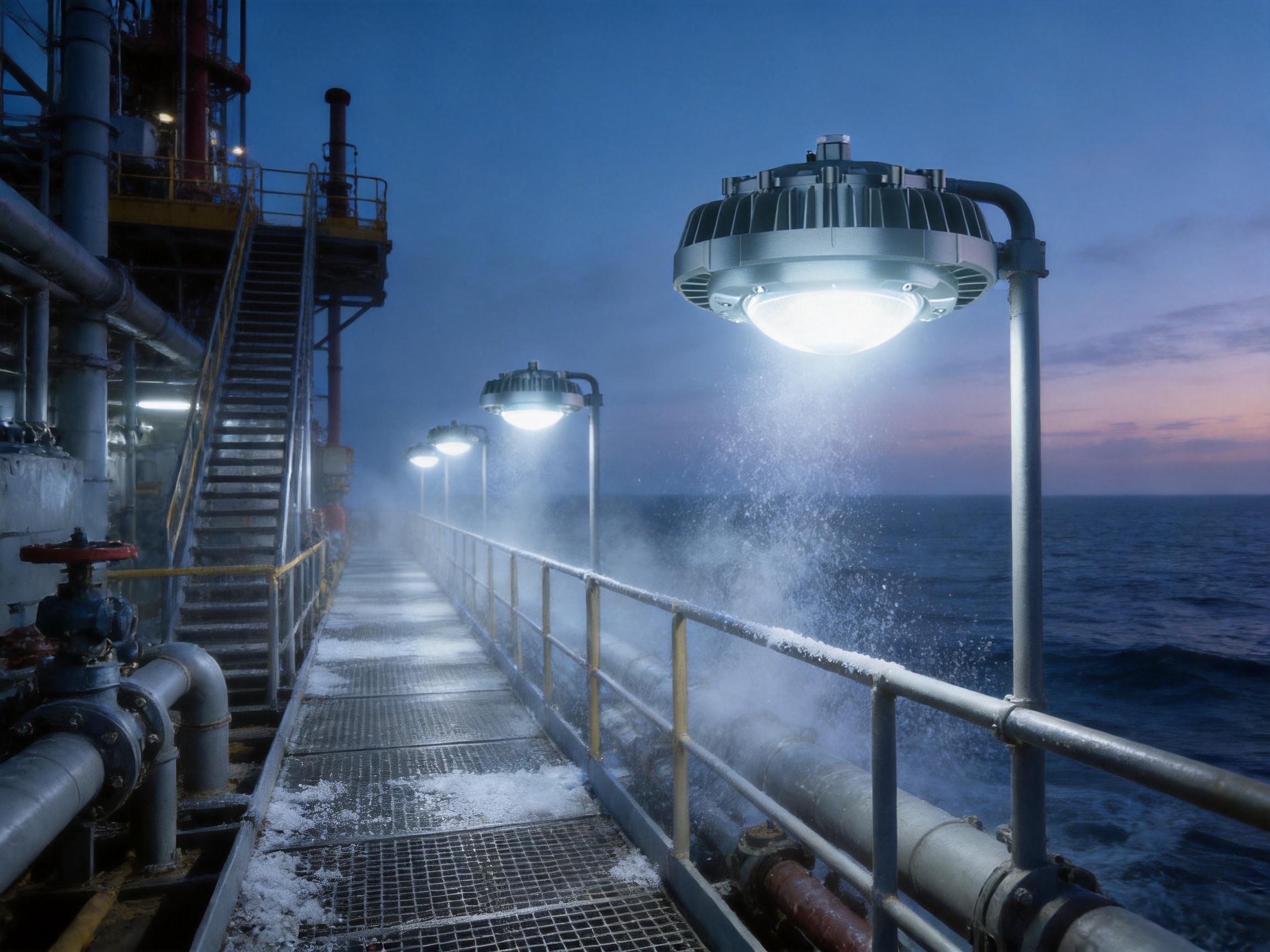
Offshore platforms combine several severe environmental conditions. Salt spray, humidity, wind, vibration, and restricted maintenance access can all affect lighting equipment. In process and utility areas, flammable gases may also be present.
A corrosion-resistant explosion-proof luminaire can be used for walkways, operating decks, equipment areas, access routes, utility zones, and other locations requiring durable illumination. Stainless steel options and protective coatings are particularly valuable in marine atmospheres, where ordinary finishes may degrade more quickly.
Reliable lighting supports routine inspection and emergency response. Operators need clear visibility around valves, pumps, vessels, ladders, handrails, and escape routes. A fixture that resists corrosion and remains sealed can help reduce the frequency of lighting-related maintenance activities on difficult-to-access platforms.
Chemical Processing Plants
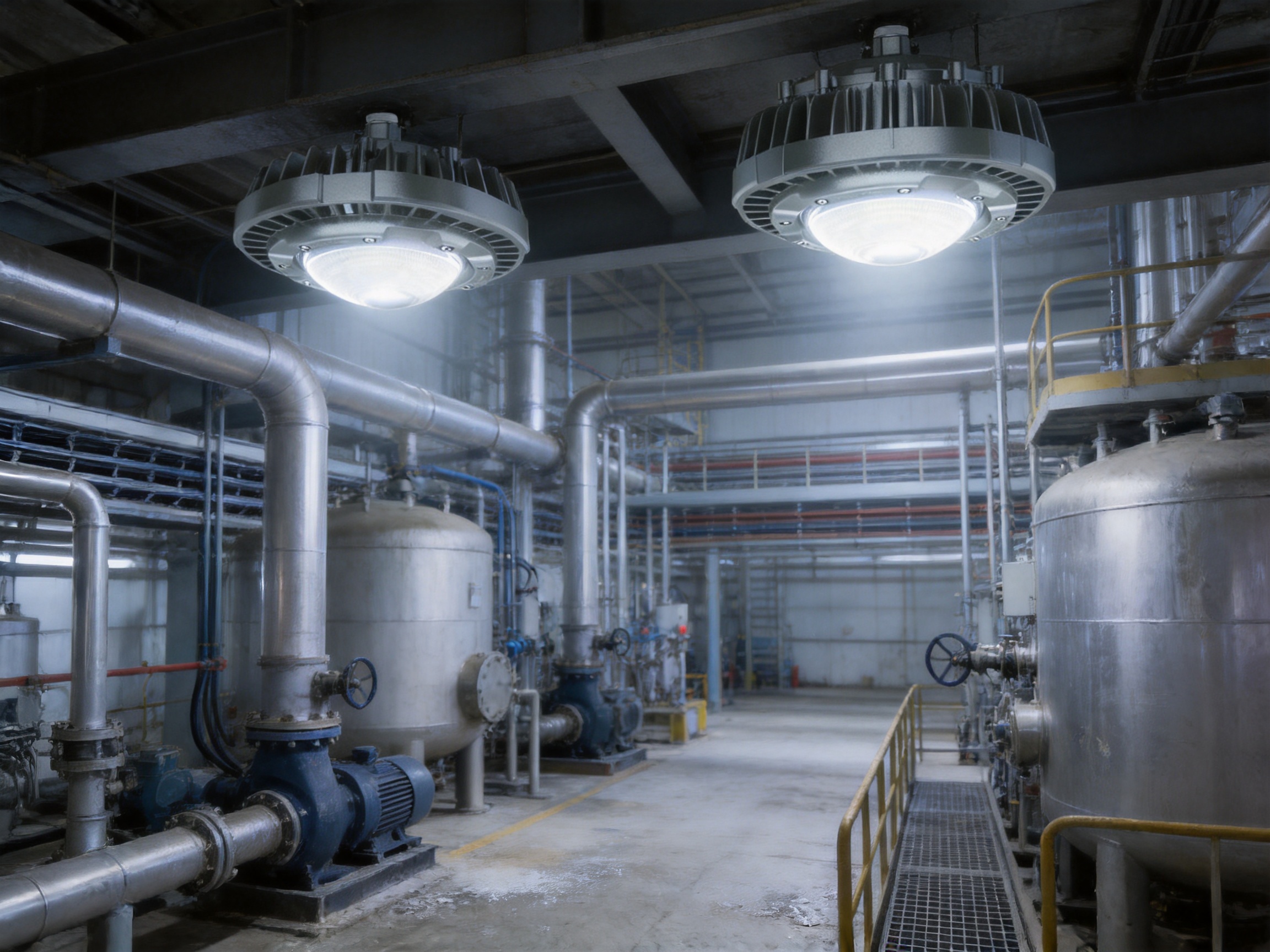
Chemical plants often include areas with corrosive vapors, flammable gases, process dust, and frequent cleaning. The exact exposure varies according to the materials being processed, the ventilation arrangement, and the location of the luminaire.
The product is designed to address the combined requirements of corrosion resistance and hazardous-area protection. It can be considered for process buildings, tank farms, pump areas, loading stations, pipe racks, workshops, and service platforms, subject to the area classification and project specifications.
Its sealed IP66 structure helps protect against dust and water, while the explosion-proof construction supports use in designated hazardous zones. The available coating and material options allow the design to be adapted to different chemical exposure conditions.
Marine Facilities and Coastal Infrastructure
Marine terminals, shipyards, ports, docks, and coastal industrial facilities are exposed to salt-laden air and frequent moisture. Corrosion can affect outdoor fixtures even when they are not directly sprayed with seawater. Wind can transport salt particles into joints, fasteners, and enclosure interfaces.
The product’s corrosion-resistant approach is suitable for these environments. It can be used around loading areas, maintenance zones, storage facilities, access roads, service corridors, and industrial buildings where hazardous-area requirements apply.
Because marine maintenance can be costly and weather-dependent, longer-lasting protective construction can produce operational advantages. Facility owners can reduce the number of unscheduled replacements and improve the predictability of planned maintenance work.
Oil and Gas Facilities
Oil and gas facilities frequently contain classified areas where flammable gases or vapors may be released during normal operation, maintenance, loading, or equipment servicing. Lighting in these zones must be selected carefully according to the relevant hazardous-area classification.
The Ex db IIC T6 Gb marking makes this product suitable for consideration in demanding gas environments when the complete project requirements are satisfied. It may be used in areas such as compressor stations, pump stations, process units, storage zones, metering areas, and transfer facilities.
In addition to explosion protection, oil and gas facilities often require resistance to weather, hydrocarbons, salt, and industrial contamination. The combination of sealed protection, corrosion-resistant options, and LED efficiency provides a practical solution for these conditions.
Dust-Hazardous Industrial Areas
Combustible dust can occur in grain handling, food processing, chemical powder production, bulk material storage, wood processing, and other industrial operations. Dust accumulation on or inside a luminaire can create thermal and maintenance concerns.
The product’s Ex tb IIIC T80°C Db marking supports consideration for combustible dust environments. The IP66 enclosure helps limit dust ingress and provides a smooth protective barrier that can be maintained through appropriate cleaning procedures.
Dust-hazardous applications require careful attention to surface temperature, dust layer thickness, cleaning frequency, and area classification. Project engineers should verify that the product’s stated temperature rating and protection level are appropriate for the specific dust type and operating conditions.
Advantages Compared with Conventional Industrial Fixtures
One Product Addresses Multiple Environmental Risks
A major advantage of this luminaire is the integration of several protective functions. Some products focus primarily on explosion protection, while others emphasize weather resistance or corrosion-resistant finishes. The Corrosion-Resistant Explosion-Proof LED Light is designed to combine hazardous-area protection, dust and water resistance, chemical corrosion resistance, and efficient LED illumination.
This integrated approach simplifies product selection for projects where environmental risks overlap. Instead of treating explosion protection and corrosion resistance as separate requirements, designers can evaluate one luminaire platform against the complete application profile.
Reduced Maintenance Exposure
Maintenance in hazardous or corrosive areas may require more than a simple lamp change. Workers may need to isolate equipment, obtain permits, conduct gas testing, use protective clothing, or schedule work during limited access windows. Any reduction in unnecessary maintenance is therefore valuable.
LED technology reduces routine lamp replacement, while the sealed and corrosion-resistant construction helps protect the fixture from environmental damage. These features can contribute to longer maintenance intervals and improved operational continuity.
The value of reduced maintenance is particularly clear on offshore platforms, elevated structures, tank farms, and facilities that operate continuously. A durable fixture can help reduce labor costs, access equipment requirements, and the risk of disrupting production.
Lower Energy Consumption over the Operating Life
With a luminous efficacy of up to 130 lm/W, the product is designed to produce useful illumination efficiently. Compared with older lighting technologies that require higher power for similar light levels, a modern LED solution can help reduce electricity consumption.
Lower energy use can contribute to reduced operating expenses and a smaller electrical infrastructure requirement. It may also benefit facilities powered by generators or limited-capacity systems, where every reduction in electrical demand can improve resource utilization.
Better Suitability for Long-Term Industrial Projects
Industrial lighting is often expected to operate for many years in environments where access is difficult and replacement work is expensive. A luminaire that combines mechanical protection, corrosion resistance, and LED efficiency can be better suited to long-term facility operation than a low-cost fixture designed for ordinary conditions.
Initial purchase price is only one part of total cost. Project owners should also consider energy, labor, spare parts, lifting equipment, production interruptions, and disposal. A more durable design may provide a better total cost of ownership when evaluated over the expected service period.
Engineering and Manufacturing Strengths
Experience in Outdoor and Industrial Lighting
Cixi HuaSheng Lighting Co., Ltd. is a professional lighting manufacturer located in Ningbo, China. Its product range includes LED street lights, tunnel lights, high-bay lights, linear lights, garden lights, solar lights, grow lights, explosion-proof lights, and other lighting products.
This broad product portfolio is relevant to the development of corrosion-resistant explosion-proof luminaires. Manufacturing experience across outdoor, industrial, municipal, and specialized lighting categories provides a foundation for understanding thermal management, enclosure design, optical performance, mechanical construction, and environmental durability.
The company exports lighting products worldwide and provides solutions for industrial, residential, and municipal projects. This international project experience supports communication with customers who have different technical specifications, regional electrical standards, installation practices, and documentation requirements.
Die-Casting and CNC Machining Capabilities
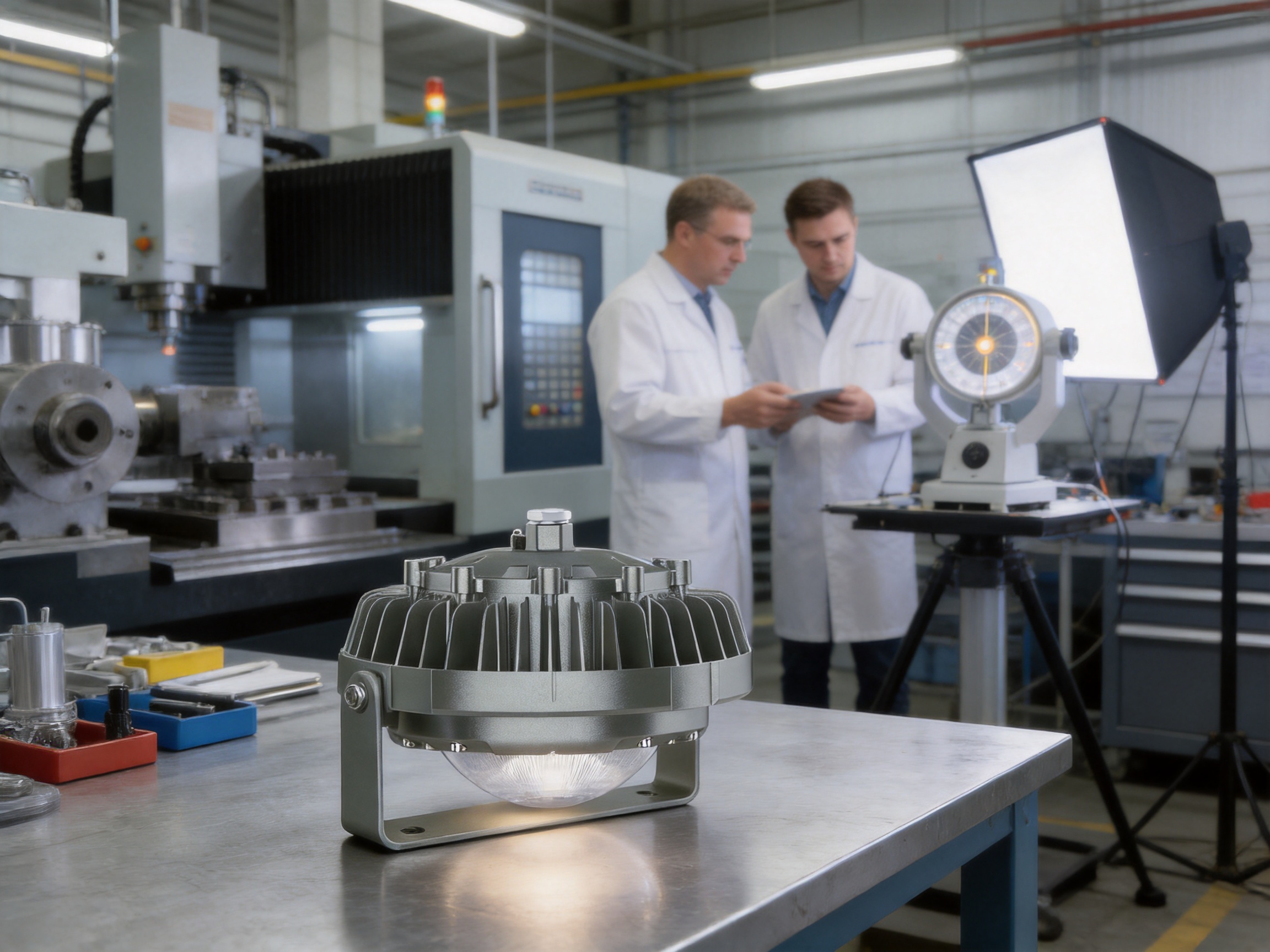
The manufacturer operates die-casting and CNC machining equipment. These capabilities are important for producing consistent metal housings, covers, brackets, mounting interfaces, and precision mechanical components.
Die-casting can support repeatable production of complex enclosure shapes while maintaining dimensional consistency. CNC machining can be used for critical surfaces, threaded interfaces, sealing areas, mounting points, and other features where accuracy is important.
For explosion-proof lighting, mechanical precision is especially significant. Enclosure interfaces, flame paths, covers, cable entries, and mounting components must be produced consistently. For corrosion-resistant lighting, the quality of surface preparation, coating application, and component integration also affects long-term performance.
In-House Mold Design and Manufacturing Support
The company provides mold design and precision die-casting mold manufacturing. Internal mold capability can improve the manufacturer’s control over product development, dimensional repeatability, and design customization.
When a customer requires a modified enclosure, mounting system, heat-dissipation structure, or external form, mold engineering experience can help transform the concept into a production-ready design. It can also support OEM and ODM programs that require customized materials, surface treatments, branding, or application-specific mechanical features.
Control over mold development may shorten communication cycles between design and manufacturing teams. It can also help ensure that design changes are evaluated with production feasibility, tooling cost, assembly requirements, and quality considerations in mind.
Testing and Photometric Equipment
The manufacturer has aging lines and goniophotometers. Aging equipment can be used to support product reliability evaluation and production quality control. A goniophotometer provides photometric measurement capabilities for assessing light distribution and optical performance.
Photometric testing is important when designing lighting layouts for industrial facilities. It can help verify luminous intensity distribution, beam characteristics, and light utilization. These measurements support lighting calculations, project documentation, and DIALux-based design services.
For customers, access to photometric and aging equipment provides greater confidence that the product is evaluated not only as a mechanical enclosure but also as a complete lighting system. Testing and measurement can support more consistent production and better alignment between design expectations and installed performance.
Quality and Environmental Management Systems
The company is certified to ISO 9001, ISO 14001, and ISO 45001. These management systems relate to quality management, environmental management, and occupational health and safety management respectively.
ISO 9001 supports structured processes for quality planning, production control, inspection, corrective action, and continuous improvement. ISO 14001 reflects a systematic approach to environmental management. ISO 45001 supports workplace health and safety practices.
For industrial customers, management system certifications can be an important part of supplier evaluation. They do not replace product-specific certification or project approval, but they indicate that the manufacturer has established formal processes for managing quality, environmental responsibilities, and workplace safety.
International Certifications and Partnerships
The company states that relevant products are certified by CB and CE and that it has established strategic partnerships with international companies. These credentials can support export projects and provide customers with documentation for regional procurement and compliance review.
Because hazardous-area lighting is highly application-specific, purchasers should request the precise certificates, test reports, marking details, and scope of approval for the selected product configuration. Certification information should match the exact model, electrical rating, enclosure version, and intended application.
OEM and ODM Customization Options
Different industrial environments require different levels of protection. A coastal storage terminal may require stronger marine corrosion resistance, while a chemical plant may need a coating system selected for a particular atmosphere. A mining or dust-processing facility may require different mounting and cleaning considerations.
The manufacturer offers OEM and ODM support, including material selection, coating level, and environmental adaptation. This enables customers to specify a product configuration based on the actual project conditions rather than selecting only from a fixed standard version.
Material Selection
Material selection can include the enclosure material, fasteners, brackets, cable-entry components, and other exposed parts. Stainless steel components may be specified for areas where corrosion resistance is especially important. The selection should be based on chemical exposure, salt concentration, temperature, mechanical stress, and expected maintenance conditions.
Coating Level
Protective coating requirements vary according to the environment. A project located inland under a roof may require a different coating system from an offshore platform exposed to continuous salt spray. OEM and ODM cooperation allows the customer and manufacturer to discuss coating thickness, surface preparation, finish, color, and environmental suitability.
Environmental Adaptation
Environmental adaptation may involve mounting arrangements, cable-entry solutions, brackets, optical configuration, external dimensions, or other mechanical features. The objective is to ensure that the luminaire fits the installation and provides the required light distribution without compromising the protective enclosure.
Any customization involving explosion-proof construction must be carefully reviewed. Changes to the enclosure, electrical components, seals, flame paths, or temperature characteristics may affect the applicable certification or approval. Customization should therefore be developed through controlled engineering and documented validation.
Lighting Design and Installation Considerations
Area Classification
Before selecting a fixture, the project team should identify the hazardous-area classification. Gas and vapor zones, dust zones, gas groups, dust groups, temperature classes, equipment protection levels, and ambient conditions must all be evaluated.
The product is stated for IIA, IIB, and IIC gas groups and Zone 1/2 and Zone 21/22 classifications. The actual suitability must be confirmed against the final project documentation and the regulations governing the installation location.
Mounting Height and Spacing
Mounting height and spacing affect the achieved illuminance, uniformity, glare, and shadowing. A photometric layout should be prepared for each area, taking into account the fixture’s light distribution, mounting angle, obstructions, equipment height, and task requirements.
Industrial facilities often include pipes, vessels, platforms, ducts, cable trays, and structural steel. These elements can block light or create shadows. A professional DIALux design or equivalent calculation can help determine the number and arrangement of fixtures before installation begins.
Thermal Management
LED performance depends on effective heat dissipation. The luminaire’s enclosure, internal thermal path, installation orientation, and surrounding air temperature all influence operating temperature.
Fixtures should not be installed where ventilation is blocked or where heat from nearby equipment exceeds the permitted ambient conditions. Adequate clearance and correct mounting help maintain stable LED and driver performance.
Cable Entries and Grounding
Cable glands, conduit fittings, and blanking elements must be compatible with the enclosure protection rating and hazardous-area requirements. Improper cable-entry installation can compromise both IP protection and explosion-proof integrity.
Grounding and bonding should be completed according to the applicable electrical code and project design. All connections should be inspected by qualified personnel before energization.
Inspection and Maintenance
Although the luminaire is designed for durability, regular inspection remains important. Maintenance teams should check for coating damage, corrosion, loose fasteners, cable-entry deterioration, enclosure damage, and abnormal light output.
Cleaning frequency should be based on the environment. Dust, salt, chemical deposits, and industrial residue can reduce light output and accelerate surface degradation if not removed. Cleaning methods must be compatible with the coating, enclosure, seals, and hazardous-area requirements.
Procurement Guidance for Project Owners and Contractors
When purchasing explosion-proof lighting, buyers should evaluate the complete product configuration rather than relying only on a product name. The following questions can help establish whether the luminaire is suitable for the project.
What is the exact hazardous-area classification? Does the required gas or dust group match the product marking? Is the temperature class appropriate for the gases, vapors, or dust present? What is the expected ambient temperature range? Will the fixture be exposed to salt spray, acids, alkalis, solvents, or cleaning chemicals?
Purchasers should also confirm the power supply, light output, color temperature, mounting method, cable-entry configuration, optical distribution, enclosure material, coating specification, and availability of replacement components.
For large projects, buyers should request photometric files, installation drawings, technical datasheets, quality documents, certificates, test reports, packaging information, and inspection procedures. Early review helps prevent delays during procurement, installation, and project acceptance.
OEM and ODM customers should define the customization scope at the quotation stage. Material changes, coating levels, mounting accessories, electrical components, logo treatment, packaging, and documentation requirements may affect tooling, lead time, testing, and approval status.
Total Cost of Ownership
The economic value of industrial lighting should be assessed over the product’s operating life. A low purchase price may not represent the lowest total cost if the fixture requires frequent replacement, consumes more energy, or suffers from corrosion-related failures.
The Corrosion-Resistant Explosion-Proof LED Light is designed to help control several long-term cost factors. Its LED light source supports efficient operation. Its sealed IP66 enclosure helps protect internal components. Its corrosion-resistant construction is intended for harsh environments. Its explosion-proof design can reduce the need to use separate lighting solutions for hazardous and non-hazardous areas.
Maintenance savings may include fewer lamp replacements, fewer emergency callouts, reduced access equipment, and less production downtime. Energy savings depend on the number of fixtures, operating hours, electricity price, lighting layout, and comparison technology, but the product’s 110–130 lm/W efficacy provides a favorable basis for energy-conscious design.
A total-cost analysis should also include installation labor, inspection, spare parts, cleaning, replacement scheduling, and disposal. In offshore and remote facilities, logistics can represent a substantial portion of the maintenance budget. Durable equipment can therefore provide value beyond its initial technical specifications.
Why Manufacturer Support Matters
Specialized industrial lighting projects often require more than a standard product catalog. Customers may need lighting calculations, installation recommendations, custom brackets, material advice, environmental adaptation, documentation, and coordination with other electrical equipment.
The manufacturer provides one-stop services including efficient lighting solutions, DIALux designs, mold design, OEM/ODM, SKD/CKD customization, and delivery. This range of services can support customers from early product selection through project implementation.
DIALux design assistance can help verify illuminance and uniformity. Mold design and die-casting capabilities support customized mechanical solutions. OEM and ODM services support customer-specific product requirements. SKD and CKD options may assist customers who require local assembly or regional manufacturing arrangements.
Effective communication is especially important for explosion-proof products. The customer, lighting manufacturer, electrical contractor, and certification personnel must have a shared understanding of the application. Clear technical documentation helps reduce the risk of incorrect installation or unauthorized product modification.
Quality, Reliability, and Project Confidence
Reliability in hazardous industrial lighting is the result of multiple factors working together. The LED package and driver must operate consistently. The housing must maintain mechanical strength. Seals and cable entries must protect against environmental ingress. Coatings must be applied correctly. Heat must be dissipated effectively. Production processes must be controlled.
The manufacturer’s combination of die-casting, CNC machining, aging lines, photometric equipment, quality management systems, and product certification support provides a structured foundation for these requirements.
Customers can further improve project confidence by requesting pre-shipment inspection, sample approval, production photographs, test documentation, and installation guidance. For major projects, it may also be beneficial to establish acceptance criteria for light output, enclosure condition, markings, packaging, and documentation before mass production.
Q&A
What is the main purpose of the Corrosion-Resistant Explosion-Proof LED Light?
The main purpose is to provide safe, efficient, and durable illumination in industrial locations where explosive gas or dust may be present and where the luminaire may also be exposed to corrosive chemicals, salt spray, moisture, or harsh weather.
Which hazardous areas can this product serve?
The product is stated for IIA, IIB, and IIC gas groups and Zone 1, Zone 2, Zone 21, and Zone 22 classifications. The explosion-proof marking is Ex db IIC T6 Gb and Ex tb IIIC T80°C Db. Final suitability must be confirmed against the project’s area classification and local regulations.
What does the IP66 rating mean?
IP66 indicates strong protection against dust ingress and protection against powerful water jets. It makes the luminaire suitable for many dusty, wet, outdoor, and industrial environments when correctly installed.
Why is corrosion resistance important for explosion-proof lighting?
Corrosion can weaken housings, fasteners, brackets, coatings, cable entries, and sealing interfaces. In hazardous areas, deterioration of the enclosure can affect both reliability and safety. Corrosion-resistant materials, coatings, and sealed structures help protect the luminaire in chemical, marine, offshore, and coastal environments.
What is the rated power range?
The rated power range is 100–140 W. The exact configuration should be selected according to the required illumination, mounting height, optical distribution, and project design.
What is the luminous efficacy?
The stated luminous efficacy is 110–130 lm/W. This indicates an efficient LED design that can help reduce energy consumption while providing industrial illumination.
What color temperature does the product use?
The standard color temperature is 5700 K, which produces a cool-white light suitable for many industrial inspection, operation, access, and maintenance areas.
Can the product be customized?
Yes. OEM and ODM options include material selection, coating level, and environmental adaptation. Customers can discuss mounting, enclosure, finish, packaging, documentation, and other requirements with the manufacturer.
Can stainless steel components be specified?
Stainless steel components are available as part of the anti-corrosion design options. The appropriate material should be selected according to the chemical exposure, salt level, mechanical requirements, and project standards.
Does the manufacturer provide lighting design assistance?
Yes. The company provides efficient lighting solutions and DIALux designs. These services can assist with fixture spacing, illuminance, uniformity, and layout planning.
What manufacturing capabilities support this product?
The manufacturer has die-casting and CNC machining equipment, aging lines, goniophotometers, mold design capabilities, and production experience covering outdoor, industrial, municipal, and specialized lighting products.
What management system certifications does the company hold?
The company states that it is certified to ISO 9001, ISO 14001, and ISO 45001. Relevant products are also stated to have CB and CE certification. Customers should request the exact documents applicable to the selected product configuration.
How should the product be maintained?
Maintenance should include inspection of the enclosure, coating, fasteners, cable entries, mounting system, and light output. Cleaning frequency should reflect the amount of dust, salt, chemical residue, and moisture in the environment. All maintenance in hazardous areas should be performed by qualified personnel according to site procedures.
Is this product suitable for every outdoor location?
No product should be assumed suitable for every environment without evaluation. The luminaire is designed for harsh industrial and hazardous locations, but the project team must confirm ambient temperature, chemical exposure, area classification, voltage, mounting method, and local compliance requirements before selection.
Conclusion
The Corrosion-Resistant Explosion-Proof LED Light is designed for industrial applications where conventional lighting cannot provide sufficient protection. It combines Ex db IIC T6 Gb and Ex tb IIIC T80°C Db protection markings with an IP66 enclosure, corrosion-resistant material and coating options, and efficient LED illumination.
Its 100–140 W power range, 110–130 lm/W luminous efficacy, 5700 K color temperature, compact 300 × 189 mm dimensions, and 5.9 kg weight make it a practical solution for many industrial lighting layouts. The product is especially relevant to offshore platforms, chemical plants, marine facilities, oil and gas installations, coastal infrastructure, and dust-hazardous industrial areas.
The product’s advantages are supported by the manufacturer’s die-casting and CNC machining capabilities, mold design expertise, aging lines, goniophotometers, quality and environmental management systems, and OEM/ODM services. These strengths allow the company to provide more than a standard luminaire. It can support product customization, photometric planning, environmental adaptation, project documentation, and delivery for international customers.
For facility owners and contractors, the most important benefit is the combination of safety, corrosion resistance, efficiency, and maintainability. When the product is correctly specified, installed, inspected, and maintained, it can contribute to reliable illumination and lower lifecycle costs in some of the most demanding industrial environments.
References
International Electrotechnical Commission. IEC 60079 Series: Explosive Atmospheres.
International Electrotechnical Commission. IEC 60529: Degrees of Protection Provided by Enclosures.
International Organization for Standardization. ISO 9001: Quality Management Systems.
International Organization for Standardization. ISO 14001: Environmental Management Systems.
International Organization for Standardization. ISO 45001: Occupational Health and Safety Management Systems.
Illuminating Engineering Society. The Lighting Handbook.
Product technical information supplied for the Corrosion-Resistant Explosion-Proof LED Light.
Product: Corrosion-Resistant Explosion-Proof LED Light

Solusi Kustom & OEM untuk Merek Pencahayaan Global
Hak Cipta © Cixi HuaSheng Lighting Co., Ltd. Semua Hak Dilindungi Undang-undang.
Pemasok Cetakan Die-Casting
