 English
 中文简体
 русский
 Français
 Español
 عربى
 Indonesia

Aluminum LED Street Light JD-1075: Efficient, Durable, and Customizable Roadway Lighting
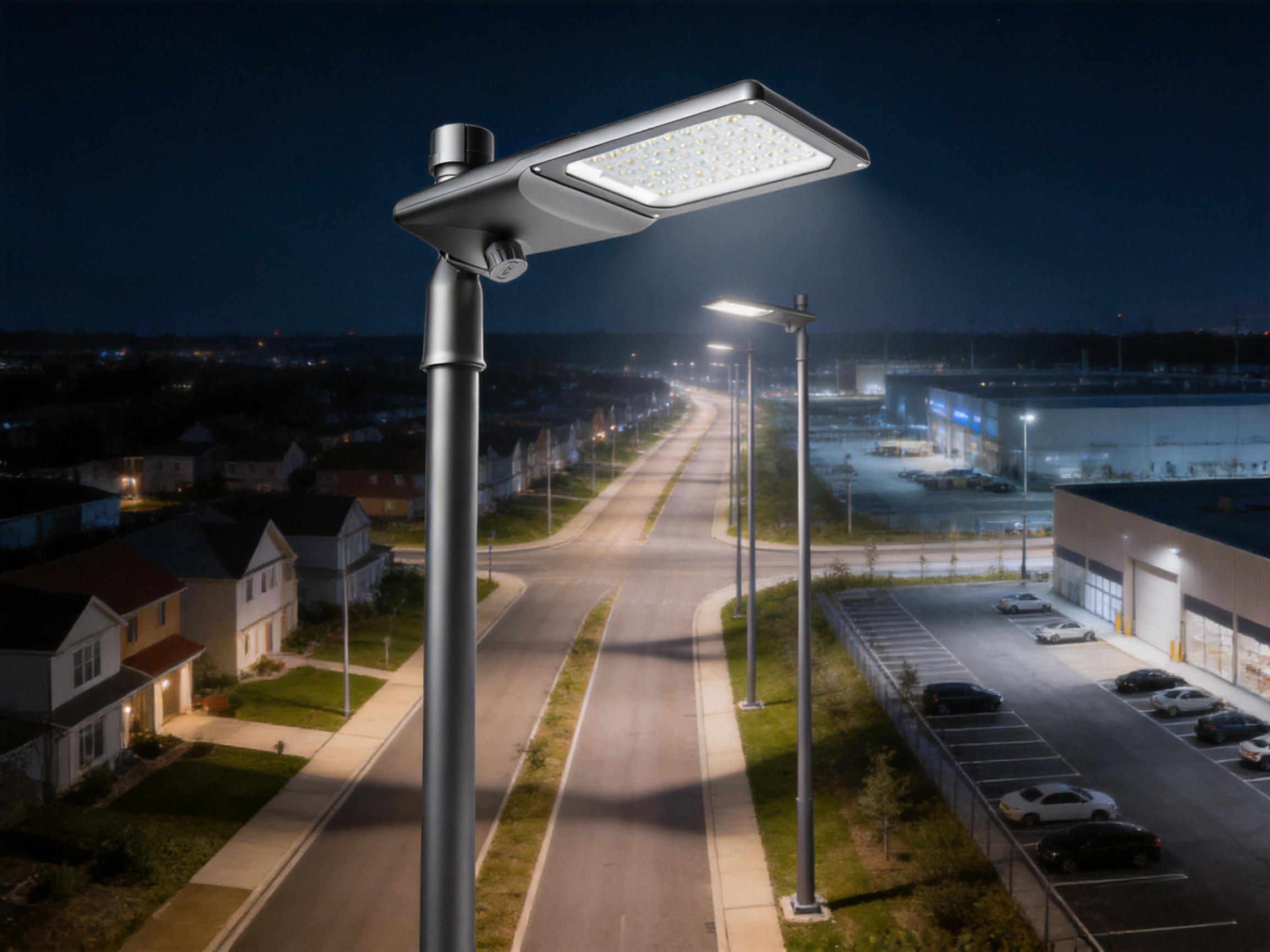
Modern road infrastructure requires lighting systems that provide dependable visibility, controlled energy consumption, long service life, and practical installation. The Aluminum LED Street Light JD-1075 is designed as a professional roadway lighting solution for municipal streets, commercial developments, industrial parks, residential communities, parking areas, and other outdoor applications where consistent illumination is essential. Its power range from 30W to 240W enables project planners to select an appropriate configuration for different road widths, mounting heights, traffic conditions, and lighting requirements.
Developed with an aluminum housing, efficient thermal management, high-performance LED components, and flexible optical options, the JD-1075 combines practical engineering with production flexibility. It is available with 3030 or 5050 LED packages and offers an efficacy range of 130 to 160 lumens per watt. This balance of output and power consumption allows buyers to pursue lower operating costs without compromising the basic requirements of professional road lighting.
For contractors, distributors, municipal buyers, and lighting designers, the value of a street light is determined by more than nominal wattage. Housing quality, heat dissipation, optical control, electrical reliability, installation convenience, quality assurance, and customization capability all influence total project performance. The JD-1075 is positioned to address these requirements through a robust aluminum structure and a manufacturing process supported by die-casting, CNC machining, aging lines, photometric testing, and systematic quality control.
Product Overview
The Aluminum LED Street Light JD-1075 is a modular outdoor fixture intended for road and area illumination. The product is engineered to deliver stable light output in outdoor environments where equipment may be exposed to temperature changes, humidity, dust, vibration, and long operating hours. Its design supports a broad range of applications, from local access roads and residential streets to commercial roadways and industrial transport routes.
The fixture supports power selections between 30W and 240W. This wide range is important because lighting projects rarely have identical requirements. A narrow residential road may require a compact low-power fixture, while a multi-lane roadway or industrial access route may need a higher-output configuration. By using one product platform across multiple power levels, buyers can simplify product selection, streamline spare-parts planning, and create a more consistent visual appearance across a project.
The JD-1075 uses 3030 or 5050 LED packages. These LED options provide flexibility for different performance targets, optical layouts, and project budgets. Depending on the selected configuration, the fixture can be adapted to support different light distribution requirements. This is especially useful when the distance between poles, road width, mounting height, or required uniformity changes from one project to another.
With an efficacy range of 130 to 160 lumens per watt, the product is designed to produce a high level of illumination from a comparatively moderate electrical input. Actual performance depends on the selected LED package, drive current, optical system, color temperature, operating conditions, and configuration. Nevertheless, the stated efficacy range demonstrates the product’s focus on efficient operation and reduced energy consumption.
Key Technical Specifications
| Item | Specification |
|---|---|
| Product | Aluminum LED Street Light JD-1075 |
| Application Category | LED Street Light |
| Power Range | 30W to 240W |
| LED Options | 3030 or 5050 |
| Lighting Efficacy | 130 to 160 lm/W |
| Small Size | 576 x 197 x 136 mm |
| Medium Size | 640 x 233 x 144 mm |
| Large Size | 701 x 282 x 145 mm |
| Housing Material | Aluminum construction |
| Primary Use | Roads, streets, commercial areas, industrial sites, and outdoor circulation zones |
The three available body sizes support different wattage and installation requirements. The compact size measures 576 x 197 x 136 millimeters, the medium size measures 640 x 233 x 144 millimeters, and the large size measures 701 x 282 x 145 millimeters. Offering multiple dimensions allows the fixture to maintain a balanced relationship between housing area, heat dissipation, optical coverage, and installed power.
These dimensions also provide practical flexibility for project design. Smaller configurations may be suitable for low mounting heights and narrower roads, while larger configurations can accommodate higher-output LED systems for broader road surfaces. The final selection should be based on a photometric design, pole spacing, mounting height, road geometry, lighting class, and local regulations rather than wattage alone.
Why Aluminum Matters in Street Lighting
Aluminum is widely used in professional outdoor lighting because it combines low weight, mechanical strength, thermal conductivity, and corrosion-resistant potential when properly finished. In a street light, the housing has several functions at the same time. It protects internal components, supports the optical and electrical assemblies, provides mounting strength, and transfers heat away from the LED modules and driver.
The aluminum structure of the JD-1075 helps create a practical balance between durability and manageable installation weight. A fixture that is excessively heavy can increase demands on poles, brackets, lifting equipment, and installation labor. A well-designed aluminum housing can provide the required structural support while remaining suitable for routine handling by installation teams.
Thermal performance is particularly important for LED lighting. LEDs are efficient, but their long-term output and reliability can be affected by excessive heat. When heat is not transferred effectively, LED junction temperatures may rise, accelerating lumen depreciation and placing additional stress on electronic components. The JD-1075 is designed with efficient thermal management so that heat generated during operation can be directed through the housing and released into the surrounding environment.
Thermal design also contributes to more stable performance across changing seasons. Roadway fixtures may operate in hot summer conditions, cold winter conditions, and rapidly changing weather. A housing that supports effective heat dissipation helps maintain a more controlled internal operating environment. This does not eliminate the need for correct installation or appropriate environmental protection, but it provides a strong foundation for outdoor reliability.
Energy Efficiency and Operating Cost Control
Street lighting often operates for many hours every night. As a result, even a modest improvement in efficacy can generate meaningful savings over the operating life of a project. A fixture delivering more lumens per watt can provide the required illumination with lower installed wattage, or it can deliver more useful light within the same power budget.
The JD-1075 offers an efficacy range of 130 to 160 lumens per watt. For buyers, this creates several possible advantages. First, the fixture may reduce electricity consumption compared with older conventional luminaires. Second, lower energy use can reduce the operating cost of large road networks. Third, reduced electricity demand can support sustainability objectives and help organizations manage energy-related emissions.
Energy efficiency should be evaluated together with optical performance. A high efficacy figure is valuable only when light is directed effectively onto the roadway. Poorly controlled light can create bright areas, dark areas, glare, or unnecessary spill light. The JD-1075 is intended to support flexible optical design so that project engineers can match the light distribution to the roadway layout rather than simply increasing power to compensate for inefficient distribution.
For a reliable economic assessment, buyers should consider more than the initial purchase price. Total cost of ownership may include electricity, replacement lamps or drivers, maintenance visits, access equipment, traffic management, inventory, and disposal. A durable LED street light with stable output can reduce the frequency of maintenance interventions. When multiplied across hundreds or thousands of fixtures, this reduction can be commercially significant.
The power range of 30W to 240W further supports cost control because it reduces the risk of over-lighting. A buyer can select a configuration suited to the actual lighting requirement instead of installing the same high-power product everywhere. Properly matched power selection can reduce both energy waste and unnecessary equipment cost.
Optical Flexibility for Different Road Layouts
Roads differ in width, direction, traffic volume, pole arrangement, and surrounding environment. A road with poles installed along one side may require a different distribution from a divided roadway with a central median. A pedestrian-oriented commercial street may have different visual priorities from an industrial access road used by heavy vehicles.
The JD-1075 supports flexible optical design to accommodate these variations. Optical flexibility can involve the choice of lens arrangement, beam distribution, LED layout, mounting orientation, and power level. The purpose is to place useful light where it is needed while limiting excessive glare and unwanted spill toward adjacent properties or natural areas.
Effective optical design can improve roadway uniformity. Uniformity refers to the consistency of illumination across the area being lit. If the contrast between bright and dark zones is too high, drivers may experience visual discomfort or reduced ability to identify obstacles. A suitable optical system helps create a more balanced lighting pattern between poles.
Optical control is also relevant to compliance and community acceptance. Light trespass into windows, glare toward drivers, and unnecessary illumination of neighboring areas can create complaints and regulatory concerns. A fixture capable of being adapted to the project layout gives designers more opportunities to control these issues at the planning stage.
Lighting calculations should be performed using the actual product photometry and project parameters. These parameters may include pole height, pole spacing, road width, carriageway arrangement, setback, maintenance factor, target illuminance, uniformity requirements, and environmental conditions. The manufacturer’s ability to support lighting solutions and DIALux designs can assist buyers in evaluating the fixture before installation.
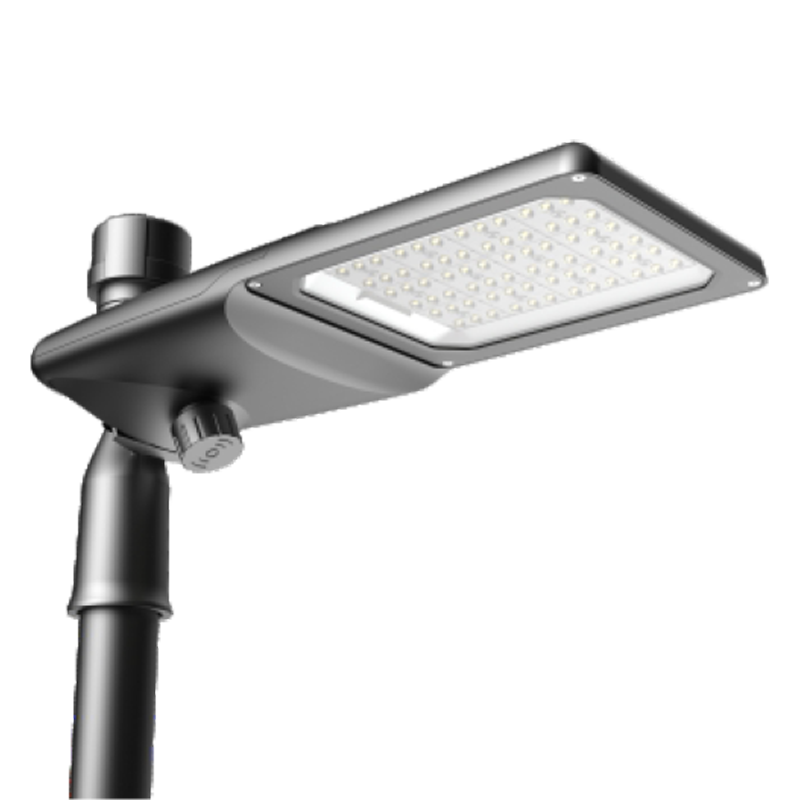
Aluminum LED Street Light JD-1075
Mechanical Design and Outdoor Durability
Outdoor street lights must withstand repeated exposure to environmental conditions. Rain, dust, humidity, wind, sunlight, temperature cycling, and vibration can all affect a luminaire over time. The mechanical design therefore has a direct influence on product longevity and maintenance requirements.
The aluminum housing of the JD-1075 is intended to provide a firm protective structure for the LED modules, driver, and related components. A stable housing can help maintain the position of the optical system and reduce the possibility of mechanical movement affecting the light distribution. It also provides a practical base for mounting hardware and service access.
Outdoor durability depends on the entire product system rather than the housing alone. Sealing methods, gaskets, fasteners, surface treatment, cable entry, driver protection, and assembly quality all contribute to environmental performance. For this reason, buyers should review the complete technical documentation and requested certifications for the exact configuration being purchased.
The product is manufactured by a company with experience in outdoor lighting products, including street lights, tunnel lights, high-bay lights, linear lights, garden lights, solar lights, grow lights, and explosion-proof lights. Exposure to different lighting categories can strengthen understanding of thermal, optical, electrical, and mechanical requirements across challenging applications.
For projects located in coastal, industrial, or highly humid areas, the buyer should specify the required corrosion protection and environmental conditions during the quotation process. Surface finish, hardware selection, coating performance, and maintenance planning may need to be reviewed according to the installation environment.
Manufacturing Capabilities Behind the Product
The performance of a professional street light depends heavily on the consistency of its manufacturing process. Even a well-designed product can experience reliability problems if casting, machining, assembly, aging, or testing is not properly controlled. The manufacturer of the JD-1075 operates a production system that includes die-casting and CNC machines, aging lines, and photometric equipment.
Die-Casting Production
Die-casting is an important process for producing aluminum lighting housings with repeatable dimensions and integrated structural features. A properly designed die-cast housing can include heat-dissipation surfaces, mounting areas, reinforcing sections, and channels for component placement. This reduces the need for multiple separate parts and can improve assembly consistency.
Dimensional repeatability is valuable in street-light production because it supports consistent fit between the housing, cover, LED board, driver compartment, mounting section, and sealing components. When parts are produced within controlled tolerances, assembly teams can achieve more stable results and reduce the risk of gaps, misalignment, or unnecessary rework.
Die-casting also supports scalable production. Once the mold is developed and validated, the manufacturing process can produce repeated housing units with a consistent shape. This is useful for large municipal or commercial projects that require many fixtures with matching appearance and performance.
CNC Machining and Precision Finishing
CNC machining is used to improve the precision of selected housing features. Machined areas may include mounting interfaces, threaded holes, contact surfaces, cable openings, or other points where dimensional accuracy affects assembly and installation. Precision machining can help ensure that the fixture attaches correctly to a pole arm or bracket.
For customized orders, CNC capability is especially useful. Buyers may require a modified mounting interface, a revised cable entry, a particular appearance, or another mechanical adjustment. CNC processing can support these modifications more efficiently than completely manual fabrication, particularly when the required dimensions and tolerances are clearly defined.
Combining die-casting with CNC machining provides a practical balance. Die-casting delivers efficient production of the primary housing, while machining refines critical areas where closer tolerances are required. This combination helps support both standard production and customized manufacturing services.
Aging and Reliability Stabilization
Aging lines are used to operate products or components under controlled conditions for a defined period. The purpose is to identify early failures, stabilize performance, and verify that assemblies can operate as expected before shipment. For LED street lights, aging may help reveal issues associated with drivers, LED boards, wiring, connectors, solder joints, or assembly procedures.
Although aging cannot predict every possible field condition, it provides an important layer of quality control. Products that complete a controlled aging process can be evaluated before they reach the customer. This reduces the likelihood that obvious early-stage electrical or assembly problems will remain undiscovered until installation.
Consistent aging procedures are particularly important for large orders. If hundreds of fixtures are being shipped to one project, buyers need confidence that the units have passed a repeatable inspection process. The use of dedicated aging lines indicates an organized approach to production rather than reliance only on visual inspection.
Photometric Measurement
Goniophotometers and related photometric equipment are used to measure the distribution of light from a luminaire. These measurements can provide data about luminous intensity, beam angles, total luminous flux, uniformity potential, and other characteristics required for lighting design.
Photometric testing is important because the useful performance of a street light depends on where the light goes, not only how much light the LEDs produce. Accurate photometric data allows designers to build more reliable roadway simulations and select suitable pole spacing and mounting arrangements.
The availability of photometric testing equipment supports product development as well as customer service. Engineers can evaluate different lenses, LED layouts, power levels, and housing configurations. The resulting data can then support project-specific recommendations and DIALux calculations.
Quality Management and Certification Support
The manufacturer states that its management system is certified to ISO 9001, ISO 14001, and ISO 45001. These standards address quality management, environmental management, and occupational health and safety management respectively. Certification does not replace product testing, but it indicates that the organization has established formal systems in important areas of operation.
ISO 9001 focuses on consistent processes, customer requirements, documentation, corrective actions, and continual improvement. For a lighting buyer, a quality management system can support better control of incoming materials, production procedures, inspection records, nonconformities, and customer feedback.
ISO 14001 addresses environmental management. This is relevant to modern lighting projects because customers increasingly evaluate energy consumption, manufacturing practices, material use, waste management, and product life-cycle considerations. An environmental management framework can help a manufacturer identify and control environmental impacts associated with production.
ISO 45001 focuses on occupational health and safety. Manufacturing facilities that use die-casting equipment, CNC machinery, electrical test systems, and assembly lines require structured safety procedures. A safer workplace can also contribute to more stable operations and responsible supply-chain performance.
The company also identifies relevant products as certified by CB and CE. Buyers should confirm the specific certificates, test reports, product versions, and applicable standards for the exact JD-1075 configuration under consideration. Certification details can vary according to electrical design, market destination, driver selection, and product modification.
Advantages Compared with Conventional Street Lighting
The JD-1075 offers several advantages when compared with older conventional street lighting technologies. Traditional high-intensity discharge systems may require longer warm-up periods, more frequent lamp replacement, and higher energy consumption. LED systems can provide immediate illumination, more controllable output, and improved compatibility with modern lighting controls.
LED fixtures also support more precise optical design. Conventional lamps often emit light in a broad pattern, requiring reflectors to redirect it toward the roadway. A modern LED street light can use multiple LED packages and dedicated lenses to create a more controlled distribution. This can improve useful light utilization and reduce wasted illumination outside the target area.
The JD-1075’s range of 30W to 240W is another advantage over one-size-fits-all lighting strategies. A single conventional luminaire type may be used across multiple road conditions even when the actual lighting requirements vary significantly. A configurable LED platform makes it easier to select an appropriate power and physical size for each location.
Thermal management is also a key distinction. Modern LED fixtures are designed with heat dissipation in mind, whereas older systems may use different thermal principles and may not provide the same level of integration between the light source and housing. Effective heat management can help protect LED performance and extend the useful service period.
Compared with low-cost fixtures that rely on minimal housing material or poorly controlled assembly, a product supported by die-casting, CNC machining, aging, and photometric measurement can offer stronger process consistency. Buyers should still compare complete technical documentation, warranties, test data, and field requirements, but manufacturing capability is an important indicator of product quality.
Customization for Commercial and Municipal Projects
Different buyers often require different product configurations. A municipal authority may need a specific mounting arrangement and lighting distribution. A commercial developer may request a particular appearance to match architectural surroundings. An overseas distributor may need private labeling, packaging adjustments, or a regional electrical configuration.
The manufacturer provides customized production services, including wattage and appearance adjustments. Wattage customization can help align the fixture with a project’s lighting calculations. Appearance adjustments may involve housing color, surface treatment, branding areas, or other external details subject to engineering review and minimum order requirements.
OEM and ODM services can support buyers that have their own market identity or product specifications. OEM production generally focuses on manufacturing according to the buyer’s established design or requirements. ODM services may involve greater participation in product development, mechanical adaptation, optical selection, or configuration planning.
SKD and CKD customization can also be relevant to international customers. Semi-knocked-down or completely knocked-down arrangements may help buyers manage local assembly, logistics, taxation, or regional production strategies. Such projects require detailed communication regarding component lists, assembly procedures, testing responsibilities, packaging, and quality acceptance criteria.
Customization should be managed through a formal technical process. The buyer should provide project drawings, mounting information, electrical requirements, optical expectations, environmental conditions, certifications, packaging needs, and target quantities. The manufacturer can then evaluate tooling, samples, photometric testing, prototype approval, and production scheduling.
Installation and Application Considerations
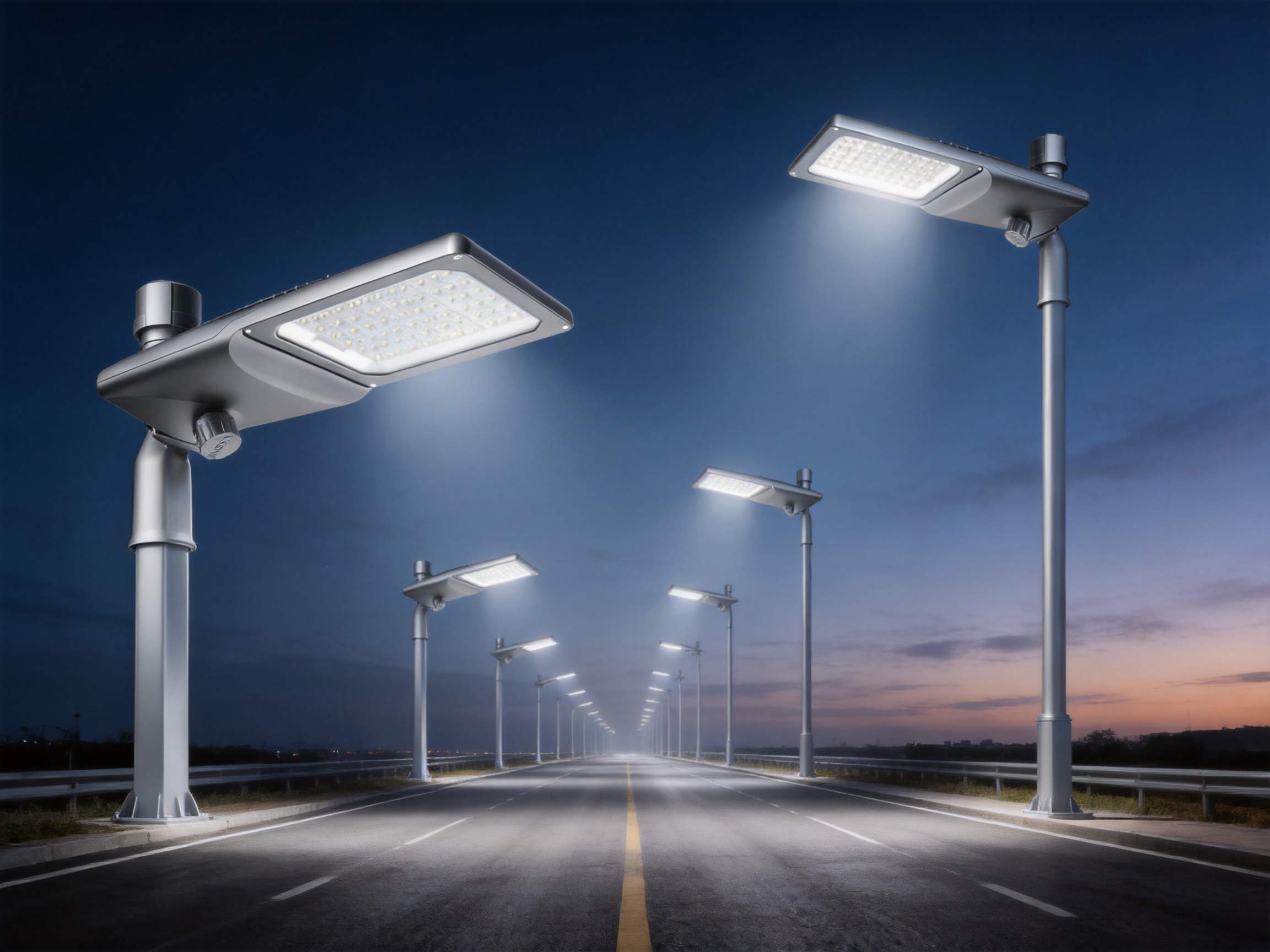
Correct installation is necessary to realize the intended performance of any street light. The fixture should be mounted on a structurally suitable pole, arm, or bracket, with the mounting diameter and attachment method matching the product design. Fasteners should be tightened according to appropriate procedures, and the fixture should be aligned to the intended roadway direction.
The selected power and size should be based on a lighting design rather than a simple replacement of an existing lamp. Factors such as pole height, pole spacing, road width, lane arrangement, pavement reflectance, traffic classification, surrounding brightness, and maintenance factor should be included in the design calculation.
Electrical installation should be performed by qualified personnel in accordance with local regulations. The supply voltage, frequency, grounding arrangement, surge protection, cable size, and control system should be verified before commissioning. If dimming, photocell, or smart-control functions are required, they should be specified before production so that compatibility can be confirmed.
Environmental conditions should also be reviewed. Areas exposed to salt spray, industrial chemicals, heavy dust, extreme temperatures, or frequent storms may require additional protective measures. The product configuration, coating, sealing, surge protection, and maintenance plan should be selected according to the actual site conditions.
A commissioning inspection should verify fixture orientation, electrical connections, operating current, control response, and visible uniformity. For large projects, sample measurements or nighttime inspections may be used to confirm that installed performance corresponds with the approved design.
Maintenance and Long-Term Service
LED street lights generally require less routine maintenance than conventional lamp systems, but they are not maintenance-free. Periodic inspection can help identify loose mounting hardware, damaged cables, contamination, corrosion, water ingress, or external impact. Cleaning may be necessary in areas with dust, pollution, insects, or industrial residue.
The aluminum housing and thermal structure should be kept reasonably clear of heavy deposits that could reduce heat transfer. In most locations, normal rainfall may remove some surface dust, but this should not be assumed in environments where airborne contaminants accumulate rapidly.
Maintenance teams should record fixture locations, installation dates, power ratings, and replacement history. Because the JD-1075 is available in multiple sizes and power levels, accurate records can prevent confusion when replacement units are ordered. Keeping a small inventory of critical components or complete fixtures may further reduce downtime for large installations.
The product platform can simplify maintenance when one project uses several compatible configurations. Standardized installation practices, familiar mounting arrangements, and consistent documentation can reduce training requirements for maintenance personnel. However, replacement parts should always match the original electrical and optical specification unless a revised design has been formally approved.
Buyers should discuss warranty terms, spare parts, technical support, failure analysis, and after-sales procedures before placing a large order. A strong supplier relationship is particularly valuable for municipal and infrastructure projects that may operate for many years.
Applications Across Multiple Outdoor Environments
Municipal Roads
Municipal roads require dependable illumination for drivers, pedestrians, cyclists, and nearby residents. The JD-1075 can be configured for different roadway widths and pole arrangements, making it suitable for local streets, connecting roads, and selected urban routes. Its energy-efficient operation can help municipalities manage recurring electricity expenditure.
Commercial Developments
Shopping areas, business parks, office campuses, and mixed-use developments often require lighting that combines safety with an attractive appearance. The available housing sizes and appearance customization options can help project owners coordinate street lighting with other outdoor fixtures and architectural elements.
Industrial Parks
Industrial parks may have large circulation areas, heavy vehicle movement, loading zones, and long operating schedules. The JD-1075’s power range allows designers to select higher-output configurations for broader roads while using lower-power versions in secondary areas. Thermal design and robust construction are especially relevant where fixtures operate continuously in demanding conditions.
Residential Communities
Residential roads require comfortable visibility without excessive glare or unwanted light entering homes. Flexible optical design can support more controlled illumination, while lower-power versions may be appropriate for smaller streets and pedestrian routes. The final configuration should be selected with attention to local lighting standards and community expectations.
Parking and Circulation Areas
Parking lots and access lanes often have irregular layouts that make optical control important. The JD-1075 can be considered for perimeter roads, internal circulation lanes, and larger access areas where a durable overhead fixture is required. Lighting calculations should account for vehicle positions, pedestrian paths, and surrounding structures that may block or reflect light.
Value for Distributors and Project Contractors
Distributors typically need products that can serve several customer segments without creating an overly complex inventory. The JD-1075’s broad wattage range and three housing sizes provide a useful platform for serving different roadway projects. A distributor can present one established product family while offering different performance levels and physical formats.
Contractors benefit from clear product documentation, repeatable dimensions, and responsive technical support. When lighting data, mounting information, installation instructions, and test documentation are available, the contractor can prepare more accurate bids and reduce uncertainty during construction.
The manufacturer’s one-stop service model includes lighting solutions, DIALux designs, mold design, OEM and ODM support, SKD and CKD customization, and delivery coordination. These services can help reduce the number of separate suppliers involved in a project. Fewer interfaces may simplify communication, although buyers should still establish clear approval procedures and quality milestones.
For export projects, production experience and international certification support can also be valuable. The company is located in Ningbo, China, an important manufacturing and logistics region. Its stated export experience and partnerships with international companies indicate familiarity with overseas customer requirements, although each project should be evaluated through specific documentation and references.
Project Selection Guidance
Before selecting the JD-1075 configuration, the buyer should define the project’s lighting objective. This may include average illuminance, minimum illuminance, uniformity, glare control, color appearance, operating schedule, and energy target. A clear objective helps prevent inappropriate comparisons based only on wattage or price.
The next step is to collect site data. Important information includes road width, number of lanes, pole height, pole spacing, pole setback, mounting-arm length, terrain, pavement type, surrounding buildings, trees, signs, and existing lighting. Accurate site data improves the reliability of photometric modeling.
The buyer should then select the approximate power and size range. The 30W to 240W product range provides flexibility, but the best selection depends on the complete lighting calculation. A higher wattage is not automatically better if it creates excessive brightness, glare, or energy use.
Optical distribution should be reviewed with the manufacturer. The customer should request the relevant photometric files or design assistance for the chosen configuration. If the project has unusual geometry, a customized optical or mechanical solution may be considered.
Finally, the buyer should confirm the required certifications, operating environment, electrical parameters, control options, packaging, warranty, delivery schedule, and inspection procedure. These details should be agreed before mass production begins.
Quality Assurance from Prototype to Shipment
A reliable manufacturing program normally includes several quality checkpoints. Incoming materials may be inspected before entering production. Die-cast housings can be checked for dimensions, surface defects, and structural consistency. CNC-machined areas can be verified against drawings. LED boards, drivers, lenses, cables, seals, and fasteners can be evaluated according to applicable specifications.
During assembly, operators should follow documented procedures for component placement, wiring, fastening, sealing, and electrical testing. Process records can help identify the source of defects if an issue is discovered later. For customized products, first-article approval is especially important because the design may differ from a standard configuration.
After assembly, fixtures can undergo functional testing, visual inspection, aging, and photometric verification as required. The inspection scope should be agreed with the buyer, particularly for large or technically complex projects. Third-party inspection may also be considered when requested by the customer or project owner.
Packaging is another part of product quality. Street lights are relatively large and may be transported over long distances. Suitable packaging should protect the housing, optical surface, mounting interface, and electrical components from impact, moisture, and abrasion. Export packaging requirements should be clarified according to the transport method and destination.
These quality steps create value beyond simple defect prevention. They improve production traceability, support repeat orders, reduce installation problems, and give buyers greater confidence that delivered units match approved samples and specifications.

Environmental and Sustainability Considerations
Street lighting contributes to long-term energy use across cities, industrial zones, and transportation networks. Improving efficacy and controlling light distribution can reduce the electricity required to achieve a defined lighting result. The JD-1075’s 130 to 160 lumens-per-watt range supports this objective when the fixture is correctly selected and designed into the project.
Long service life can also reduce material consumption associated with frequent replacement. Fewer replacements mean fewer transport operations, fewer maintenance visits, and less packaging waste. The actual environmental benefit depends on product life, operating schedule, maintenance quality, and end-of-life handling.
The manufacturer’s ISO 14001 environmental management certification indicates that environmental issues are addressed through a formal management framework. Buyers seeking sustainability documentation should request information about material composition, production practices, energy management, packaging, recycling, and end-of-life procedures.
Responsible lighting design should also consider the nighttime environment. Excessive upward light, glare, and spill light can affect nearby residents, wildlife, and the appearance of the night sky. Flexible optical control and careful aiming can help reduce unnecessary illumination while maintaining road safety.
Competitive Positioning
The JD-1075 competes in a market that includes basic low-cost street lights, premium smart-city luminaires, and application-specific roadway fixtures. Its strongest competitive position is the combination of practical efficiency, broad power selection, aluminum construction, optical flexibility, and customization support.
Compared with entry-level products, the JD-1075 is supported by a more developed manufacturing infrastructure, including die-casting, CNC machining, aging lines, and photometric equipment. This can provide greater consistency and better support for project-based orders. Buyers should nevertheless compare actual test reports, warranty terms, driver brands, surge protection, ingress protection, and photometric files before making a final decision.
Compared with highly specialized smart-city products, the JD-1075 may offer a simpler and more economical platform for projects that do not require advanced network controls. It can serve as a dependable core roadway luminaire while allowing control features to be specified when required. This may appeal to buyers who prioritize practical performance and competitive lifecycle cost.
Compared with narrow-range street lights, the JD-1075 provides broader configuration flexibility. Its 30W to 240W range and three physical sizes allow one product family to address a larger variety of roads and outdoor spaces. This can simplify procurement, product training, and inventory management.
Frequently Asked Questions
What is the power range of the Aluminum LED Street Light JD-1075?
The JD-1075 is available in power configurations from 30W to 240W. The correct selection depends on road width, pole spacing, mounting height, target illuminance, uniformity, and the project’s lighting design.
Which LED packages are available?
The product can use 3030 or 5050 LED packages. The selected package may depend on the required output, optical configuration, thermal design, efficiency target, and customer specification.
What efficacy can the product provide?
The stated efficacy range is 130 to 160 lumens per watt. Actual performance depends on the selected LED package, driver, operating current, optical system, color temperature, and complete fixture configuration.
What are the available product dimensions?
The small version measures 576 x 197 x 136 millimeters. The medium version measures 640 x 233 x 144 millimeters. The large version measures 701 x 282 x 145 millimeters.
Why is aluminum used for the housing?
Aluminum offers a useful combination of low weight, structural strength, thermal conductivity, and suitability for die-casting. In a street light, it can support the mounting structure, protect internal components, and help transfer heat away from the LED and driver assemblies.
Can the fixture be customized?
Customized production services are available, including adjustments to wattage and appearance. OEM, ODM, SKD, and CKD options may also be considered depending on the technical requirements, order quantity, tooling needs, and destination market.
Can the product be used in municipal projects?
Yes. The product is designed for municipal and commercial roadway applications. Before approval, the project owner should review the relevant photometric data, certifications, environmental requirements, electrical specifications, warranty, and installation conditions.
Does the manufacturer support lighting design?
The company provides lighting solutions and DIALux design support. Project data such as road width, pole height, pole spacing, mounting arrangement, and target lighting criteria should be supplied for an accurate design.
What manufacturing equipment supports the product?
The manufacturing system includes die-casting machines, CNC machines, aging lines, and goniophotometers. These capabilities support housing production, precision machining, reliability stabilization, and photometric measurement.
What certifications does the company report?
The company reports ISO 9001, ISO 14001, and ISO 45001 certifications. It also states that relevant products are certified by CB and CE. Buyers should request the certificates and test reports applicable to the exact product configuration and destination market.
How should the correct size be selected?
Size selection should be based on the required power, LED configuration, mounting conditions, heat dissipation needs, optical layout, and overall roadway design. A photometric calculation is recommended instead of selecting a size based only on appearance or nominal wattage.
Is the product suitable for industrial areas?
The JD-1075 can be considered for industrial roads, access routes, parking areas, and circulation zones. Sites with chemical exposure, high dust, salt spray, extreme temperatures, or heavy vibration should be reviewed carefully so that the appropriate protective configuration is selected.
Conclusion
The Aluminum LED Street Light JD-1075 is a versatile roadway lighting platform designed to combine energy efficiency, durable aluminum construction, optical flexibility, and manufacturing consistency. Its 30W to 240W range supports diverse applications, while the choice of 3030 or 5050 LED packages allows the product to be adapted to different performance requirements.
Its stated efficacy of 130 to 160 lumens per watt can help reduce operating costs when paired with an appropriate lighting design. The three available housing sizes support different power levels and installation conditions. Efficient thermal management, controlled optical design, and a robust mechanical structure further contribute to dependable outdoor operation.
The product’s competitive value is strengthened by the manufacturer’s production capabilities. Die-casting supports repeatable aluminum housing production, CNC machining improves precision at critical interfaces, aging lines support reliability screening, and goniophotometers provide photometric data for professional lighting design. ISO quality, environmental, and safety management systems add further structure to the manufacturing process.
For municipalities, contractors, distributors, and commercial developers, the JD-1075 provides a practical foundation for roadway and area lighting projects. Buyers can benefit from a broad configuration range, customized wattage and appearance options, OEM and ODM support, DIALux assistance, and delivery services. The best project results will come from selecting the fixture through a complete evaluation of photometry, installation conditions, electrical requirements, environmental exposure, certification, lifecycle cost, and after-sales support.
References
1. Product technical information for Aluminum LED Street Light JD-1075, including power, LED package, efficacy, and dimensional data.
2. Company manufacturing information concerning die-casting, CNC machining, aging lines, goniophotometric testing, and customized production.
3. ISO 9001 quality management system principles and supplier quality-control practices.
4. ISO 14001 environmental management system principles for manufacturing organizations.
5. ISO 45001 occupational health and safety management system principles.
6. General roadway lighting design principles concerning illuminance, uniformity, glare, optical distribution, and maintenance factors.
7. General LED luminaire engineering principles concerning thermal management, optical control, energy efficiency, and outdoor durability.
Product: Aluminum LED Street Light JD-1075

Solusi Kustom & OEM untuk Merek Pencahayaan Global
Hak Cipta © Cixi HuaSheng Lighting Co., Ltd. Semua Hak Dilindungi Undang-undang.
Pemasok Cetakan Die-Casting
