 English
 中文简体
 русский
 Français
 Español
 عربى
 Indonesia

Adjustable Garden LED Spot Light GZD-SL-H: Flexible Outdoor Illumination for Modern Landscapes
Outdoor lighting has become an essential part of residential, commercial, hospitality, and landscape design. A well-planned lighting system can improve safety, extend the usable hours of an outdoor space, emphasize architectural details, and create a distinctive visual atmosphere. However, outdoor environments are constantly changing. Plants grow, garden layouts are modified, seasonal decorations are installed, and landscape designers often need to redirect light to new focal points. A fixed lighting fixture may provide reliable illumination, but it can become restrictive when the lighting direction must change.
The Adjustable Garden LED Spot Light GZD-SL-H is designed to address this challenge. With an adjustable structure, multiple power options, broad color selections, several beam angles, and compatibility with different control modes, it provides a flexible solution for gardens, villas, courtyards, pathways, hotel landscapes, and decorative outdoor areas. Its 9-36W power range allows users to select an appropriate output for different applications, from small planting beds and ornamental features to larger landscape compositions.
This article examines the design, technical performance, applications, manufacturing strengths, customization capabilities, and competitive advantages of the GZD-SL-H. It also explains how the product can support professional lighting projects and why the manufacturing capabilities of Cixi HuaSheng Lighting Co., Ltd. are important when selecting a reliable outdoor lighting partner.
1. The Role of Adjustable Lighting in Outdoor Design
Landscape lighting is more than the simple addition of brightness. It involves controlling light direction, intensity, color, contrast, and distribution to create a comfortable and visually balanced environment. A lighting fixture that cannot be adjusted may work well during the initial installation but become less effective as the surrounding landscape develops.
Adjustability is especially valuable in gardens. Trees and shrubs may change height and density throughout the year. Flower beds may be replanted, sculptures may be relocated, and pathways may be redesigned. An adjustable spotlight enables the lighting direction to follow these changes without requiring the fixture to be removed or replaced.
The GZD-SL-H is intended for this type of dynamic environment. Its manually adjustable angle allows installers and end users to redirect the beam toward plants, walls, signs, architectural surfaces, water features, or decorative objects. This flexibility can reduce maintenance work and help preserve the original investment in the lighting system.
Adjustable garden spotlights are also useful when a project has multiple visual objectives. The same fixture may provide upward lighting for a tree, accent lighting for a sculpture, or grazing light for a textured wall. By changing the orientation and selecting an appropriate beam angle, users can create different effects without changing the basic fixture type.
For professional landscape contractors, this adaptability can simplify installation planning. Instead of specifying different fixed-angle products for every small feature, contractors can use a versatile spotlight and make final aiming adjustments on site. This can be particularly helpful in projects where the final planting arrangement or decorative layout is not completely fixed during the early design stage.
2. Product Overview
The GZD-SL-H is an adjustable outdoor LED spot light developed for garden and landscape applications. It is available in a 9-36W range and can be configured for low-voltage or standard-voltage requirements depending on the selected version and project design.
The fixture supports DC12-24V and AC85-265V input voltage options. The low-voltage version is suitable for landscape systems that emphasize electrical safety and integration with dedicated outdoor power supplies. The broad-voltage version can be considered for projects requiring direct compatibility with a wider range of electrical systems, subject to the final configuration and local installation requirements.
Its LED source options include Epileds, Bridgelux, Epistar, Osram, and Cree. This gives project buyers flexibility when balancing budget, efficiency, brand preference, color consistency, and performance requirements. The product can also be specified in a range of colors, including red, green, blue, yellow, white, warm white, RGB, and RGBW.
With beam angles ranging from narrow 10-degree distribution to wider 110-degree distribution, the GZD-SL-H can be applied to both focused accent lighting and broader area illumination. The listed light output ratio is 70 lumens per watt, while the available correlated color temperature range extends from 1800K to 6500K.
The product supports DMX512 and steady control modes. A steady mode is appropriate for simple installations where the light remains continuously on at a selected color or white setting. DMX512 control can support coordinated color changes and programmed lighting scenes in larger or more visually active projects.
With an IP65 rating and an operating temperature range of -20°C to 45°C, the fixture is intended for outdoor environments exposed to dust, rain, and changing weather conditions. Correct installation, cable protection, drainage, and regular inspection remain important for long-term performance in any outdoor lighting project.
| Product Item | GZD-SL-H |
| Product Type | Adjustable Garden LED Spot Light |
| Power Range | 9-36W |
| Light Source Options | Epileds, Bridgelux, Epistar, Osram, Cree |
| Input Voltage Options | DC12-24V or AC85-265V |
| Color Options | Red, green, blue, yellow, white, warm white, RGB, RGBW |
| Beam Angle Options | 10°, 30°, 45°, 60°, 90°, 110° |
| Light Output Ratio | 70 lm/W |
| Color Temperature | 1800-6500K |
| Control Modes | DMX512 or steady operation |
| Operating Temperature | -20°C to 45°C |
| Ingress Protection | IP65 |
3. Adjustable Structure and Practical Flexibility
The primary advantage of the GZD-SL-H is its adjustable lighting direction. The structure is designed to let users manually change the angle of the light after installation. This feature provides a practical solution for projects where the desired beam direction may change over time.
In a residential garden, the spotlight can be aimed at a flowering plant during one season and redirected toward a tree trunk or garden ornament during another. In a hotel courtyard, it can illuminate a planter, an entrance feature, or an outdoor seating area depending on the event layout. In a commercial landscape, it can highlight signage or architectural details without adding a new fixture.
Adjustability may also reduce the number of fixtures required for a project. A fixed light often needs to be installed precisely at the correct angle, and even a small change in the surrounding design can make its beam ineffective. An adjustable fixture offers a wider installation tolerance because the final direction can be refined after mounting.
The product is described with enhanced swivel mechanisms intended to support repeated angle adjustment. This is important because a mechanism that becomes loose after occasional repositioning can cause beam drift, uneven illumination, and increased maintenance. A stable adjustment system helps the fixture retain its intended orientation during normal use.
Corrosion-resistant materials provide another advantage for outdoor use. Garden fixtures are exposed to moisture, fertilizer residue, dust, temperature changes, and sometimes coastal air. Material selection and surface finishing therefore have a direct effect on appearance and service life. Cixi HuaSheng Lighting Co., Ltd. can provide housing finishes and structural customizations according to the requirements of different projects.
Compared with ordinary fixed garden spotlights, the GZD-SL-H offers a more adaptable approach to landscape illumination. Compared with highly specialized architectural luminaires, it can provide a simpler and more accessible solution for gardens and decorative outdoor areas where frequent adjustment is more important than complex optical integration.
4. Beam Angle Selection for Different Landscape Effects
Beam angle has a major influence on the visual result of an outdoor spotlight. A narrow beam concentrates light in a smaller area and can create a stronger accent effect. A wide beam spreads illumination over a larger surface and can provide softer coverage.
4.1 Narrow 10-Degree Beam
A 10-degree beam is suitable for focused accent lighting. It can be used to highlight a slender tree trunk, a small sculpture, a column, a sign, or a specific ornamental feature. Because the light is concentrated, accurate aiming is important. Narrow beams are often most effective when the fixture is positioned at an appropriate distance from the target.
4.2 Medium 30- to 60-Degree Beams
Beam angles of 30, 45, and 60 degrees offer a balance between concentration and coverage. They are useful for medium-sized shrubs, planting groups, building surfaces, garden walls, and decorative objects. These options can help designers create layered lighting in which different landscape elements receive different levels of emphasis.
4.3 Wide 90- and 110-Degree Beams
Wide beam options are suitable for broader surfaces and general decorative lighting. They can illuminate a larger section of a wall, a low planting bed, a pathway edge, or a courtyard feature. A wide beam can also help create a softer visual transition between lit and unlit areas.
The availability of multiple beam angles is a competitive advantage because it allows one product family to serve many project conditions. Buyers do not need to select a completely different fixture for every lighting task. They can choose the appropriate optical distribution while retaining a consistent housing style and installation approach.
5. Color, CCT, and Control Possibilities
The GZD-SL-H supports a broad range of color options. White and warm white are commonly used for functional and architectural landscape lighting. Warm white can create a welcoming atmosphere around villas, hotels, restaurants, and residential gardens. White light may be preferred where a cleaner or more neutral appearance is required.
The listed color temperature range of 1800-6500K allows different visual atmospheres to be created. Lower color temperatures produce a warmer, more intimate effect, while higher color temperatures appear cooler and more energetic. The correct selection depends on the surrounding materials, plant colors, architectural style, and desired mood.
Red, green, blue, and yellow versions can be used for themed environments, festive decoration, entertainment spaces, and special landscape features. RGB and RGBW configurations provide additional creative possibilities. RGB can produce changing color effects, while RGBW can combine color effects with a dedicated white channel for more natural white illumination.
The DMX512 control option is valuable for projects that require synchronized lighting scenes. A group of fixtures can be programmed to change color, brightness, or timing in coordination with other luminaires. This can support hotel events, public installations, themed gardens, entertainment venues, and architectural presentations.
Steady operation remains useful for simpler installations. Not every landscape requires dynamic control, and a continuous single-color output may be preferable for residential gardens, pathways, and low-maintenance commercial areas. Offering both steady and DMX512 modes allows the product to meet different technical and budget requirements.
When specifying color-changing products, project planners should evaluate the control system, cabling, power supply, programming requirements, and maintenance procedures as a complete package. Cixi HuaSheng Lighting Co., Ltd. can support OEM and ODM projects involving color temperature, housing finish, structural design, and installation accessories.
6. Outdoor Protection and Environmental Reliability
Outdoor fixtures must withstand more demanding conditions than indoor luminaires. Rain, airborne dust, humidity, sunlight, temperature variation, and accidental contact can all influence performance. The GZD-SL-H is rated IP65, indicating protection against dust ingress and water jets from different directions when the product is correctly assembled and installed.
IP65 protection makes the product suitable for many exposed garden and landscape applications. It can be used near planting areas, outdoor walls, courtyards, villa gardens, hotel grounds, and decorative pathways. However, IP65 does not mean that the fixture should be submerged or installed in locations with continuous standing water. Drainage and mounting position should always be considered during installation.
The operating temperature range of -20°C to 45°C supports use in many outdoor climates. Projects in regions with conditions outside this range should be reviewed with the manufacturer before specification. The power supply, wiring, connectors, and control equipment should also be selected for the actual environment rather than evaluated only by the fixture rating.
Corrosion resistance is particularly important in coastal areas, industrial environments, and locations where irrigation water or chemical residue may contact the housing. Material and finish options can be selected according to the project environment. Regular cleaning and inspection can help preserve both optical performance and exterior appearance.
Reliable outdoor performance is not created by the enclosure alone. It also depends on heat management, LED quality, sealing procedures, driver selection, cable entry design, and production consistency. This is why the manufacturing process and quality management system of the supplier are important considerations when comparing outdoor lighting products.
7. LED Source Choices and Performance Considerations
The GZD-SL-H can use LED sources from Epileds, Bridgelux, Epistar, Osram, or Cree. Different LED source options allow the product to be adapted to project priorities. Some buyers may focus on initial cost, while others may prioritize brand recognition, color consistency, output stability, or specific procurement standards.
A suitable LED source should be matched with the optical system, thermal structure, operating current, and required color performance. Simply selecting a high-output LED does not automatically guarantee a better luminaire. The entire system must be engineered so that the LED operates within appropriate thermal and electrical conditions.
The listed light output ratio of 70 lumens per watt provides a reference for evaluating the fixture’s luminous efficiency. Actual project performance also depends on the selected LED color, CCT, beam angle, driver, ambient temperature, installation position, and control mode. Professional buyers should request project-specific photometric information when preparing a detailed lighting calculation.
For large landscape projects, consistent color appearance between fixtures is important. Variations in color temperature or color rendering can make a group of spotlights appear uneven. A controlled production process, stable LED sourcing, and appropriate inspection procedures help reduce these differences.
The company’s equipment includes aging lines and goniophotometers. Aging tests can help identify early electrical or component issues before shipment, while goniophotometric testing can provide information about luminous distribution and optical performance. These capabilities support more consistent product evaluation than visual inspection alone.
8. Manufacturing Capabilities of the Supplier
Cixi HuaSheng Lighting Co., Ltd. is located in Cixi City, Ningbo, Zhejiang Province, China, and specializes in outdoor lighting products for international customers. Its product range includes LED street lights, tunnel lights, high-bay lights, linear lights, garden lights, solar lights, grow lights, explosion-proof lights, and other lighting products.
The company operates with die-casting and CNC machines, aging lines, and goniophotometers. This combination of equipment supports several important stages of lighting production. Die-casting equipment can be used to produce metal housings and heat-dissipation structures with repeatable dimensions. CNC machining can refine critical surfaces, mounting points, threads, and connection areas. Aging lines can support reliability screening, while goniophotometers can be used for optical measurement.
Die-casting is especially relevant to outdoor spotlights because the housing often needs to combine mechanical strength, thermal performance, and precise geometry. A well-designed die-cast body can provide a stable platform for LED modules, lenses, brackets, and sealing components. Consistent dimensional control also helps maintain assembly quality between production batches.
CNC processing can be used where tighter tolerances or additional finishing are required. This can be useful for adjustable joints, mounting interfaces, screw holes, cable entry areas, and customized structural components. In OEM and ODM projects, CNC capability can help the manufacturer adapt the standard design to a customer’s technical requirements.
Quality systems are another important strength. The company is described as certified to ISO 9001, ISO 14001, and ISO 45001. These standards relate respectively to quality management, environmental management, and occupational health and safety. Certification does not replace product testing, but it indicates that the organization has established formal management processes in these areas.
Relevant products are certified by CB and CE according to the supplied company information. Certification requirements depend on the exact product configuration, destination market, and applicable standards. Buyers should confirm the specific documentation available for the selected GZD-SL-H version before placing an order.
For international buyers, a supplier with in-house manufacturing resources can provide advantages in communication, engineering changes, production scheduling, and after-sales support. It may also reduce the complexity of coordinating separate housing manufacturers, machining suppliers, assembly facilities, and testing laboratories.
9. Competitive Advantages of the GZD-SL-H
9.1 Greater Adaptability Than Fixed-Angle Fixtures
The most direct competitive advantage is the adjustable structure. Fixed-angle garden lights may be suitable for simple installations, but they provide limited flexibility once mounted. The GZD-SL-H can be redirected to accommodate changes in vegetation, architecture, and landscape use.
9.2 Broad Specification Range
The combination of 9-36W power, several beam angles, multiple CCT options, monochrome colors, RGB, and RGBW allows the product to serve a broad market. Buyers can use the same basic product family for small residential applications and larger decorative projects with more advanced control requirements.
9.3 Multiple Voltage Configurations
Support for DC12-24V and AC85-265V versions gives designers more freedom when integrating the fixture with existing electrical systems. Low-voltage systems may be selected for certain garden environments, while broad-voltage versions can simplify compatibility with other project power arrangements.
9.4 Outdoor Protection
The IP65 rating provides protection appropriate for many exposed landscape applications. When combined with corrosion-resistant materials and suitable surface finishes, this makes the fixture more practical for long-term outdoor use than products designed primarily for sheltered locations.
9.5 Professional Manufacturing Support
The supplier’s die-casting, CNC machining, aging, and photometric testing capabilities support a more controlled production process. This is an advantage over suppliers that depend entirely on generic components and external assembly without comparable engineering or inspection resources.
9.6 OEM and ODM Flexibility
Customers can request adjustments to the swivel structure, color temperature, housing finish, and installation accessories. This is important for landscape contractors, distributors, lighting brands, and project developers that need a product adapted to a particular design language or procurement specification.
9.7 One-Stop Project Services
The company provides lighting solutions, DIALux design support, mold design, OEM and ODM services, SKD and CKD customization, and delivery coordination. These services can help customers move from concept and photometric planning to production and shipment through a more integrated workflow.
10. Applications in Residential Gardens
Residential gardens are one of the most natural applications for the GZD-SL-H. The fixture can be installed near flower beds, trees, shrubs, pathways, fences, water features, and outdoor seating areas. Its adjustable beam direction allows homeowners or installers to refine the appearance after observing the garden at night.
For a small garden, a narrow beam can highlight a tree trunk or sculpture, while a medium beam can illuminate a cluster of plants. Warm white light can create a relaxed atmosphere around a patio or entrance. A higher color temperature may be selected where the design calls for a cleaner and more contemporary appearance.
The adjustable design is also useful for gardens that change over time. New plants can be added, old plants can be removed, and outdoor furniture can be rearranged without making the original lighting installation obsolete. This can reduce the need for rewiring or purchasing additional fixtures.
For villas and larger residential properties, several GZD-SL-H fixtures can be combined to establish visual hierarchy. The brightest or most focused beams can emphasize entrance features, while wider beams provide softer background illumination. Consistent fixture styling can help maintain a coordinated appearance across the property.
11. Applications in Hotels and Hospitality Spaces
Hotels, resorts, restaurants, and boutique hospitality venues often need outdoor lighting that is both attractive and adaptable. Landscapes may be used for daily circulation, weddings, corporate events, seasonal celebrations, or evening dining. An adjustable spotlight can support these changing uses.
In a hotel garden, the GZD-SL-H may highlight trees, building façades, signs, planters, sculptures, or outdoor pathways. With RGB or RGBW configurations and DMX512 control, the lighting can be integrated into event scenes and themed presentations. A steady warm white setting can be used for ordinary evening operation, while a color program can be activated for special occasions.
Hospitality operators also benefit from maintainability. When decorative elements change, staff or service contractors may be able to redirect the fixtures rather than replace them. This flexibility can help preserve the intended appearance while keeping maintenance procedures manageable.
Because outdoor hospitality projects are highly visible, product finish and consistency are important. Customized housing finishes can help the fixture blend with landscape furniture, façade materials, or other outdoor equipment. OEM and ODM options can also support hotel groups or lighting brands that require a consistent product identity across multiple properties.
12. Applications in Commercial and Architectural Landscapes
Commercial properties use landscape lighting to attract attention, improve wayfinding, and reinforce brand or architectural identity. The GZD-SL-H can be used around entrances, retail properties, office campuses, public-facing facilities, and landscaped pedestrian areas.
Its beam angle selection allows designers to match the light distribution to different architectural surfaces. Narrow beams can emphasize vertical details, medium beams can cover columns or wall sections, and wide beams can create broad washes across low façades or planting areas.
Where a project includes changing architectural presentations or seasonal decoration, DMX512 control can provide additional flexibility. Fixtures can be grouped and programmed to operate with a coordinated sequence. This is particularly useful for commercial spaces where the landscape appearance may be adjusted for holidays, promotional campaigns, or public events.
The fixture should be integrated into a complete lighting design rather than used indiscriminately. Excessive brightness, poorly aimed beams, and uncontrolled color can create glare or visual clutter. A professional layout using DIALux or another photometric design tool can help determine spacing, aiming, output, and energy requirements.
13. Installation and Maintenance Recommendations
Correct installation is essential for achieving the expected performance of an outdoor spotlight. Before mounting the GZD-SL-H, the installer should confirm the selected input voltage, power supply capacity, control method, cable specification, and mounting surface.
The fixture should be positioned so that water can drain away naturally. Although the IP65 rating protects against dust and water jets, the product should not be placed in a location where water remains around cable entries or mechanical joints. Connectors and cable junctions should have suitable outdoor protection.
When aiming the fixture, installers should consider the viewing position, target distance, beam angle, and possible glare. The light should emphasize the intended feature without shining directly into windows, pedestrian sightlines, or neighboring properties. Narrow beams generally require more precise aiming than wide beams.
For low-voltage versions, the voltage drop across long cable runs should be evaluated. The power supply should have sufficient capacity for the connected load, with appropriate allowance for system operation. For DMX512 systems, signal wiring, addressing, termination, and controller compatibility should be checked during commissioning.
Routine maintenance may include cleaning the lens or front cover, checking cable connections, inspecting mounting hardware, and confirming that the adjustable mechanism remains secure. In environments with dust, salt, or heavy pollution, more frequent cleaning may be appropriate. Any adjustment should be performed carefully to avoid damaging the housing, cable, or swivel components.
14. Customization for OEM and ODM Projects
Different customers have different requirements for product appearance, optical output, control systems, packaging, and installation. A standard product may meet many needs, but customization can be important when the spotlight must fit a specific project or brand portfolio.
The GZD-SL-H can be adapted through OEM and ODM services. Possible customization areas include the adjustable structure, color temperature, housing finish, LED source, color configuration, control mode, and installation accessories. These options allow customers to specify a product that aligns more closely with their project standards.
Housing finishes may be selected to complement black, gray, bronze, metallic, or other landscape equipment, subject to production feasibility. Color temperature can be tailored to the visual requirements of a garden, façade, hospitality venue, or municipal project. Accessories may be customized to support different mounting conditions.
Structural customization is particularly useful when a project has special aiming requirements or a proprietary design language. The manufacturer’s die-casting and CNC resources can support mold development and component refinement. Customers should provide drawings, target quantities, required certifications, packaging expectations, and installation conditions as early as possible.
For distributors, private-label programs may include customized logos, product labels, cartons, manuals, and color selections. For engineering contractors, the emphasis may be on photometric data, installation details, control compatibility, and project documentation. A capable manufacturer can support both approaches through a coordinated engineering and production process.
15. Project Design Guidance
A successful landscape lighting project begins with a clear definition of the visual and functional objectives. Designers should identify the elements that require emphasis, the areas that need general visibility, and the locations where light must be controlled to avoid glare or spill.
The mounting distance and beam angle should be selected together. A narrow beam placed too close to a large target may create an uneven bright spot, while a wide beam placed too far away may produce insufficient intensity. Testing a sample fixture on site can help confirm the appearance before full installation.
Color temperature should be evaluated against the surrounding environment. Warm light often complements natural materials such as wood, stone, brick, and vegetation. Neutral or cool white may be appropriate for modern façades, commercial spaces, or areas where a crisp appearance is required. Color-changing versions should be used with a clear programming concept to avoid inconsistent or distracting effects.
For a layered design, different GZD-SL-H configurations can be combined. A 10-degree fixture may highlight a key tree or sculpture, a 45-degree version may illuminate medium-sized shrubs, and a 90-degree or 110-degree version may provide broad background coverage. This approach creates depth while retaining a consistent product family.
Lighting calculations should consider the fixture’s 70 lm/W listed output ratio, selected power, optical distribution, mounting height, surface reflectance, and control schedule. DIALux design support from the manufacturer can assist with the development of professional lighting layouts and project proposals.
16. Energy and Operating Considerations
LED technology provides an efficient alternative to many traditional outdoor light sources. The 9-36W range of the GZD-SL-H allows the system designer to select a suitable power level instead of using one oversized fixture for every application. Correct power selection can help avoid unnecessary energy consumption.
Control also influences operating cost. A steady lighting system can be connected to timers, photocells, or building management systems according to the project design. DMX512 control can allow selected fixtures or scenes to operate only when needed. Reduced operating hours and lower brightness during quiet periods may further improve energy management.
Energy performance should not be evaluated only by wattage. Optical efficiency, beam control, maintenance requirements, LED life, driver performance, and replacement frequency all influence the total cost of ownership. A fixture that directs light accurately may achieve the desired visual result with fewer units or lower output.
Environmental management is part of the company’s broader manufacturing strengths. ISO 14001 certification indicates an established environmental management framework. Project buyers that have sustainability policies may consider this relevant when assessing potential suppliers, alongside product efficiency and packaging practices.
17. Why Supplier Capability Matters
Outdoor lighting projects often involve more than selecting a catalog item. Buyers may need technical drawings, samples, photometric files, certification documents, customized finishes, packaging, spare parts, and delivery coordination. A supplier with broader capabilities can reduce the number of separate vendors involved in the project.
Cixi HuaSheng Lighting Co., Ltd. provides manufacturing and engineering services for industrial, residential, municipal, and commercial lighting applications. Its product portfolio covers several outdoor lighting categories, which can be useful when a project requires multiple product types from one source.
The availability of die-casting and CNC machines supports control over key structural components. Aging lines support production screening. Goniophotometers support optical assessment. These capabilities are valuable because outdoor fixture quality depends on the interaction of mechanical, electrical, thermal, and optical systems.
The company also offers SKD and CKD customization. These models may be relevant to customers that have regional assembly operations, local supply-chain requirements, or market-specific production strategies. The exact scope, documentation, and quality controls should be agreed during project planning.
International customers may also benefit from the company’s experience exporting products worldwide. Export readiness involves more than shipment. It includes packaging design, labeling, documentation, communication across time zones, and awareness of market certification expectations.
18. Recommended Customer Profiles
The GZD-SL-H is suitable for landscape contractors that need a flexible spotlight for varied outdoor projects. Its adjustable structure, beam choices, and power range can simplify product selection across gardens, villas, hotels, and commercial properties.
It is also suitable for lighting distributors that want an adaptable outdoor product for different customer segments. A distributor can stock selected standard configurations while requesting special versions for larger projects or private-label programs.
Architectural lighting designers may consider the product when they need an accessible fixture for accent lighting, façade highlighting, or decorative landscape scenes. The availability of DMX512 and RGBW options can support more advanced concepts where dynamic color is part of the design.
Property developers, hotel operators, and facility managers may value the product’s ability to accommodate landscape changes. A fixture that can be redirected can remain useful as planting and outdoor layouts evolve.
Lighting brands and OEM buyers can use customization services to create a product line with specific finishes, color temperatures, accessories, or packaging. The manufacturer’s production resources can support the transition from sample development to larger-scale production.
19. Product Selection Checklist
Before ordering the GZD-SL-H, buyers should confirm the required power level. A 9W version may be appropriate for smaller accents, while higher-power versions may be needed for taller trees, larger walls, or greater mounting distances.
The input voltage must match the project’s electrical design. Buyers should clearly specify whether the requirement is DC12-24V or AC85-265V and should confirm the associated driver or power supply arrangement.
The LED source and color configuration should be selected according to performance and budget expectations. White, warm white, RGB, and RGBW versions serve different design purposes. The required CCT should also be confirmed within the 1800-6500K range.
Beam angle selection should be based on the target size, mounting distance, and desired visual effect. Buyers should not choose a beam angle only by fixture quantity or price. A suitable optical distribution is essential for a balanced result.
Control requirements should be clarified before production. A steady version and a DMX512 version may require different wiring, drivers, and commissioning procedures. The customer should confirm whether the project needs fixed output, color adjustment, programmed scenes, or integration with another control system.
Finally, purchasers should confirm the required housing finish, mounting accessories, certifications, packaging, sample approval process, delivery schedule, and after-sales documentation.
20. Frequently Asked Questions
What is the main purpose of the GZD-SL-H?
The GZD-SL-H is an adjustable outdoor LED spotlight for gardens, villas, courtyards, hotel landscapes, façades, pathways, plants, trees, sculptures, and other decorative features. Its primary benefit is the ability to redirect the light angle after installation.
What power options are available?
The product is available in a 9-36W range. The appropriate power depends on the target, mounting distance, required brightness, beam angle, and overall lighting design.
Can the spotlight be used with low-voltage systems?
Yes. One input voltage option is DC12-24V. The product is also available in an AC85-265V configuration. The selected version should match the project power system and local installation requirements.
Which beam angles can be selected?
The available beam angles are 10°, 30°, 45°, 60°, 90°, and 110°. Narrow angles are suitable for focused accents, while wide angles cover larger surfaces and areas.
Does the product support color-changing effects?
Yes. Color options include RGB and RGBW, in addition to red, green, blue, yellow, white, and warm white. DMX512 control is available for projects requiring programmed or synchronized lighting effects.
What is the available color temperature range?
The listed CCT range is 1800-6500K. This allows buyers to select warm, neutral, or cooler white tones according to the project design.
Can the fixture be used in rainy outdoor locations?
The fixture has an IP65 rating and is designed for many exposed outdoor applications. It should not be submerged or installed in locations with continuous standing water. Correct cable protection, mounting, and drainage are necessary.
What is the operating temperature range?
The listed environment temperature range is -20°C to 45°C. Applications outside this range should be reviewed with the manufacturer before final specification.
How does the adjustable design compare with a fixed spotlight?
An adjustable spotlight can be redirected when garden layouts, plants, façades, or decorative features change. A fixed spotlight has a predetermined direction and may require relocation or replacement when the target changes.
Can the product be customized?
Yes. OEM and ODM services can include adjustable structure design, color temperature, housing finish, LED source, control configuration, and customized installation accessories. Project drawings and technical requirements should be provided for evaluation.
What manufacturing resources support the product?
The supplier operates die-casting and CNC machines, aging lines, and goniophotometers. These resources support housing production, precision machining, reliability screening, and optical measurement.
Can the supplier provide lighting design assistance?
The company provides one-stop lighting services that include lighting solutions and DIALux designs. Project-specific photometric information and design support should be confirmed according to the required application.
Are certification documents available?
The company reports ISO 9001, ISO 14001, and ISO 45001 certifications, and relevant products are certified by CB and CE. Buyers should request documentation for the exact product configuration and destination market.
Who can purchase this product?
The product is suitable for landscape contractors, lighting distributors, architects, hotel operators, property developers, municipal project suppliers, lighting brands, and OEM or ODM buyers.
21. Conclusion
The Adjustable Garden LED Spot Light GZD-SL-H provides a practical combination of flexible aiming, multiple optical choices, varied power levels, outdoor protection, and customization potential. Its adjustable structure makes it especially useful in landscapes that change over time or require frequent visual reconfiguration.
The product can support focused tree lighting, plant illumination, pathway accents, wall washing, façade highlighting, garden decoration, hospitality lighting, and dynamic color scenes. With 10° to 110° beam angles, 9-36W power options, DC12-24V or AC85-265V input configurations, 1800-6500K CCT, RGB and RGBW choices, and DMX512 compatibility, it can be adapted to a wide range of project requirements.
Its competitive position is strengthened by the manufacturing and engineering resources of Cixi HuaSheng Lighting Co., Ltd. Die-casting, CNC machining, aging lines, goniophotometric equipment, quality management certifications, OEM and ODM services, and DIALux design support provide a foundation for consistent production and project-specific development.
For buyers seeking an outdoor spotlight that is more adaptable than a fixed-angle fixture and more customizable than a basic garden lamp, the GZD-SL-H offers a strong option. Careful specification of voltage, power, beam angle, CCT, color, control mode, finish, and accessories will help ensure that the final product matches the visual, electrical, and environmental requirements of each installation.
References
1. Cixi HuaSheng Lighting Co., Ltd., GZD-SL-H Adjustable Garden LED Spot Light product information and technical specifications.
2. International Electrotechnical Commission, Degrees of Protection Provided by Enclosures, IP Code guidance.
3. International Organization for Standardization, ISO 9001 Quality Management Systems principles and requirements.
4. International Organization for Standardization, ISO 14001 Environmental Management Systems guidance.
5. International Organization for Standardization, ISO 45001 Occupational Health and Safety Management Systems guidance.
6. International Commission on Illumination, principles of outdoor lighting, visual comfort, and photometric evaluation.
7. DMX512 lighting control industry guidance for digital communication in entertainment and architectural lighting systems.
8. Professional landscape lighting design practices covering beam angles, aiming, color temperature, glare control, and outdoor installation.
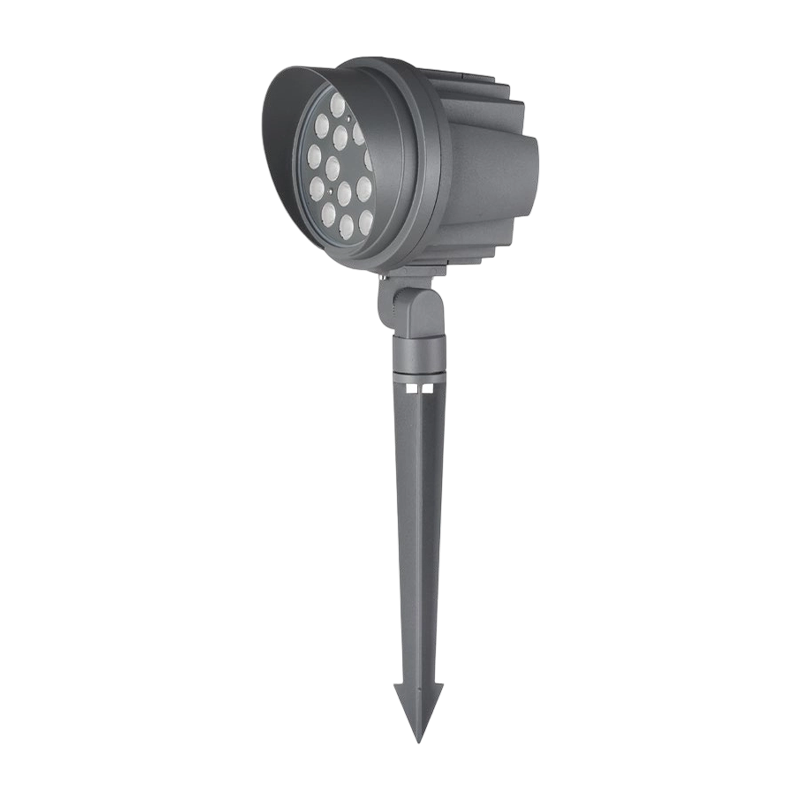
Adjustable Garden LED Spot Light GZD-SL-H
Outdoor lighting design depends on the relationship between the fixture, the landscape, and the changing needs of the property. The GZD-SL-H is designed to maintain that relationship through adjustable direction and configurable performance.
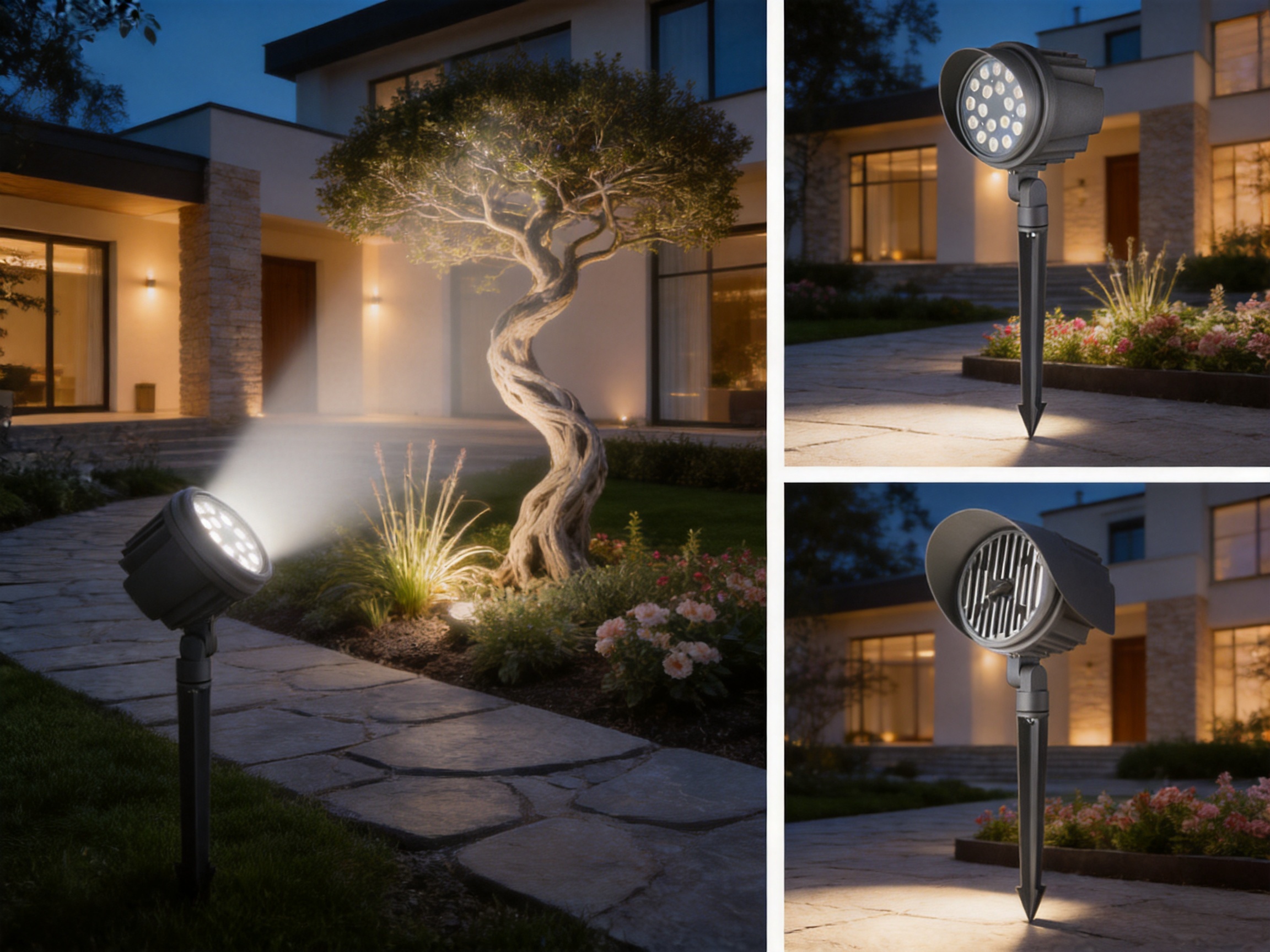
Accurate beam distribution, appropriate power selection, and careful installation can help the product produce attractive and efficient illumination across residential, commercial, hospitality, and architectural environments.
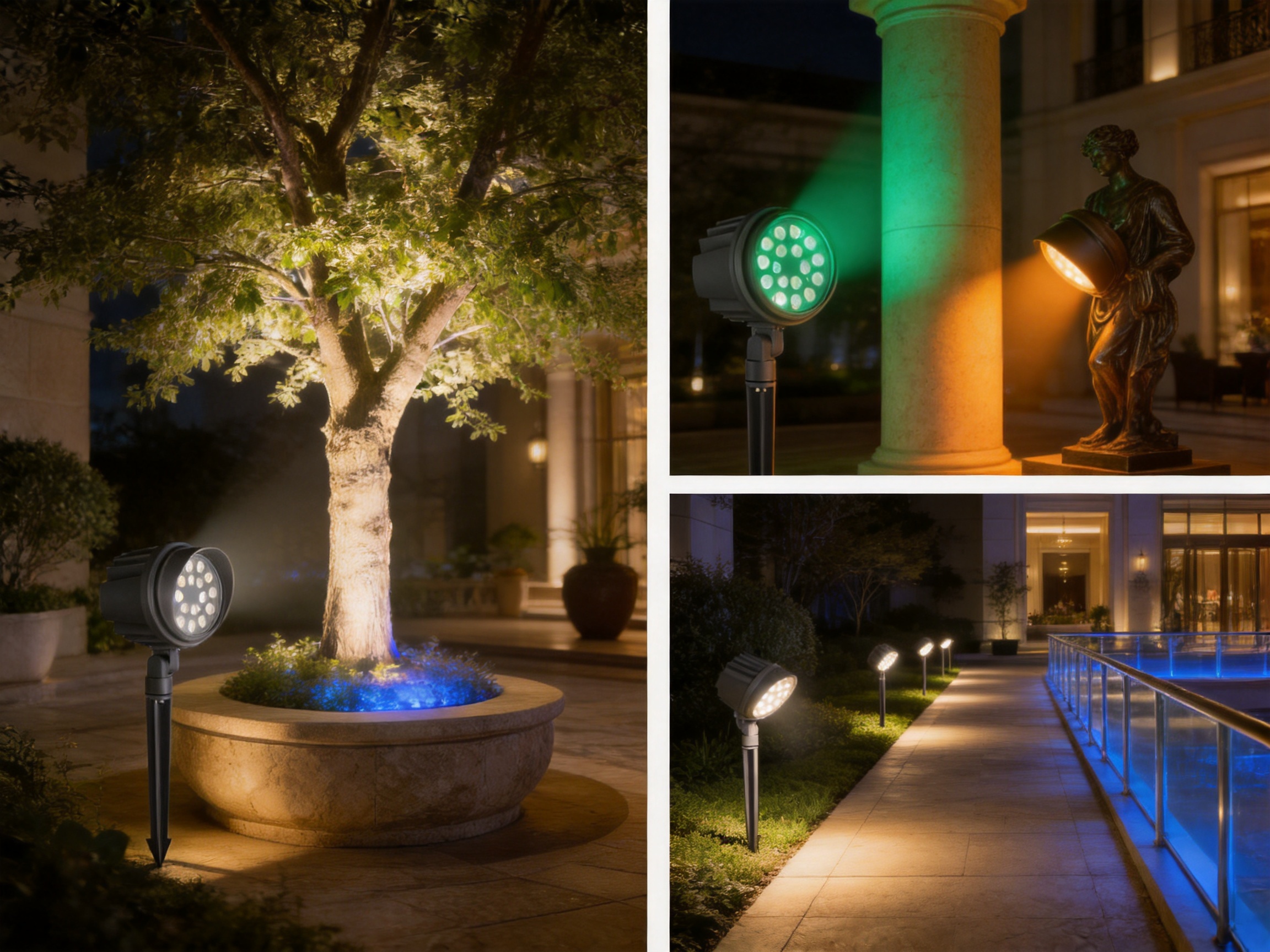
Manufacturing control is a critical part of outdoor lighting quality. Die-casting, CNC machining, aging procedures, optical testing, and structured quality management support the consistency required for professional projects.
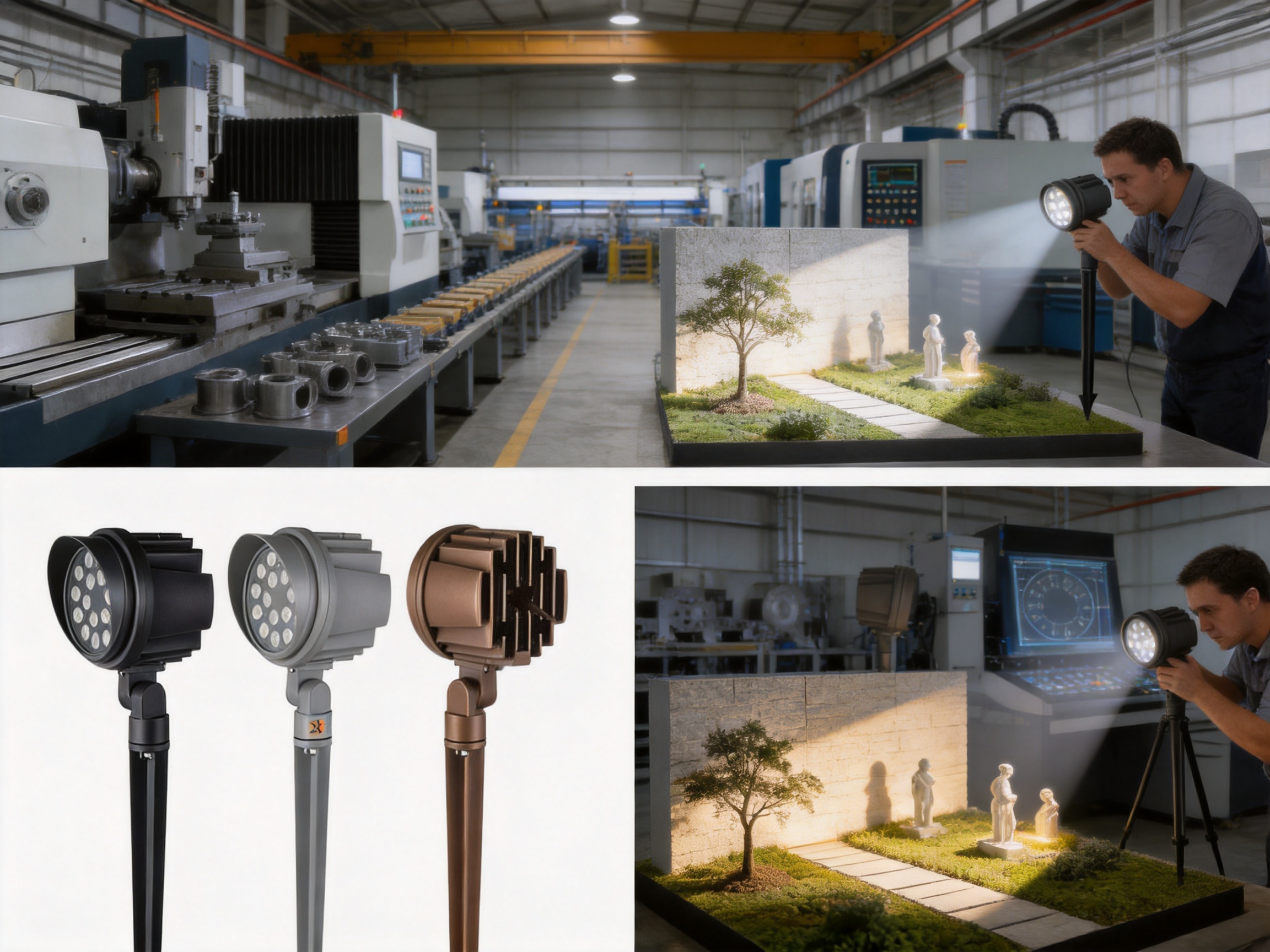
With OEM and ODM support, the GZD-SL-H can be adapted to different finishes, color temperatures, structural requirements, control systems, and installation conditions, making it suitable for both standard orders and customized lighting programs.
Product: Adjustable Garden LED Spot Light GZD-SL-H

Solusi Kustom & OEM untuk Merek Pencahayaan Global
Hak Cipta © Cixi HuaSheng Lighting Co., Ltd. Semua Hak Dilindungi Undang-undang.
Pemasok Cetakan Die-Casting
